What is a SPOT and why was it introduced?
SPOT (Goods Waiting Confirmation System) is a new mechanism for the Federal Tax Service to control imports from the EAEU countries, created by order of the Government of the Russian Federation No. 3213-r dated 11/10/2025. Previously, importers imported goods and paid VAT and excise taxes after arrival. The attackers used “one-day deals”: the goods were formally imported to companies that did not pay taxes, and then sold through simplified tax authorities without VAT. The budget was losing billions from this. The new mechanism will change the scheme: now taxes will need to be paid before importation, and the fact of payment will be confirmed with a QR code. In fact, the indirect tax declaration copies the amount of the security payment in the declaration, and you do not need to pay the tax again.

The stages of SPOT implementation
The system is being introduced in stages. There's a big difference between them.:
- Test mode (April 1 – June 30, 2026). At this stage, the Federal Tax Service will check how people are mastering the new procedure: a DOPP (a document about the upcoming delivery) is issued, QR codes are generated. You don't have to make a security payment until June 30. This is the time to train the system without financial risks.
- Full-fledged mode (from July 1, 2026). Starting from this day, it is mandatory to submit an additional payment and make a security payment. Without this, the factors are: without a document with a QR code, the cargo will not be allowed to cross the border.
Who falls under the SPOT
Everyone who is connected with automobile import from the EAEU countries falls under the system.:
- Importers are organizations and sole proprietors (based on any taxation system) that import goods by road from Kazakhstan, Belarus, Kyrgyzstan and Armenia.
- Intermediaries are attorneys, commission agents, and agents who arrange imports for others.
- Carriers are drivers and forwarders who physically transport goods across the border.
The system does not apply to imports from "far abroad" (China, Europe, the USA, etc.). There are exceptions for goods: SPOT does not apply to goods for personal use by individuals, oil and petroleum products, natural gas, electricity, goods transported between the Kaliningrad region and the rest of Russia, as well as goods for diplomatic missions.

Document on the upcoming delivery (DPP)
From July 1, 2026, importation without additional payment is prohibited. This document (form CND 1160303) is an electronic statement to the Federal Tax Service about what you plan to import. It must be sent through the taxpayer's Personal Account or via telecommunications no later than 2 business days before crossing the border. This way, the Federal Tax Service will have time to check your data, and customs will receive information about the cargo in advance.
The key information is indicated in the DPP: transaction details (importer, seller, carrier), documents (contracts, specifications), description of goods (name, HS code, quantity, cost), car data (license plate number) and approximate date of import. It also shows the amount of the security payment and its calculation.
After sending, the tax service checks the additional payment. If everything is in order (and the payment has been made since July 1), the system assigns the "registered" status to the application and issues you a QR code in your personal account within 15 minutes.
Security payment: settlement and benefits
A security payment is an advance payment of VAT and excise taxes. Its amount is equal to the taxes that you would have to pay upon importation of this batch of goods. The formula looks simple (for goods without excise duty):
Security payment = Customs value of the goods × VAT rate
For example, if we import household appliances from Belarus for 5,000,000 rubles, the VAT rate is 22%, then the payment will be 1,100,000 rubles. It is this amount that must be transferred to a special CBC (notified by the SPOT operator in the applicant's Service) before submitting the DPP in order to receive a QR code and skip the goods. After importation, you submit a VAT declaration, where you specify the same amount for payment – the previously transferred payment will simply be credited and will not be required to pay tax again.
There are benefits: the payment is NOT made (or a simplified procedure may be applied) Authorized Economic Operators (AEO), the largest taxpayer, tax monitoring is applied to the applicant, goods are transported in transit between the EAEU states through the territory of Russia, as well as organizations importing goods for which VAT/excise duty is not charged. It is important to check this in advance: you may be exempt from the payment.
Getting a QR code and skipping the product

A QR code is a visual link to your registered DPP. It's easy to get it: after the approval of the Document by the Federal Tax Service, you will be able to download a PDF with the code in your personal account. Next, we proceed as follows:
- The importer downloads the QR code and transmits it to the carrier in any convenient way (messenger, mail, in person).
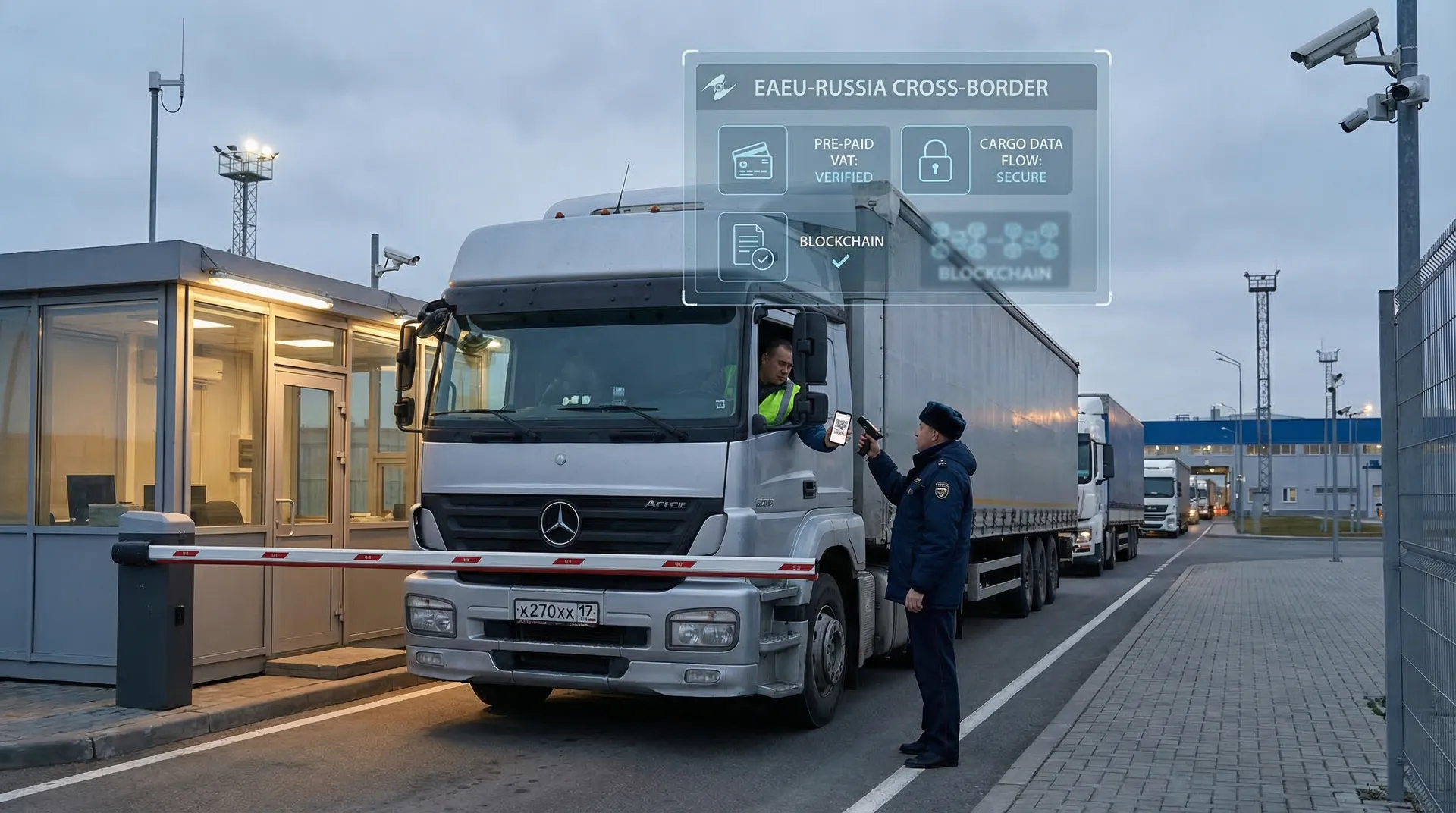
- The carrier arrives at the border and presents the QR code to the customs officer (from the phone screen or printout).
- The customs officer scans the code. The system immediately shows whether all the information about the cargo is correct and whether the payment has been paid.
- If everything is in order, the cargo is allowed through. Otherwise (no payment or non–compliance) - import ban.
For example, the driver Ivanov brought a load of furniture for the customer.
He has a valid QR code. Customs scans and sees that the additional payment has been issued and the funds have been credited. The cargo passes within a few minutes.
The situation is different: Ivanov arrives without a QR code. The customs officer refuses – the cargo is turned back and they demand to issue the additional payment again.
Conclusion: never leave without a QR code.
My advice to carriers is to specify in the contract with the customer the obligation to provide a valid QR code in advance, and include fines for failure to take responsibility.
Risks and responsibilities
SPOT has significantly increased his control. A new risk for the carrier: arriving at the border without a confirmed DOPPLER and losing the truck and time. Timeliness is important for businesses: failure to comply with SPOT requirements will result in fines. There are no specific fines yet, but amendments to the Administrative Code are already being prepared. Responsibility is expected for: - Failure to provide or late submission of additional information.
- The indication of false information in the application.
- Violation of the procedure for making a security payment (delay).
- Import of goods without a valid QR code.
These violations will be followed by fines, which must be taken in the first half of 2026.
In my opinion, the main thing is to work honestly and process documents promptly, then the SPOT will turn into increased transparency for you, not a barrier.
Action plan
- Now (until April 1). Study the official information of the SPOT from the Federal Tax Service. Check if your company has AEO or major payer status (they may be exempt from payment). Update the contracts with the carriers: include a clause about the need for a valid QR code and the terms of liability. Appoint a person responsible for working in the new service (the importer's personal account).
- Until July 1. Get a qualified signature (CAP) to work with the personal account of the Federal Tax Service and configure the accounting software (1C, etc.) for new DPP formats. Train employees to complete the DPP and calculate the payment. During the test period (April–June), send TRIAL copies and make sure that you understand the process of receiving the QR code.
- During the summer. Keep track of the status of the submitted DPP, pay the security payment on time. Keep copies of all sent documents and a printed QR code on board.
- Cost control. Make sure that the financial calculations take into account the required payments. Transfer the paid VAT to the expenses after importation, so as not to pay twice.
- Communication with counterparties. Notify all partners about the new rules: transport companies, suppliers, customs brokers. Exchange current contacts and completed documents.
- Monitoring and updates. Keep an eye on changes in the regulations and drafts of the Administrative Code. Edits can be clarified before the start of the full–fledged mode - be prepared for changes.
Start preparing today. The better you study the SPOT rules before July 1, 2026, the fewer risks and delays you will have when crossing the border. Move forward confidently according to the new rules, and your shipments will pass through the point without delay.