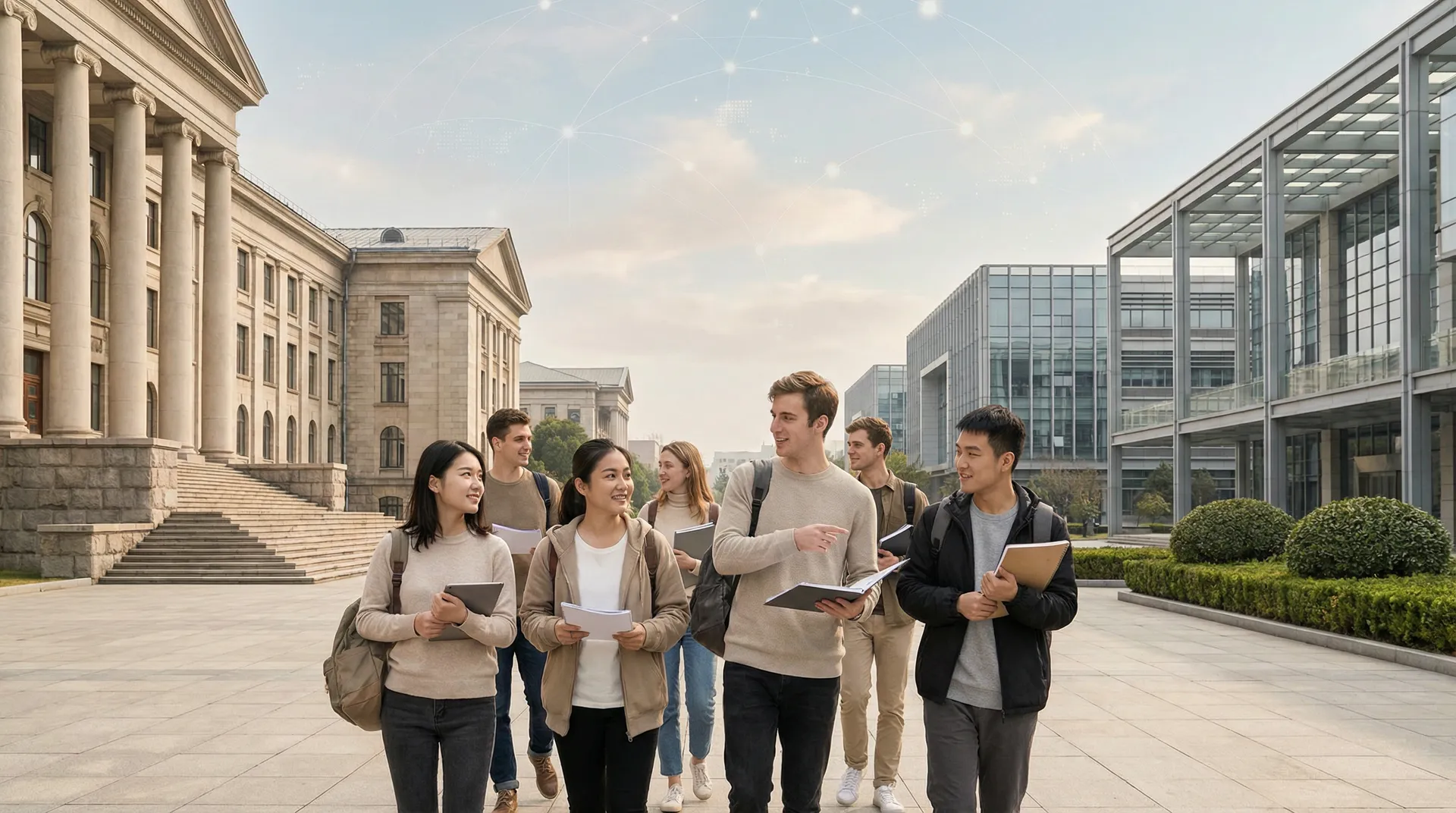
In an interview published by the Chinese Xinhua news agency, the Russian president noted that more than 51,000 Chinese students study in Russia, and more than 21,000 Russians study in China, and called academic mobility favorable for the two countries. These figures show the scale of cooperation and the foundation for future business.
The Roadmap for Sino‑Russian Humanitarian Cooperation until 2030 provides for more than 100 projects in culture and education. The Cross-Year of Education is intended to give this document a new impetus. For businesses, this means access to more qualified personnel, strengthening business relationships, and creating new markets at the intersection of education and industry.
The strategic importance of the cross-years
The cross-years have become a traditional form of strengthening cooperation between Moscow and Beijing. After a Year of Culture, a Year of Tourism, and a Year of Physical Education, the turn came to education. By putting education at the forefront of cooperation for the first time, the countries emphasize that professional staff is the foundation of a long–term business. Joint programs of bilateral higher education, exchanges of graduate students and young scientists, the work of joint laboratories – all this forms a single educational space.
The business community is already responding. At conferences and forums, corporate representatives point out that the shortage of specialists who speak foreign languages and understand the Chinese market hinders the expansion of Russian products to the East. Therefore, companies are starting to finance educational programs and create grants for joint research in petrochemistry, physics, and sustainable development. PPP projects with universities and regions are becoming an attractive channel for expanding influence and training personnel for their own tasks.
Exchange infrastructure: cities and programs
Cities are the centers of gravity
As part of the cross-year program, exchanges in groups of 200-300 students are planned. The Chinese cities of Shanghai, Xi'an, Harbin, Dalian and Beidaihe will become the main venues for Russian youth. They already have a well-developed tourism and educational infrastructure, and local administrations have agreed on activities for the year ahead. Groups will visit museums, participate in festivals, volunteer at forums, and learn Chinese. The reciprocal step will be trips of Chinese students to Moscow and St. Petersburg.‑St. Petersburg, Kazan and Vladivostok.

In addition to the capital, Shanghai plays a special role: there is a joint institute of Moscow State University and Peking University, which will become a center for academic cooperation and research projects. Xi'an is a historical center and at the same time an industrial hub, which will combine cultural and technological aspects. Harbin, whose cultural ties with Russia date back to the 19th century, will be a key location for language courses and music projects.
Program formats
The exchange programs will be diverse. In addition to traditional lectures and seminars, the focus is on practical projects.:
- Joint education in art and culture. Students will be able to participate in master classes in traditional Chinese calligraphy, Russian painting, and folk dancing. Such an exchange helps to understand the mentality and values of a partner.
- Volunteer projects. Young people will help at environmental events, festivals and sporting events. This builds teamwork skills and social responsibility.
- Participation in business missions and B2B exhibitions. Students will have the opportunity to visit industrial and exhibition complexes, get acquainted with manufacturing enterprises, and complete internships in Chinese and Russian companies. This is a practical basis for career growth.
- Internships in leading companies. Partner companies will be able to hire students for practical training. This will help young people understand the real economy and corporate culture, and the business will receive promising employees.
Why Businesses should invest in education
Staff training and barrier reduction
Education is not only a humanitarian project. For companies, this is an investment in human capital that reduces operational risks. Specialists with experience in studying abroad adapt faster, speak a foreign language and culture, which means they are more successful in negotiating and building partnerships. According to the Ministry of Education of the Russian Federation, graduates of exchange programs are 1.5 times more likely to work in international companies and 20% faster to grow in positions. This has a direct impact on productivity and competitiveness.
Business network expansion
Participants in exchanges become carriers of connections. Each student who has completed the program has a network of contacts in another country. When young professionals take up managerial positions in three to five years, these connections become a bridge for business. This creates a "live channel" between the companies of the two countries based on trust and personal relationships.
Increase brand awareness
PR opportunities are opening up for companies that organize or sponsor educational projects: they demonstrate social responsibility, attract the attention of students and universities, and gain the status of key partners. In the face of fierce competition, a brand associated with supporting education inspires confidence among customers and government agencies.
Access to research and innovation
Within the framework of the cross-year, it is planned to expand cooperation in science. The joint laboratories will develop projects in petrochemistry, materials science and IT technologies. Businesses investing in such laboratories gain access to research results, which is especially important in the context of sanctions and limited access to foreign technologies. In addition, PPP programs provide an opportunity to finance research with government co-financing, sharing risks and costs.

Challenges and recommendations for business
Although the prospects are huge, companies face a number of challenges.:
- Bureaucratic barriers. The design of internships and internships requires coordination with the educational authorities of both countries. Businesses need to make plans and allocate resources in advance.
- Logistical difficulties. Organizing flights, visas, and accommodation for students requires separate teams and experience. It is important to work with trusted agencies and universities.
- Cultural differences. Despite the growing mutual sympathy, differences in business culture, communication style, and educational expectations persist. Preparatory trainings and adaptation programs should be conducted.
How to act as a business
- Strategic planning. Determine which competencies and personnel will be needed in five years, and build partnership programs specifically in these areas.
- Cooperation with universities. Enter into agreements with universities, offering them practical cases and financing for projects that are useful to your company.
- Participation in government programs. Keep an eye on the cross-year grant and subsidy contests; the government will provide support to active companies.
- Invest in language training. Specialists who speak the partner's language are a rare resource. Create language courses for employees, expanding the circle of potential exchange participants.
Conclusion: education as a bridge to long-term partnership
The cross–year of education 2026-2027 is not just a formality. In the context of accelerated digitalization, technological sanctions and geopolitical changes, it is educational exchanges that are becoming the foundation of long‑term business interactions. Through exchange programs, internships, joint research and humanitarian projects, a new elite of specialists is being formed who are ready to work in the face of global competition. The synergy of education and business makes it possible to remove barriers, build trust and create a steady flow of ideas and personnel on which joint projects between Russia and China will be built in the 21st century. Investing in education today is an investment in the future of business and the economy of the two countries.