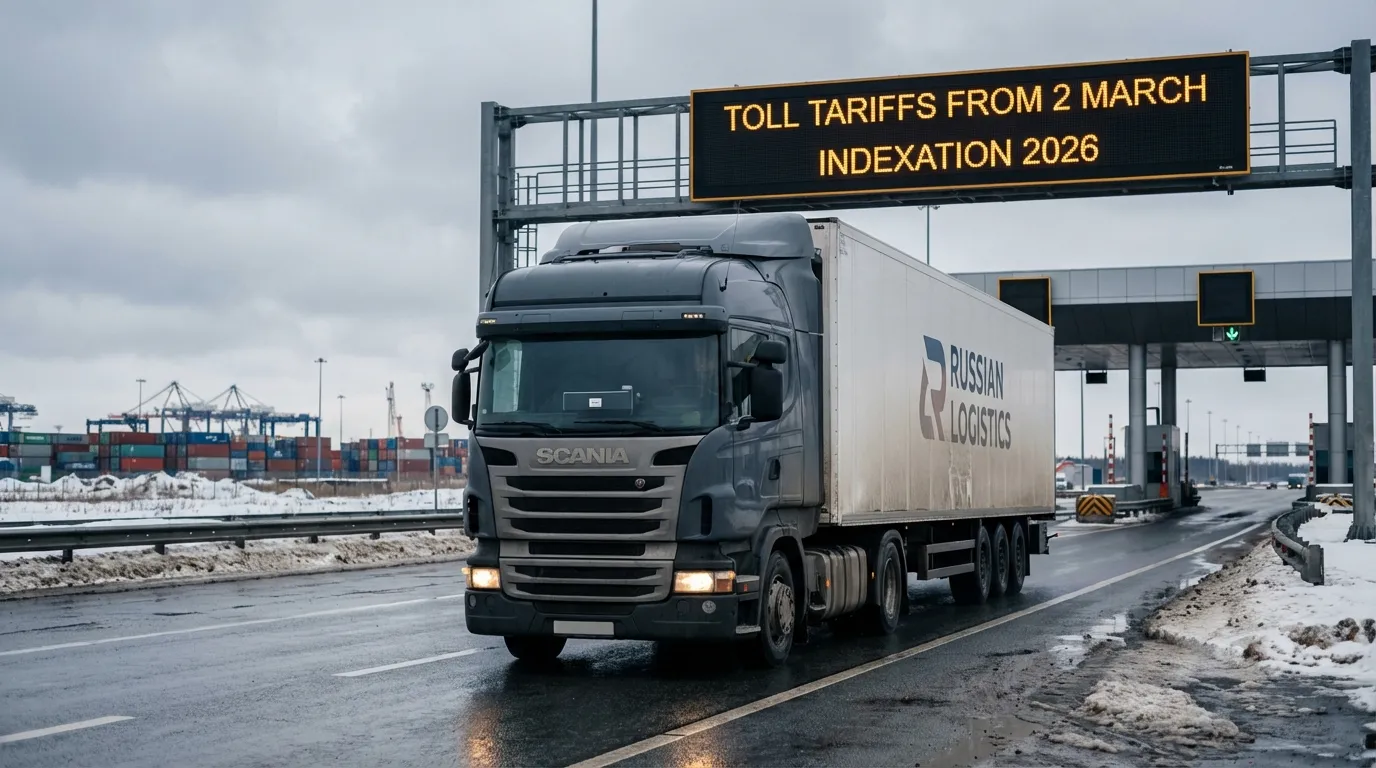
The most noticeable jump was recorded on the M-3: on the Maloyaroslavets—Timokhino section, the fare on weekdays increased to 190 rubles, the increase is indicated at 72%. On the M-12, the increase is more pronounced on the full Moscow—Kazan shoulder: the cost along the entire highway has risen from 5399 to 5909 rubles, an increase of 9.4%. There are also reductions on the M-4: for one of the weekend segments, the fare was reduced from 80 to 70 rubles per trip, which corresponds to minus 12.5%.
A key signal to the participants of foreign economic activity is related to the desk-based accuracy of flight budgeting. On a monthly basis, even "planned" indexing quickly turns into a significant amount when the fleet makes regular trips to ports, terminals, storage facilities and industrial clusters. The growth of the toll component affects the transportation rate, the terms in contracts, the delivery price in commercial offers, and the choice of a route for KPIs by time.
The legislative "ceiling" of tariffs remains a separate factor. The company emphasizes the connection of tariffs with the limits set by the regulations.:
"Despite the annual fare adjustments, fares on highways remain significantly below the legal limits."
In practice, this means that indexing retains room for further increases in subsequent years, which means that it is important for the carrier to include travel charges as a separate manageable cost element. According to the data on limits and actual values for the M-4, we are talking about the limit of 6.95 rubles per km with an actual 4-5 rubles per km, for the M-11, the limit is 11.1 rubles per km with an actual level of about 6 rubles.
The reasons for the indexation are publicly linked to inflation and maintenance costs:
"There is inflation, costs are rising, including for road maintenance," explained Vyacheslav Petushenko, head of the state—owned company.
According to preliminary estimates, tolls by the end of 2025 have reached 140 billion rubles, and revenues are directed to the maintenance and repair of roads, traffic safety and the return of attracted investments.
What should a foreign economic activity carrier do now?:
- update the tariff directories in TMS/ERP and the rules for calculating flights along the corridors M-4, M-11, M-12, M-3 and CCAD;
- recalculate the "cost per minute" of accelerated routes and fix the surcharge in the commercial policy;
- check where the transponder and subscriptions give a stable effect for regular lines;
- to coordinate with the cargo owners changes in rates before peak delivery periods in order to avoid margin gaps on already confirmed orders.