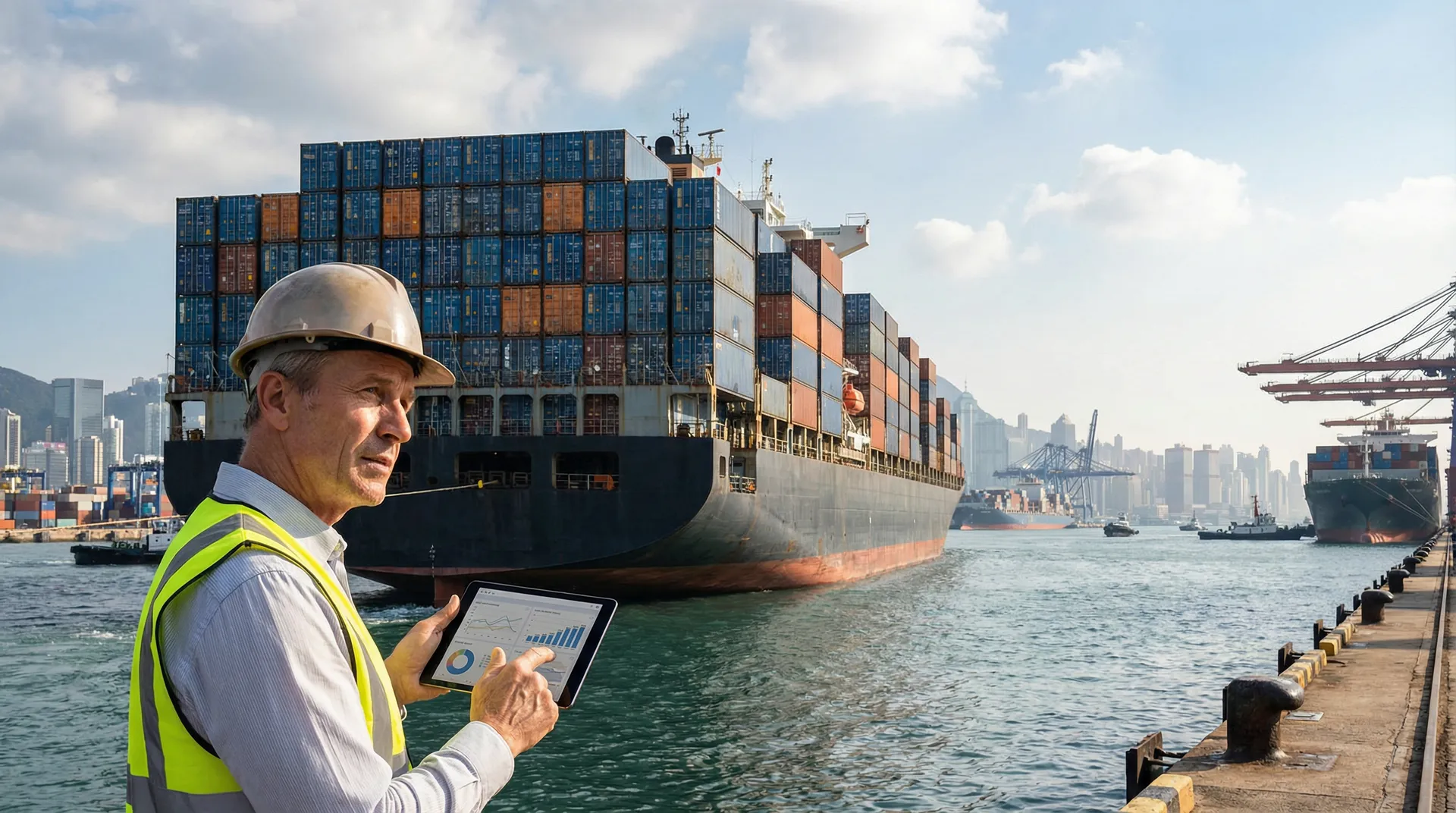
The global container shipping market has gone up again. According to Drewry, in the week to March 26, 2026, the global container index rose to $2,279 per FEU, an increase of 5%. This is the fourth week in a row that spot rates have been rising, with routes that are sensitive to geopolitics, fuel costs, and service reconfiguration becoming the main source of pressure.
The market received the most noticeable boost on the Trans-Pacific shoulder. According to your original message, the Shanghai — New York and Shanghai - Los Angeles directions are highlighted separately, where the rates continued to move up. Drewry confirms in its open summary that the growth at the end of March was supported by Asia–Europe and Transpacific trade routes, and the rise along the Asia-European lines looked even stronger.
The key driver of this movement lies outside the container industry itself. Shipping companies are putting new risks in tariffs against the background of the deteriorating situation in the Middle East and rising fuel prices. CMA CGM explicitly stated that it is reviewing Emergency Fuel Recharge due to the fact that "There has been a significant price spike in the fuel market caused by the escalation of geopolitical tensions in the Middle East." The updated EFS sizes, according to the company, will take effect on March 27, 2026 and are valid until further notice.
For the market, this means a simple thing: carriers are starting to transfer geopolitical costs to freight costs faster than before. When emergency fuel surcharges appear on the line, the economics of contracts change, the delivery of imported shipments becomes more expensive, and the nervousness of cargo owners who work with long leverage and narrow margins increases. In such an environment, even a moderate weekly movement of the index is perceived as a signal for a new round of rate revisions.
Drewry already expects a further rise in spot rates in the coming weeks. For importers and exporters, this means that the end of March may become the entry point to a more expensive stage of maritime logistics, where the price will be determined not only by demand and fleet capacity, but also by military tensions, fuel costs and the willingness of lines to introduce new charges.