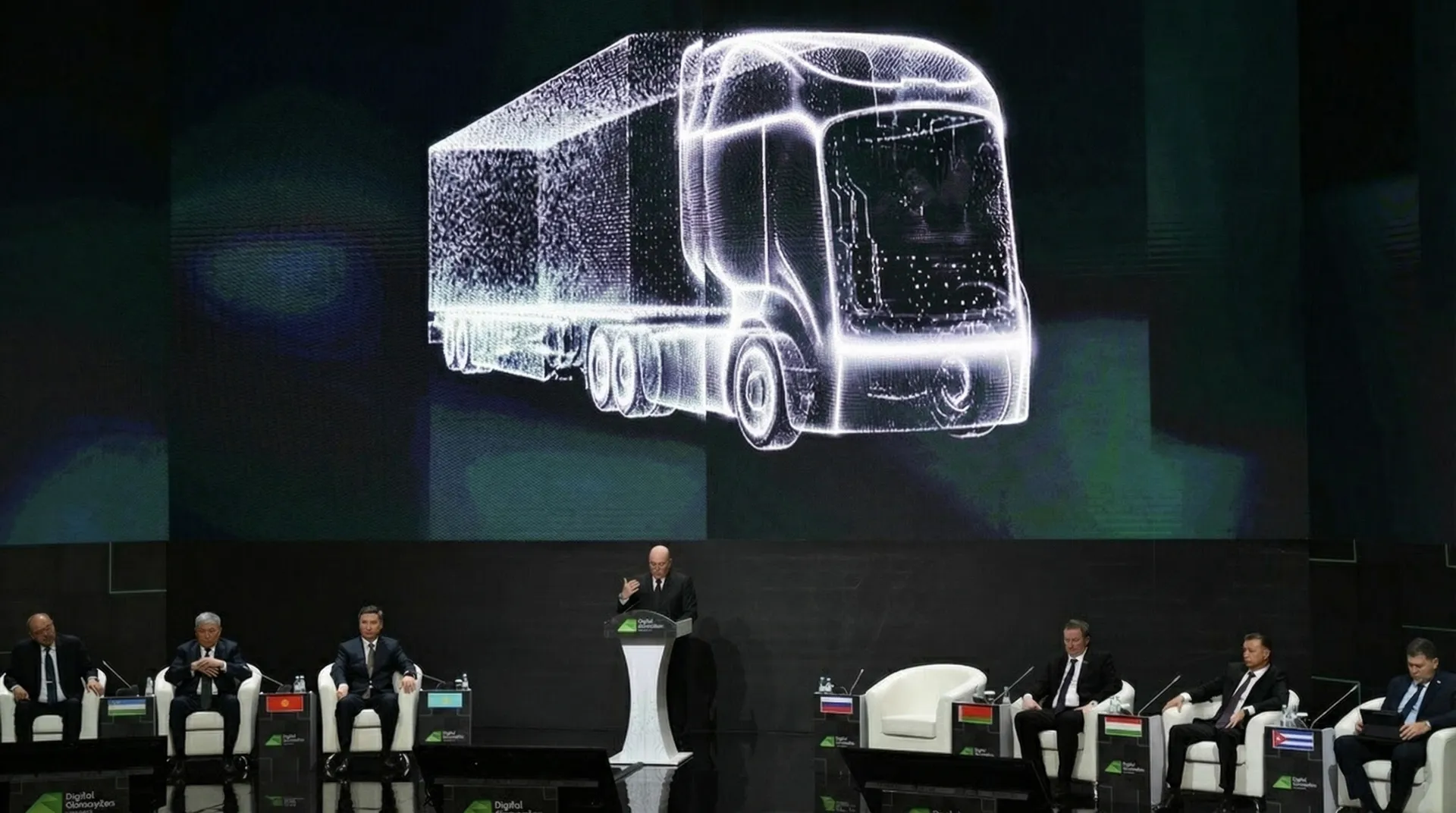
The transport agenda of Eurasia gets a new technological theme. Russia has officially invited the EAEU partners to joint projects in the field of unmanned cargo transportation. The idea is not about abstract experiments, but about key international transport corridors, where autonomous systems can have a real effect in the coming years.
Prime Minister Mikhail Mishustin formulated the proposal bluntly:
"An integrated ecosystem of autonomous technologies has been formed in Russia. We invite our partners in the union and all friendly states to launch joint projects to develop autonomous freight transportation along key international transport corridors."
The second key quote concerns the rules of the market: "We are ready to jointly create a unified regulation for autonomous systems in the Eurasian space." This is where the main fork lies. Unmanned transportation becomes truly widespread only when there are uniform standards of access, security, communication and responsibility for them.
This topic may become a strategic one for EAEU logistics. Autonomous cargo routes can increase corridor capacity, improve delivery to remote areas, and reduce long-haul costs. If integration proceeds through common rules and joint projects, Eurasia will have a chance to form its own intelligent transportation market faster.