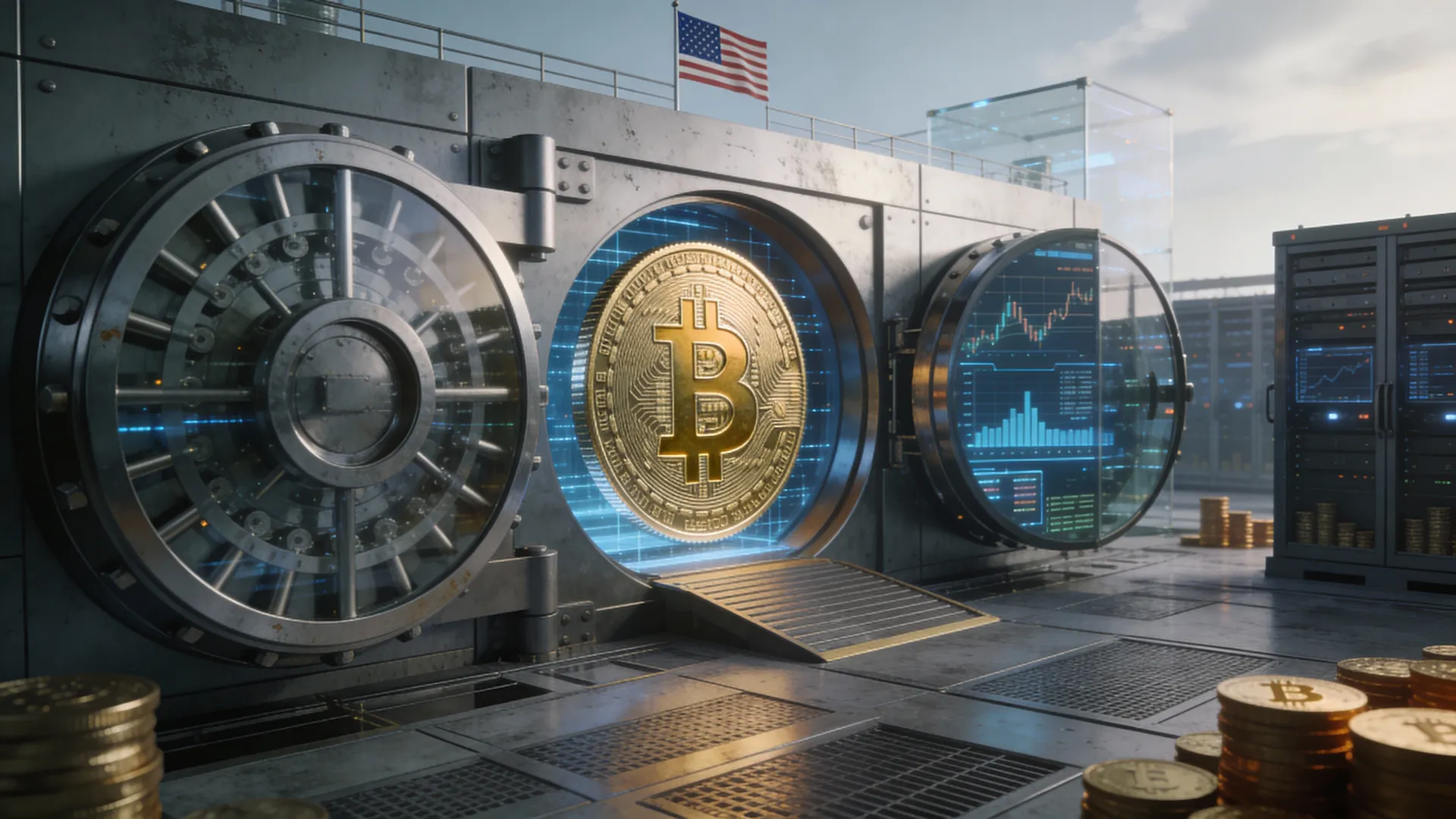
In 2025, the distribution of government Bitcoin reserves has changed markedly. BTC's sovereign balance sheets were formed in various ways, from seizures in criminal cases to systemic mining and treasury strategies. As a result, bitcoin has finally established itself as a traceable element of government assets.
The United States became the largest holder of BTC by the end of 2025. While estimates in May indicated about 198,000 BTC, the large-scale seizure of 127,271 BTC related to the case of a wanted Chinese citizen dramatically increased the volume of reserves. According to Arkham Intelligence, at the end of the year, the US government controls approximately 328,372 BTC, which at current prices is equivalent to about 28.7 billion dollars. The main source of reserve formation is judicial seizures in the framework of investigations of financial crimes.
The UK is in second place, owning 61,245 BTC. The origins of this stock date back to 2018, when the London Metropolitan Police seized crypto assets from defendants in a large-scale fraud and money laundering case worth about 5 billion pounds. Full control over the wallets was obtained by the state in 2021, and since then the volume of reserves has remained stable.
The third position is occupied by El Salvador, the only country where bitcoin has the status of a legal tender. According to Arkham, the country controls about 7,509 BTC. The authorities claim that the assets were formed through government treasury purchases. However, a number of external observers, including the International Monetary Fund, have expressed doubts, suggesting that some of the transactions may reflect internal movements of funds rather than the actual build-up of reserves.
The fourth place is occupied by the United Arab Emirates, which owns 6,568 BTC. Unlike the United States and the United Kingdom, the UAE has formed a reserve due to production. The bitcoins were obtained through Citadel Mining— an 85% owned company of the Royal Abu Dhabi Group. This approach fits into the region's strategy for the development of crypto, blockchain and AI infrastructure.
Bhutan closes the top five, where the accumulation of BTC also occurred through mining. The process is overseen by the sovereign wealth fund Druk Holdings. Although the volumes were higher in previous years, in 2025 the reserves decreased to 5,984 BTC. Nevertheless, the fund announces plans to increase crypto investments tenfold by 2035.
Combining these examples, analysts note that states have come to own bitcoin not for ideological reasons, but because of practical circumstances — law enforcement, access to cheap energy, or strategic financial decisions. By 2026, the sovereign ownership of BTC has ceased to be exotic and has become a factor that markets closely monitor, and regulators and politicians take into account when shaping the economic agenda.