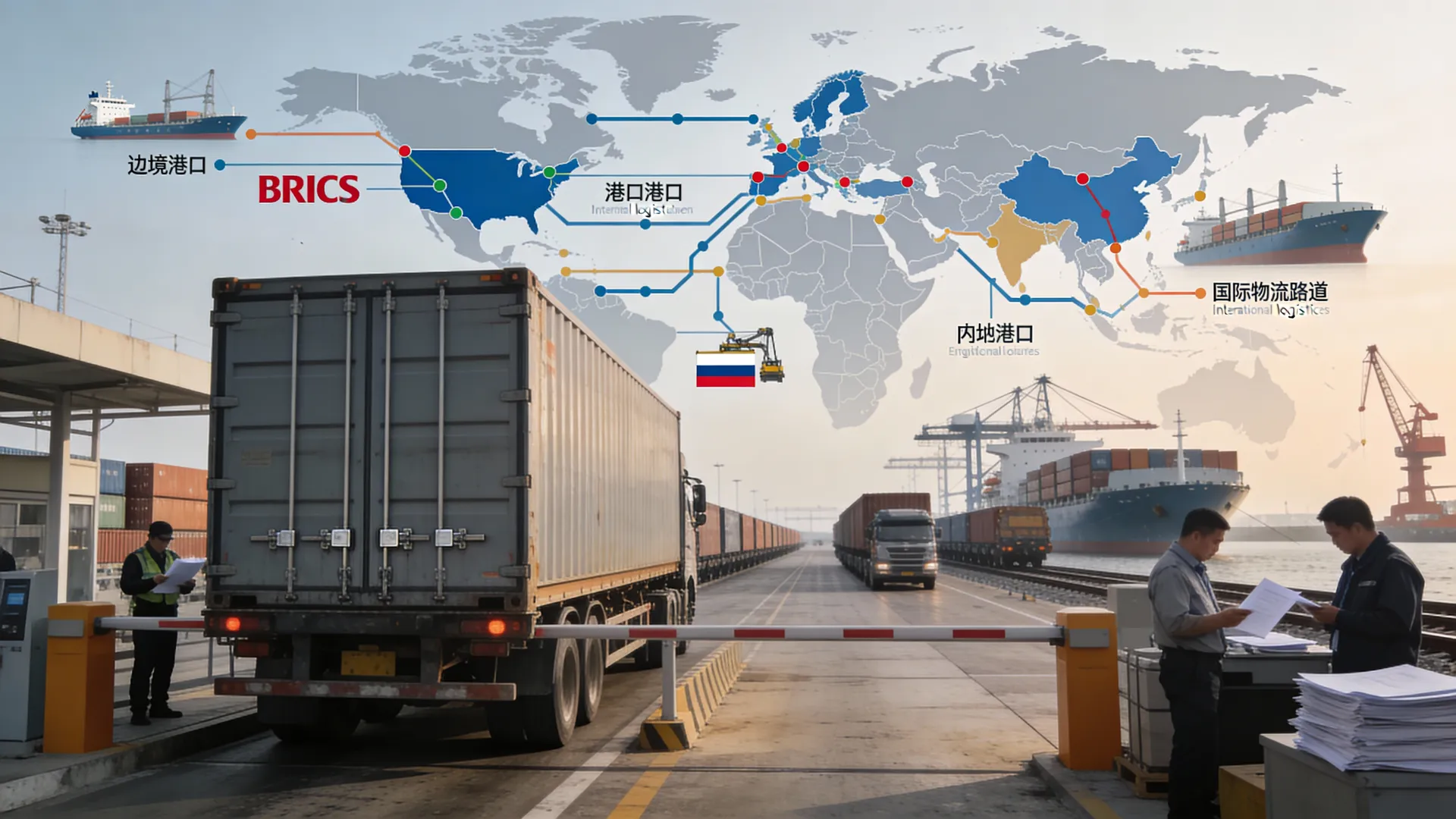
BRICS prepares a "bundle" of digital currencies: India promotes CBDC payments for trade and tourism by the 2026 summit

The Indian regulator proposes to build a single circuit for cross—border settlements by integrating national digital currencies of central banks, so that the digital rupee can "talk" with the digital ruble, digital yuan and other CBDCs of the BRICS participants. Target scenarios are payments in trade and tourism, where today too many costs are eaten up by conversion, intermediaries and delays in correspondent chains.
A separate signal is institutional: India has officially launched the branding and preparation of its BRICS presidency in 2026 (logo, theme, website), which confirms that work on initiatives is not "in chat rooms", but on the working agenda of the year.
Why this could be a turning point for foreign economic activity and logistics
For foreign trade, money is the same part of the supply chain as a port, warehouse, or customs office. If payments accelerate and become predictable, the economics of the entire transaction change.:
- The speed of closing contracts. Less dependence on bank windows and manual compliance checks at each link → faster prepayment/postpaid → fewer cash gaps between importers and exporters.
- The cost of transactions. Some of the fees for international transfers and conversions go away, especially when payments are made directly in digital currencies and do not require a long route through third currencies.
- Documents and controls. With a competent architecture, the CBDC infrastructure can provide better payment tracing and reconciliation automation (invoice-payment—shipment), which simplifies currency control and reduces the risk of errors in documents.
Why is "one click" still more of a metaphor?
Even if a political decision is made at the summit, there are several difficult knots ahead.:
- Technology interoperability (different CBDC platforms, different accounting models, and security).
- KYC/AML and data exchange rules: without a single compliance standard, banks and large businesses will not transfer mass payments to a new circuit.
- Clearing and trade imbalances: a quick payment does not eliminate the issue of liquidity and "balancing" flows between countries — limits, swap lines and pilot corridors are likely.
Expert conclusion
For the foreign economic activity market, the main conclusion is pragmatic: it is worth preparing now, but without illusions. The BRICS Single Payment in the near future is more likely to be pilot routes and separate corridors for standard operations than an instant replacement of the usual schemes. Companies that are the first to learn how to integrate new payment methods into contracts (price/payment currency, delivery terms, payment triggers, proof of performance) will gain an advantage in transaction speed and financial circuit stability.