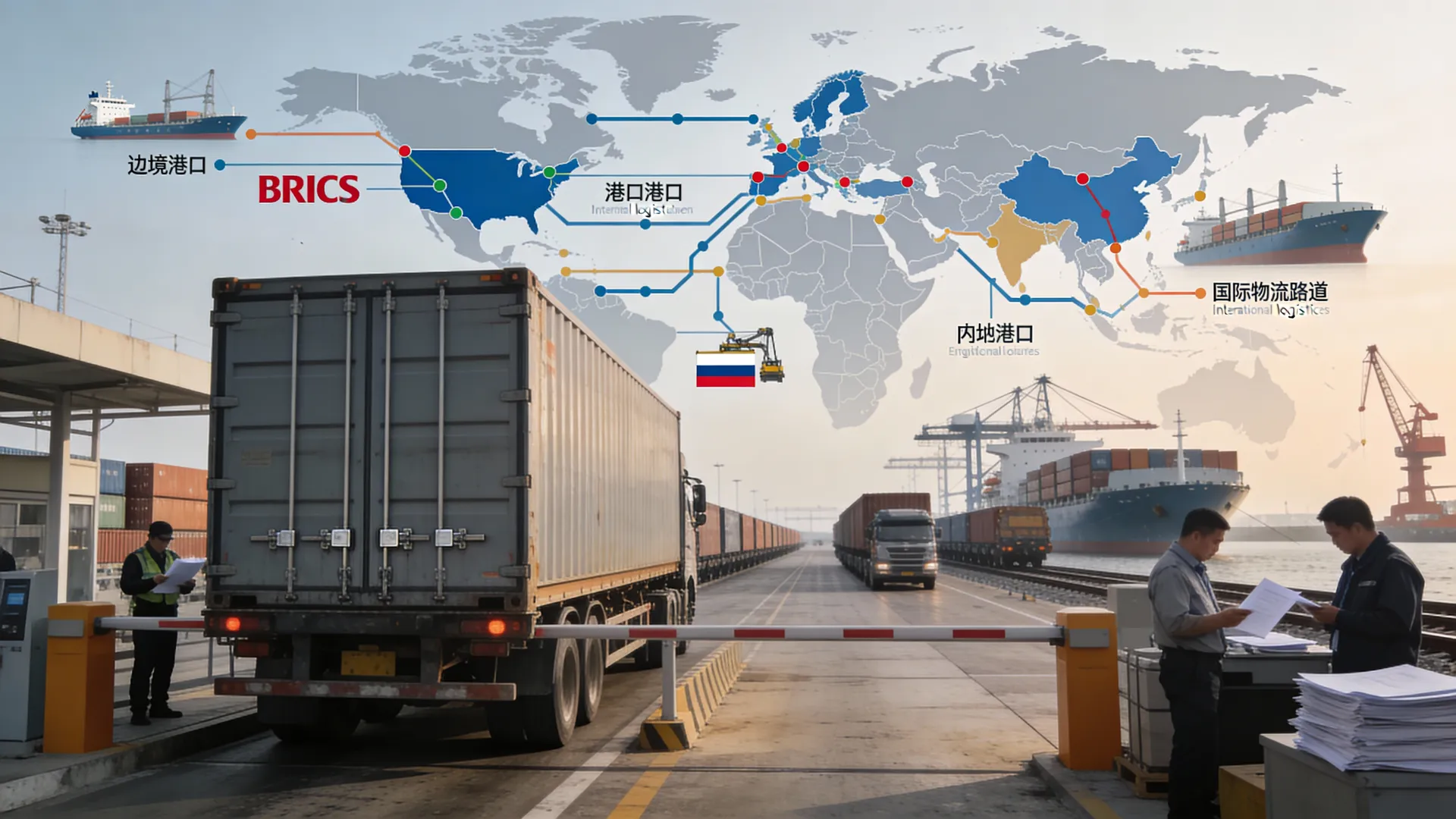
The State Duma Committee on Budget and Taxes has supported government amendments that clarify how customs authorities should interact with other agencies when controlling goods and motor vehicles. The essence of the initiative is practical: to remove "gray areas" where responsibility is blurred between customs, traffic police and specialized supervisory services, and businesses are wasting time on downtime.
Today, customs officers can independently stop trucks for inspection in customs control zones along the border, as well as in certain designated places inside the country, if the technically permissible maximum vehicle weight is 3.5 tons or more. In all other cases, the stop occurs through traffic police officers when interacting with mobile groups or individual customs officials. In practice, this means that the speed of reaction depends not only on customs, but also on the availability of crews and agreed procedures.
The key innovation concerns situations where a storage check reveals signs of violations that are not within the competence of customs. In this case, the customs authorities must inform the agency to which the violation "belongs" or its territorial subdivision. An important caveat for carriers and cargo owners is that transport and goods (if they are not seized or seized by customs itself) are returned to the persons who deposited them or those who have the authority to dispose of them. The order and composition of the transmitted information is planned to be fixed jointly by the Federal Customs Service and relevant federal agencies so that there are no discrepancies in the format of documents, deadlines and channels of exchange.
A separate block of changes is the conversion of unclaimed vehicles and goods into federal ownership. The deadline for publishing information on the FCS website about unclaimed property is reduced from 60 to 30 days. For the market, this is a signal of an increase in the "cost of procrastination": disputed shipments and detained vehicles should not be left without legal support and prompt communication with customs and the Customs Service.
Why the topic is important for foreign economic activity and corridors from the BRICS countries. Flows from China, India and other partners increasingly follow mixed patterns: auto plus railway, auto plus sea, transshipment at warehouses and terminals. In such chains, any interdepartmental disagreement leads to cascading delays: not only a specific truck is idle, but also a window in the warehouse, a slot at the terminal, and a delivery schedule to the final recipient. Formalizing the exchange with agencies such as the sanitary or veterinary supervision reduces the risk of "suspended" inspections, when the cargo is actually held, but does not move procedurally.
For businesses, the main conclusion is simple: the requirements for pre-control of documents and for the speed of reaction during arrests are increasing. Carriers and participants in foreign economic activity should set routes in advance, taking into account customs control zones, keep a ready package of supporting documents on the origin, safety and purpose of the goods, as well as have clear rules of action in case information is transferred to another agency. The better the preparation, the less likely it is that the check will turn into a multi-day downtime.