The customs agenda for 2026 in the EAEU countries focuses on a key issue — the correctness of determining the customs value. It is this parameter that forms the basis for calculating import duties and VAT, which means it directly affects the financial model of foreign economic activity.
Regulators are increasing their attention to the transaction price structure, payment sources, contract terms, and related costs. The practice of recent years shows that disputes over customs value remain one of the most frequent reasons for additional charges and adjustments to declarations. In 2026, the focus is shifting towards the unification of approaches within the EAEU and more rigorous analysis of price indicators.
For businesses, this means building a transparent transaction architecture from the very beginning. The contract, invoice, specification, transport documents and payment confirmation should form a logical and comparable picture. Any discrepancies between the stated price and the market indicators become the basis for additional verification.
Special attention is paid to the analysis of the interdependence of the parties, the structure of commissions and agency fees, as well as the correct inclusion of transport and insurance costs in the customs value. Errors at this stage lead to an adjustment of the declaration and an increase in the financial burden on the importer.
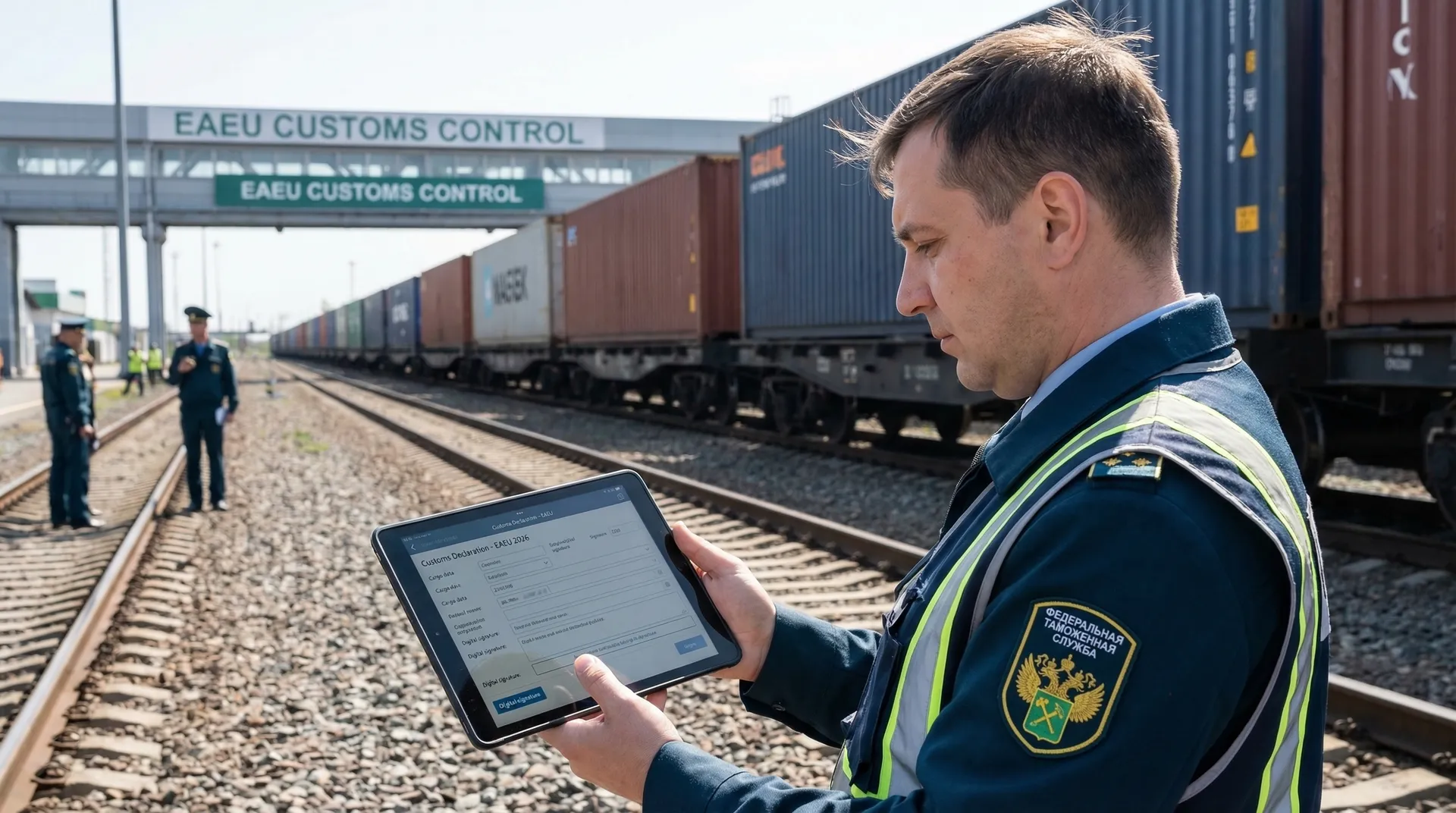
In 2026, digitalization of customs procedures strengthens the analytical component of control. Risk management systems automatically compare data on prices, countries of origin, and product characteristics. This increases the likelihood of spot checks and requires more careful preparation of documents.
For companies working with China and Asian countries where price competition is high, the risk of cost adjustments increases. The strategy of safe delivery in the current conditions involves a preliminary analysis of price ranges, preparation of discount justifications and a transparent payment structure.
In 2026, the foreign economic activity becomes a zone of controlled compliance. Companies that work systematically with the customs value receive predictable release dates and financial burden. Those who ignore the price confirmation requirements face additional costs and delays.