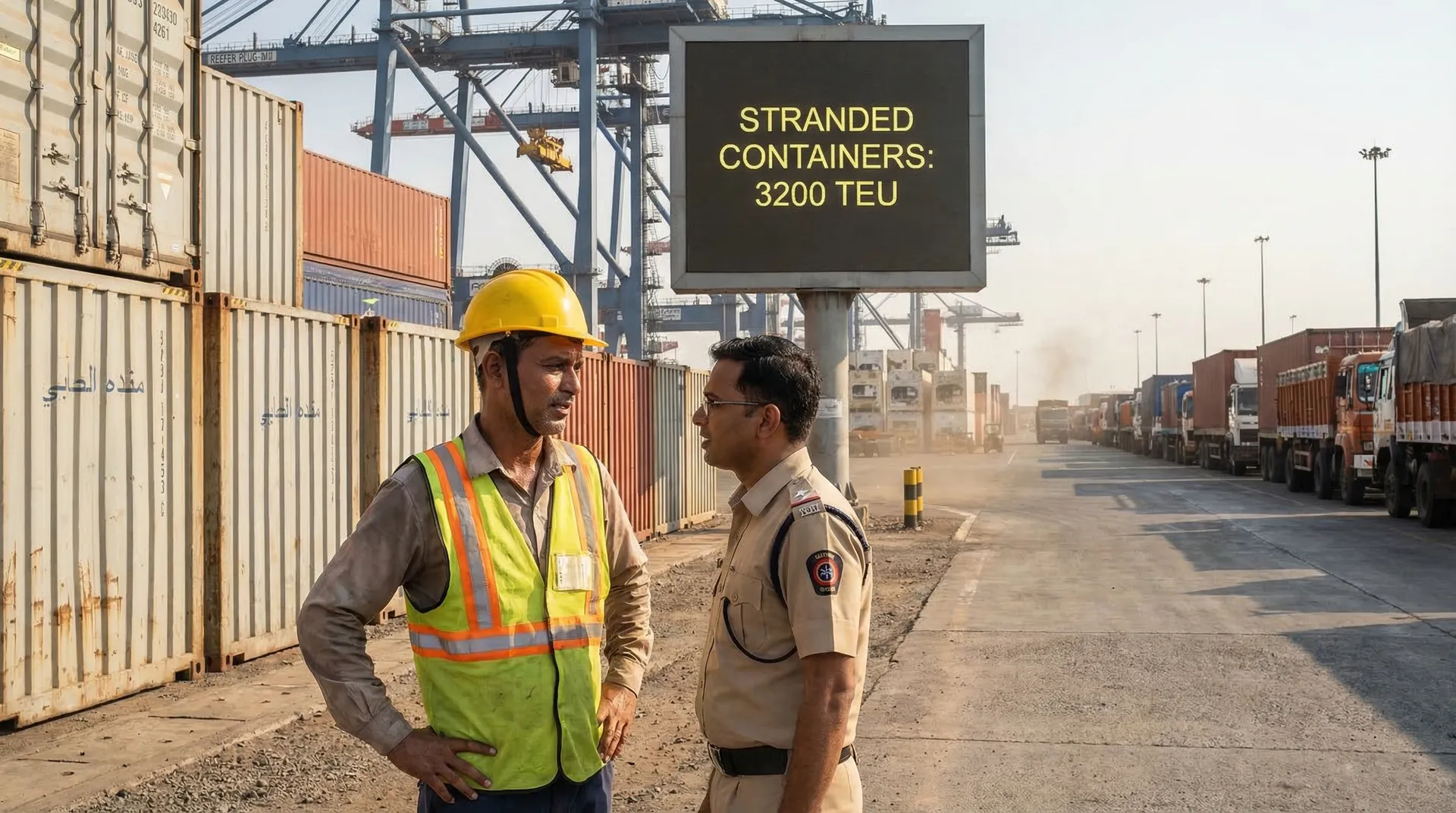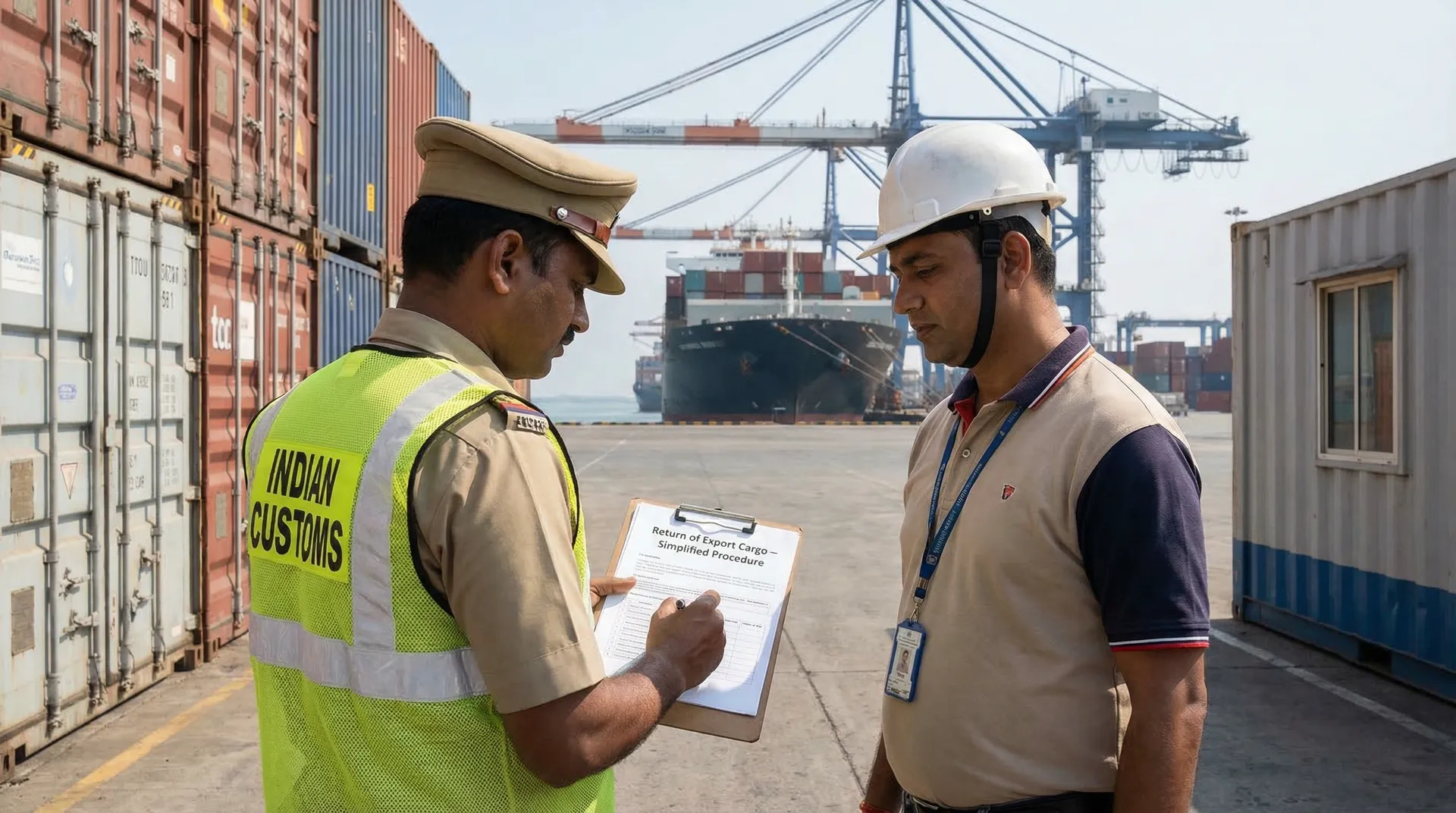
India has launched an anti-crisis regime for port export logistics. The Central Council for Indirect Taxes and Customs (CBIC) has approved temporary regulations for handling export cargo, which is being forced to return to Indian ports amid the closure of the Strait of Hormuz and violations of sea routes. The document is valid for 15 days and is designed to quickly sort through accumulated shipments without turning the export procedure into an import bureaucracy.
The key operational principle concerns the ship's return point. The circular contains the following requirement:
“In all such cases, the vessel is allowed to dock only in the same Indian port from which it left, except in cases of cargo transshipment,” the document says.
This rule reduces confusion over documents and the allocation of responsibility between the port, terminal and customs when the return takes place under stress and on short notice.
CBIC described three typical situations in which actions on manifests and confirmations differ. If the ship is still in the territorial waters of India and the export manifests have not been submitted, the captain gives an undertaking that there has not been an exit beyond the territorial waters. Containers in such cases can be unloaded to the terminal without submitting a Bill of Entry, provided that the accompanying export documents are checked.
If the Export General Manifest or Sea Departure Manifest have already been filed, or the ship returns from international waters without calling at foreign ports, the mechanics are similar.: unloading without a Bill of Entry is allowed after verification of the SDM and documents, and information about cancelled Shipping Bills is transmitted via ICEGATE to the RBI, DGFT and other agencies.
The third scenario applies to flights that return after calling at a foreign port without unloading containers. In this case, CBIC considers such shipments to be actually exported, but also allows unloading without a Bill of Entry after checking the documents and transmitting information on canceled Shipping Bills via ICEGATE.
A separate sensitive element is export incentives and refunds. CBIC explicitly stated that the territorial divisions would manually collect the export incentives already paid for such shipments. This is an important signal for the financial services of exporters: the return of the container to the port becomes an event that requires reconciliation of IGST, drawback and other payments in order to avoid further claims and cash gaps.
For foreign economic activity teams, the new procedure means the need to act on the checklist on the day of the ship's return: confirmation of EGM/SDM status, preparation of a package of documents for the terminal, request Back to Town if necessary, monitoring the status of Shipping Bills cancellation and further communication with the bank and foreign trade authorities. In such conditions, the winner is the one who keeps a single shipping archive and can quickly prove that the containers have not "moved" to the import contour.