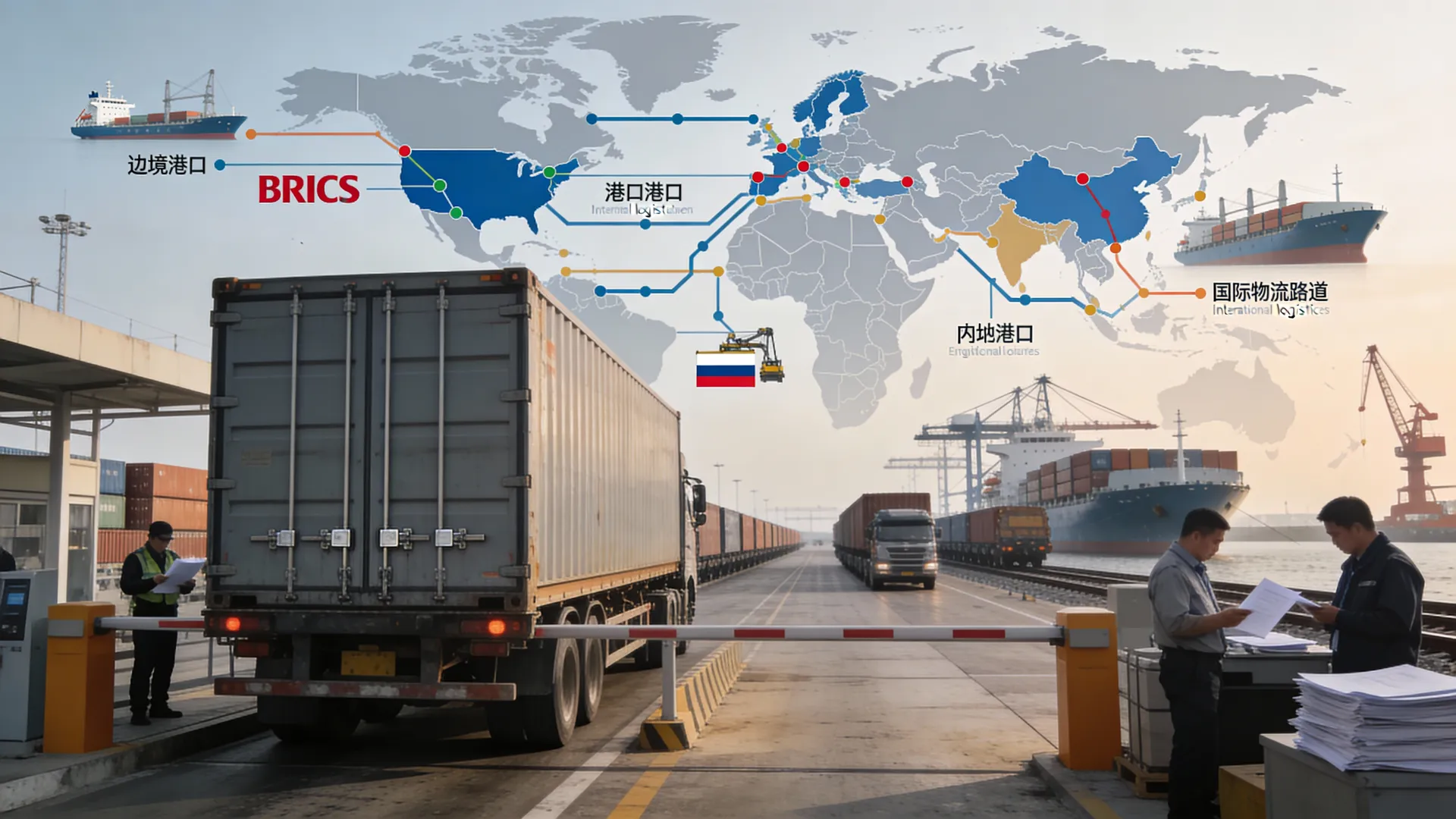
The Federal Customs Service of Russia and the Ministry of Transport have begun a large-scale modernization of checkpoints in order to reduce the standard inspection time for cargo transport to 10 minutes. This task was defined at the level of the President of the country and became a key guideline for changing both the infrastructure and regulatory processes at the border.
Currently, the inspection procedure at most checkpoints takes much longer, which creates queues, increases the costs of carriers and slows down foreign trade chains. To remedy the situation, a roadmap has been developed that provides for the simultaneous implementation of technological solutions and the updating of the regulatory framework. As early as 2026, it is planned to provide a 10-minute inspection standard at at least five checkpoints.
The creation of an intellectual checkpoint is becoming a central element of the reform. This is the concept of a single digital platform combining data from all control services, electronic document management tools, weight and dimensional systems, modern inspection and inspection complexes and an electronic queue. Such solutions make it possible to handle traffic flows without unnecessary stops and minimize human involvement in routine procedures.
The pilot implementation is taking place at the Tagirkent-Kazmalyar checkpoint on the border with Azerbaijan. An experimental integrated control model has been operating here since mid-2025. Trucks pass through an electronic queue, data is pre-entered into the information system, and inspection is carried out using high-precision complexes, which reduces transport processing time and reduces the risk of errors.
The heads of the Federal Customs Service and the Ministry of Transport stressed that in order to achieve these goals, it is necessary to comprehensively modernize the infrastructure, ensure the operation of all services in a single information environment and build a system of preliminary information. The priority is not only speeding up control, but also improving its quality through automation.
In parallel, measures for the development of territories adjacent to checkpoints are being discussed. We are talking about creating additional waiting areas, logistics services and platforms for servicing carriers. These solutions will increase throughput and support the growth of international trade.
The large-scale digitalization of the border and the transition to intelligent checkpoints reflect the general trend of strengthening logistics corridors and optimizing foreign economic activity. Russia expects that the introduction of advanced technologies will significantly speed up the movement of goods and strengthen the country's position in international trade.