China has announced a sharp expansion of preferences for Africa: from May 1, 2026, Beijing will cancel duties on goods from 53 African countries with which it maintains diplomatic relations. The decision was announced on behalf of the President of the People's Republic of China and was presented as a step towards deepening the Africa—China trade link against the background of competition for the markets of raw materials and agricultural products.
The key wording sounds as harsh as possible and leaves no room for "partial" interpretations.:
"Since May 1, 2026, China has been fully implementing measures to impose zero tariffs on all 53 African countries with which it maintains diplomatic relations," Xi Jinping said in a congratulatory message sent to Chairman of the African Union (AU) Joao Lawrence and Chairman of the AU Commission Mahamud Ali Yusuf on the occasion of the upcoming lunar the calendar of the year of the Red Horse.
From the point of view of foreign economic activity, this is not just a "tariff discount". Zero duties dramatically change the mathematics of supplies for a wide range of items — from the agricultural sector (coffee, cocoa, sesame, nuts, fruits, fish) to minerals and metals. If the duty barrier disappears, three things come to the fore: the cost of freight, the stability of logistics, and the speed of customs procedures. Therefore, the second element of the statement is no less important — the promise to simplify the admission of goods and speed up clearance.:
According to the Chinese president, at the same time, Beijing intends to advance negotiations on the Comprehensive Economic Partnership agreement in order to develop and expand access of African products to the Chinese market. He promised to optimize the operation of the "green channel" for goods from Africa.
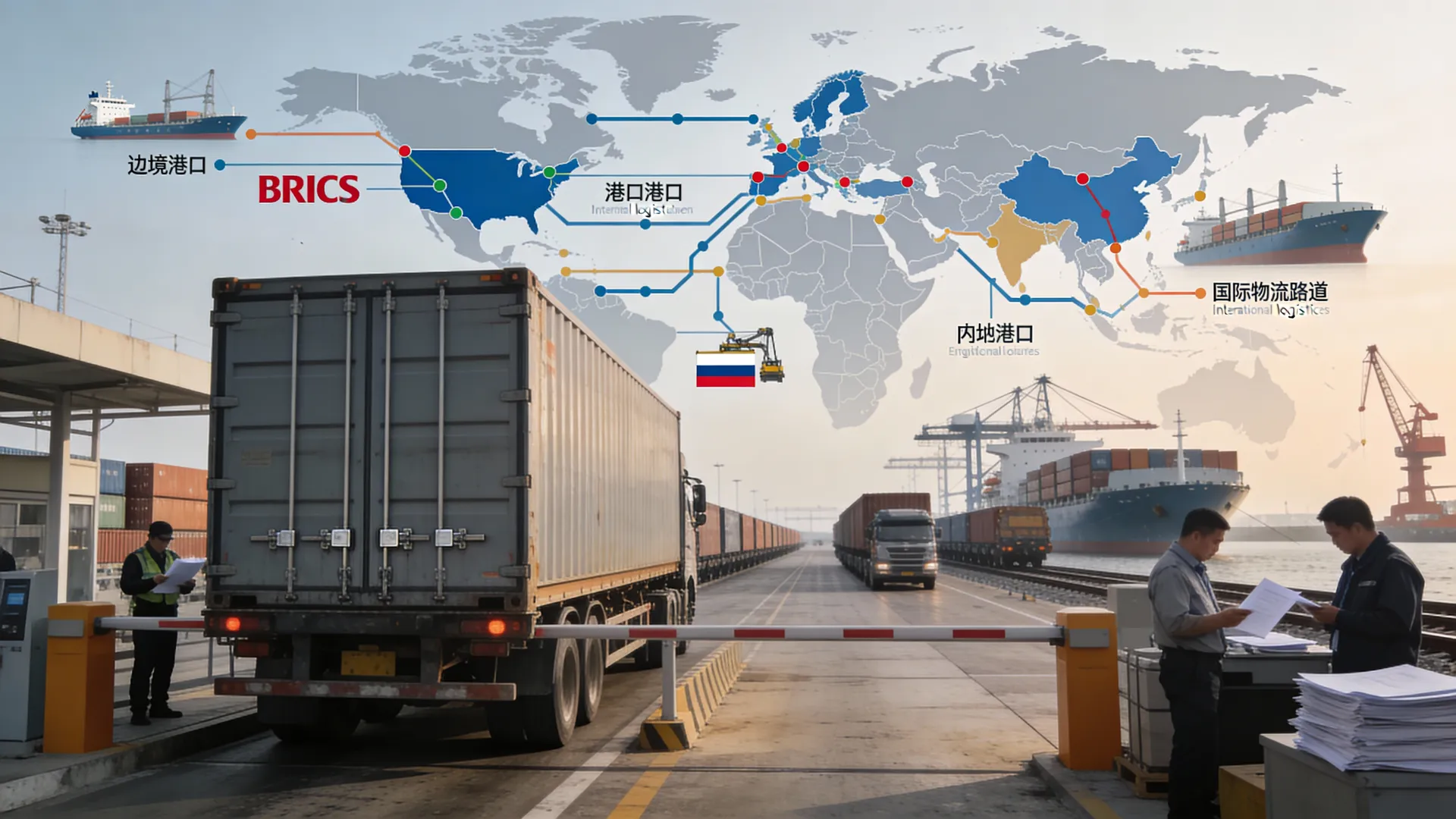
For cargo transportation, this means a likely increase in flows by sea to Chinese ports and increased competition for container capacity during peak seasons of African exports. Zero duty often leads to an "accelerator effect": even at the same price, the importer makes a faster purchase decision because some of the uncertainty about the final cost disappears. The result is more forward contracts, higher requirements for the regularity of lines, the availability of refrigerated containers, and the capacity of departure ports in East and West Africa.
There is also a geopolitical layer that is important for the BRICS countries and partners. For China, this is a way to secure long—term access to resources and expand its presence in African markets through economic partnership, and for African exporters it is a chance to sell more products with higher added value if the green channel really reduces the costs of certification and inspections. At the same time, Russia and the EAEU are indirectly facing a new factor: some of the commodity flows (raw materials, metals, agricultural commodities) that compete in the global market may be more actively moving to China, and this will affect prices, timing, and availability of logistics services in related areas.
The scale of the current tie-up is particularly indicative: according to Chinese customs, China's trade with African countries reached $348.05 billion in 2025. This is the base on which the "zero tariff" can impose additional growth, primarily by expanding the range and increasing the share of "regular" supplies instead of single shipments.
The main practical conclusion for the participants of the foreign economic activity is that the window of opportunity does not open "for everyone at once", but for those who will prepare the chain of compliance and logistics faster — check the origin, documents, quality requirements, packaging and labeling, as well as secure the capacities of carriers and terminals in advance for the second half of 2026.