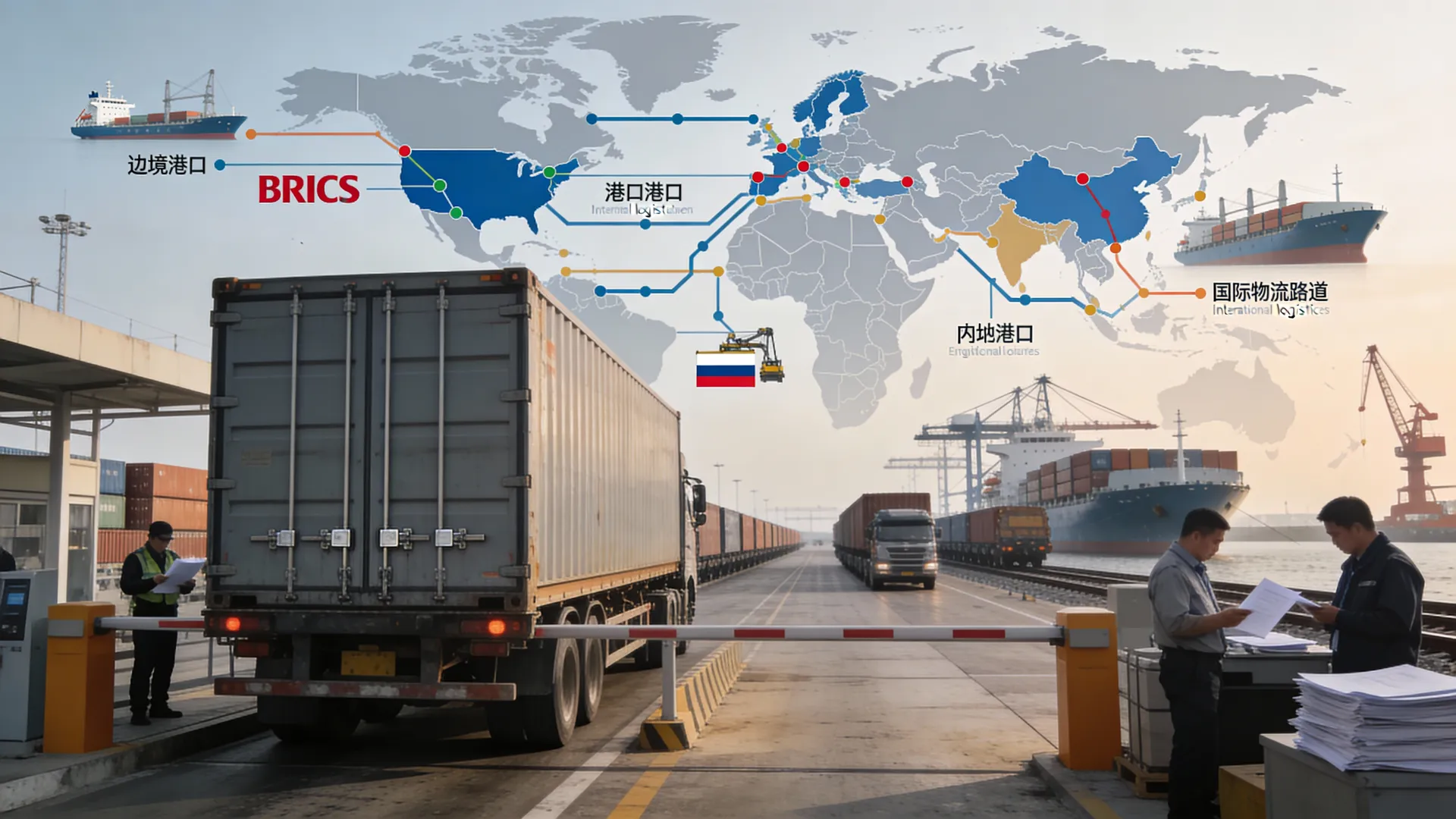
The key point of the statement is not a "loud showcase" about the new currency, but a more mundane and necessary thing for foreign economic activity: a set of tools that make settlements between companies more resistant to external restrictions and easier to operate. In the wording of the Russian side, we are talking about several "layers" of infrastructure at once.:
- cross-border payments (so that money arrives quickly and predictably),
- settlement and depository circuit (accounting/clearing/support of financial obligations and instruments),
- reinsurance infrastructure (to cover risks without dependence on foreign markets),
- plus, the development of a New investment platform and the BRICS Grain Exchange as applied "economic add-ons."
Why is this important specifically for logistics and import/export, and not just for financiers? Because in international trade, money is part of the supply chain. If the calculation "stalls", all nodes suffer: the supplier slows down the shipment, banks/ agents lay down additional checks, compliance costs increase, and logistics turns into storage "before payment". Therefore, creating our own BRICS payment circuit is an attempt to reduce the most painful risk of recent years: the unpredictability of payments in foreign trade transactions.
What can really change for Russian participants in foreign economic activity (and where you should not be under any illusions):
- Stability of calculations in national currencies. If there are more coordinated "rails" (banking/technological/regulatory) within the block, calculations in national currencies will become less manual and less dependent on intermediaries. This is especially important for regular imports with short delivery windows and tight production schedules.
- Reducing transaction losses. Today, businesses often pay a "complexity tax": intermediary fees, unnecessary conversions, reservations, and longer enrollment periods. The BRICS infrastructure is aimed precisely at reducing these frictions, but the effect will not be instantaneous and heterogeneous across countries.
- Insurance and reinsurance. This is critical for transportation: the more difficult it is to insure risks, the more expensive the logistics and the higher the requirements for prepayments/guarantees. The reinsurance circuit within the block has the potential to give the market more capacity and predictability, especially along routes and industries where external insurers are cautious.
- Agricultural track: grain exchange. The stakes are higher here: exchange mechanisms increase price transparency and contract standardization. For exporters, this may mean more "understandable" benchmarks and price fixing tools, and for logistics, more predictable export programs.
At the same time, it is important to be honest about the restrictions. Even with political will, such systems rely on KYC/AML standards, compatibility of national payment circuits, legal regimes, and business trust. Therefore, in the near future, the most likely scenario is a "phased build—up" - first pilots and individual corridors (by country/industry), then expansion.
The main practical conclusion for importers and exporters is that they should prepare not for a "revolution", but for the emergence of new working options. Those who are already building settlement chains with backup payment routes, flexible price/payment currencies and clear conditions for the terms of crediting will benefit, especially on supplies.