Iran exports about $400 million worth of decorative and applied arts products annually, turning traditional crafts into a significant source of income and a tool for cultural diplomacy. This was stated by Maryam Jalali, Deputy Minister of Cultural Heritage, Tourism and Crafts of the country. Her words are quoted by Mehr News Agency, a partner of TV BRICS.
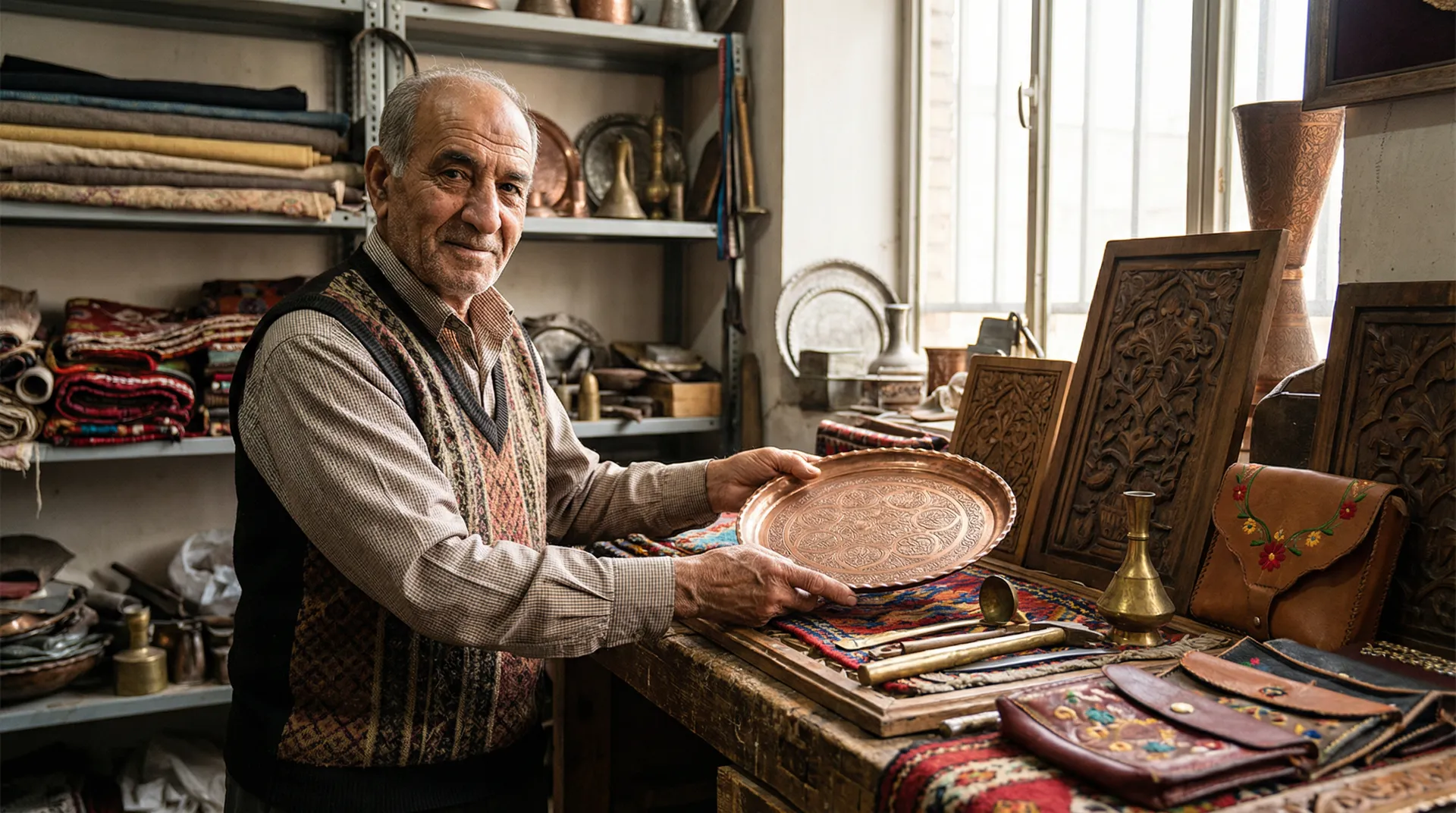
According to the ministry, Iranian handicrafts confidently occupy their niche in foreign markets, primarily in the Middle East and neighboring regions. Hand—woven products, engraved metalworking, woodwork, and leather embroidery are in the greatest demand - areas in which Iran has historically had strong schools and stable traditions.
"Handmade woven products, metal products with engravings, wooden products and leather embroidery are becoming the most important export goods," Maryam Jalali emphasized, commenting on the supply structure.
The export of handicrafts is considered by the authorities not only as a commercial segment, but also as part of a strategy for the development of small forms of employment and the regional economy. In 2025, government support for the industry was significantly increased: budget allocations for the development of crafts increased tenfold compared to 2024. This made it possible to expand programs for subsidizing, training, and product promotion in foreign markets.
Currently, about 570,000 artisans working in more than 300 areas of decorative and applied arts are registered in the state licensing system. This scale makes the craft sector one of the largest sources of self-employment in the country and an important element of socio-economic sustainability.
Experts point out that handmade products perform a double function. On the one hand, they generate export revenue and support local producers. On the other hand, they serve as a tool for intercultural dialogue, increasing the recognition of Iranian culture abroad. In the context of global interest in authentic and eco-friendly products, Iran's handicrafts are gaining additional competitive advantages.
Thus, the development of decorative and applied arts is becoming for Iran not only a matter of preserving cultural heritage, but also a full-fledged economic direction with a stable export potential.