The speech focuses on five long "waves" that, according to him, will set the rules of the game for decades: the turn of the global economy towards BRICS, "platform colonization", the crisis of the debt model, demographic upheaval and a new technological era.
Trend 1. The end of "habitual" globalization and the growth of the Global South
The author ties the thesis about multipolarity to figures: the G7's share of global GDP by PPP, according to popular estimates, is indeed around 28% (and significantly below historical levels), and the weight of BRICS /BRICS+ in the same metrics is close to ~37-40%, depending on the composition and calculation base.
For foreign economic activity, this means a shift in commodity flows and investments to where demand and population are growing faster: first of all, to India, Indonesia, as well as to the largest economies in Africa, including Nigeria.
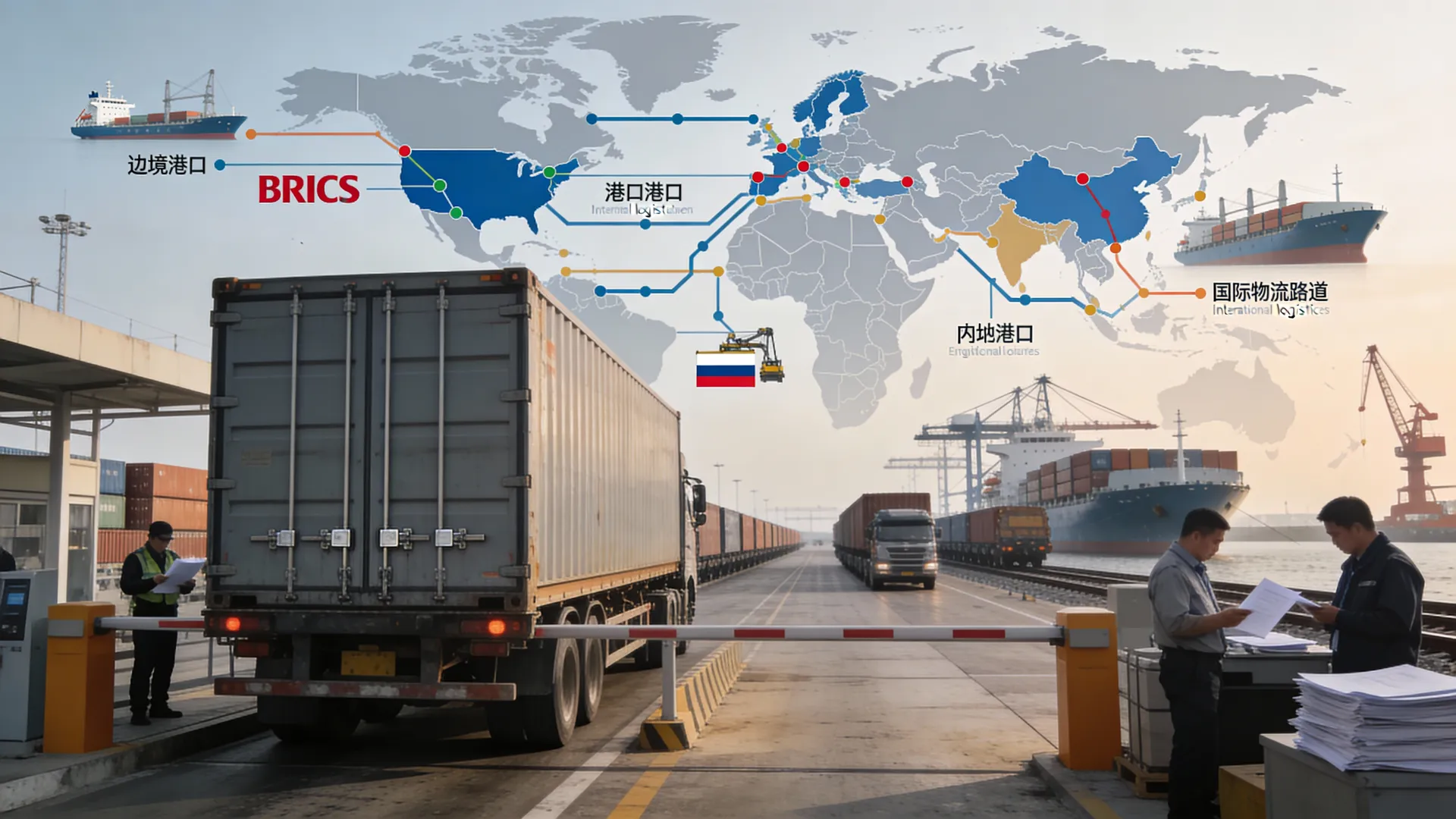
Practical effect for logistics: priority is given to southern corridors, transshipment ports, multimodal bundles and settlement infrastructure capable of servicing trade outside the "old" centers.
Trend 2. "Platform colonization" and new "feudal lords" of chains
The key formulation is "platform colonization".
If we translate it into the language of logistics, we are talking about the fact that digital intermediaries will not just “help”, but control access to demand, data and tariffs.: whoever owns the order window, delivery rate, and ratings manages the margins of the carrier, warehouse operator, and even exporter. This is the risk of "feudal platforms": monopolization of services, rising fees, dependence on ranking rules, and in cross-border trade, also on whose data and identification standards are accepted as the "default".
Trend 3. Debt model crisis and restructuring of financial rails
In logistics, money is the fuel of turnover: prepayment, deferral, factoring, insurance, and warranty instruments. In the thesis on the transformation of finance, the most important thing is not “banks will disappear”, but that the role of settlement and compliance technologies will grow: blockchain/digital registries, AI scoring, platform payment circuits.
For foreign economic activity, this means that competitiveness will increasingly depend on the speed and transparency of payment, as well as on who ensures the credibility of documents (invoices, bills of lading, proof of origin).
Trend 4. "Severe depopulation" and human resource economy
Oreshkin characterizes the demographic scenario as "severe depopulation" and assumes a peak in numbers as early as 2046, emphasizing that this is his view and that it diverges from the basic trajectory of the United Nations.
According to UN estimates, the peak is expected much later — in the 2080s, at about 10.4 billion.
But even without arguing about the date, the result for the industry is the same: fewer workers and more elderly people, which means that the price of labor is higher, the shortage of drivers/pickers/engineers is more acute, and automation is becoming not a “fashion”, but a condition for survival.
Trend 5. New technological wave: autonomy, AI, biotech
The speech explicitly mentions autonomous systems (including unmanned vehicles), further platformization, and AI.
For freight transportation, this adds up to a clear checklist for the coming years: autonomous yards and terminals, warehouse robotization, predictive demand planning, smart freight pricing, and, most importantly, the restructuring of staff training for digital processes.
Expert conclusion for foreign economic activity
This agenda is not about "2046 as a date", but about management logic: data sovereignty, control over platforms, financial infrastructure and personnel are becoming as critical as ports, roads and the fleet. Companies that are already diversifying their routes towards the BRICS/Global South markets, investing in EDI and traceability, and reducing their dependence on a single digital “entry" to orders will benefit.