BRICS domestic trade is accelerating faster than global foreign trade as a whole is growing, according to Russian Deputy Foreign Minister Sergei Ryabkov. According to him, the comparison in favor of "intra-bloc" ties is noticeable both in terms of global dynamics and in terms of trade between the BRICS countries and other partners.
"According to statistics, the growth of trade between the BRICS countries significantly exceeds both the global growth rate of foreign trade and the growth rate of trade of all BRICS member countries with other partners," the Deputy minister noted.
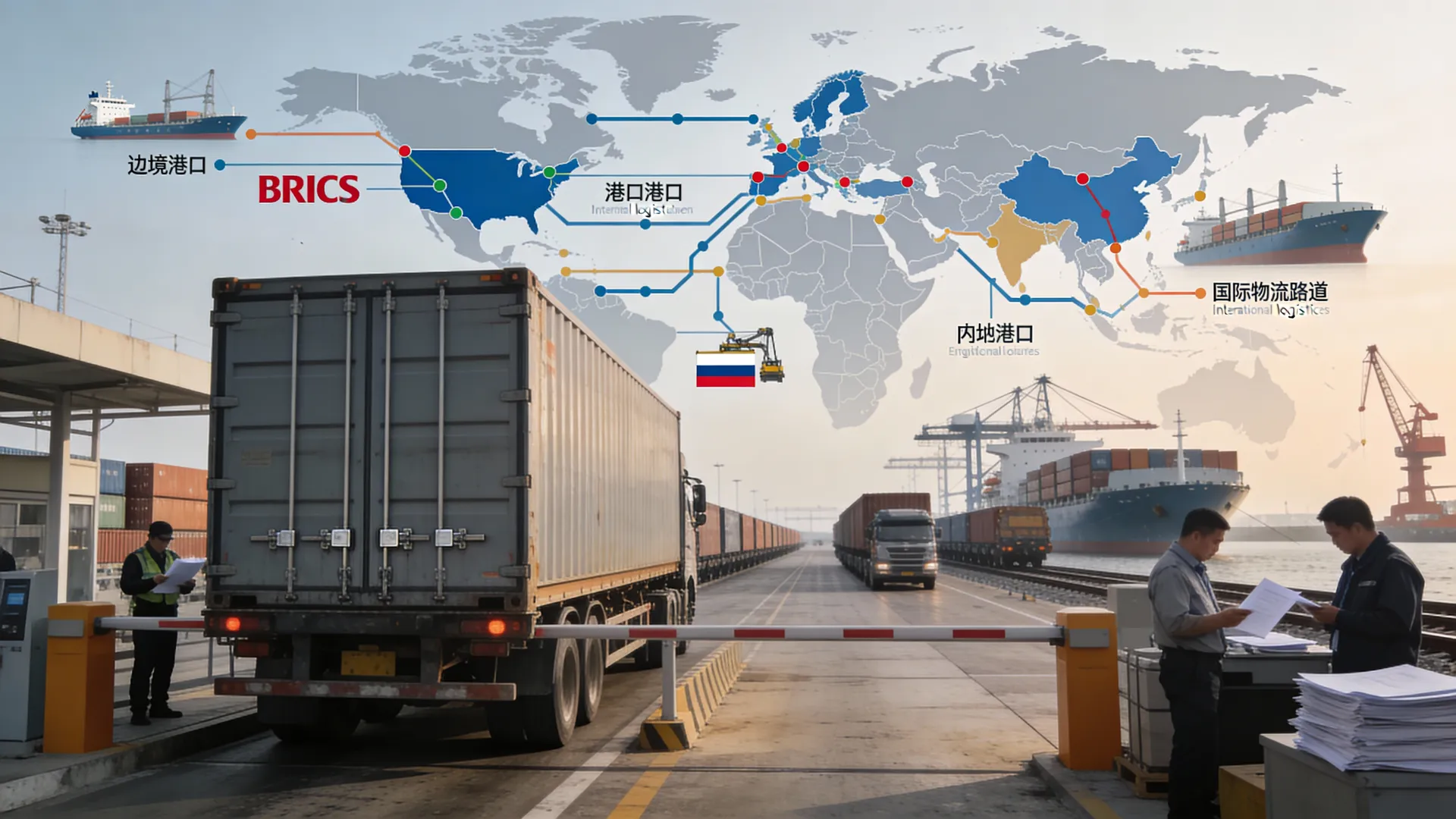
This is more important for business and logistics than it seems at first glance. Growth "within the club" usually means a shift from sporadic transactions to more stable supply chains: routes are consolidated, the need for regular services is growing, rather than one-time "shots" for freight. The more such chains there are, the higher the demand for predictable infrastructure — ports, terminals, railway hubs, container fleets, warehouse handling and insurance stocks in key areas.
Ryabkov emphasizes that BRICS is not positioned as a universal solution to problems, but it has a practical effect.:
"this is just an indicator that BRICS - without being some kind of "magic wand" - can really help solve problems."
What is behind this "help" in the applied sense for foreign economic activity:
- Restructuring of trade flows. With the growth of mutual trade, the share of goods that go "out of habit" and according to pre-agreed slots increases, which means that carriers get the opportunity to plan shoulders and reduce idle runs.
- The financial side of transactions. The more mutual trade there is, the higher the demand for convenient settlement mechanisms and lower transaction costs (fees, deadlines, compliance). This directly affects the capital turnover rate of importers and exporters.
- Standardization of requirements. Steady growth within the association almost inevitably leads to a convergence of approaches to documentation, certification, and digital data exchange — otherwise, scaling up runs into "friction" at the boundary between procedures.
Another marker is the political willingness to continue integration.:
"This potential needs to be increased, and there is a political will to do so," Ryabkov said.
For companies working with BRICS destinations, the conclusion is pragmatic: if domestic trade grows faster than global trade, those who secure logistics capacities in advance, build stable partners along the chain, and keep documents "perfectly clean" benefit. In such an environment, competition is shifting from one-time price dumping to quality of service.: stable deadlines, transparent calculations, and manageability of risks.