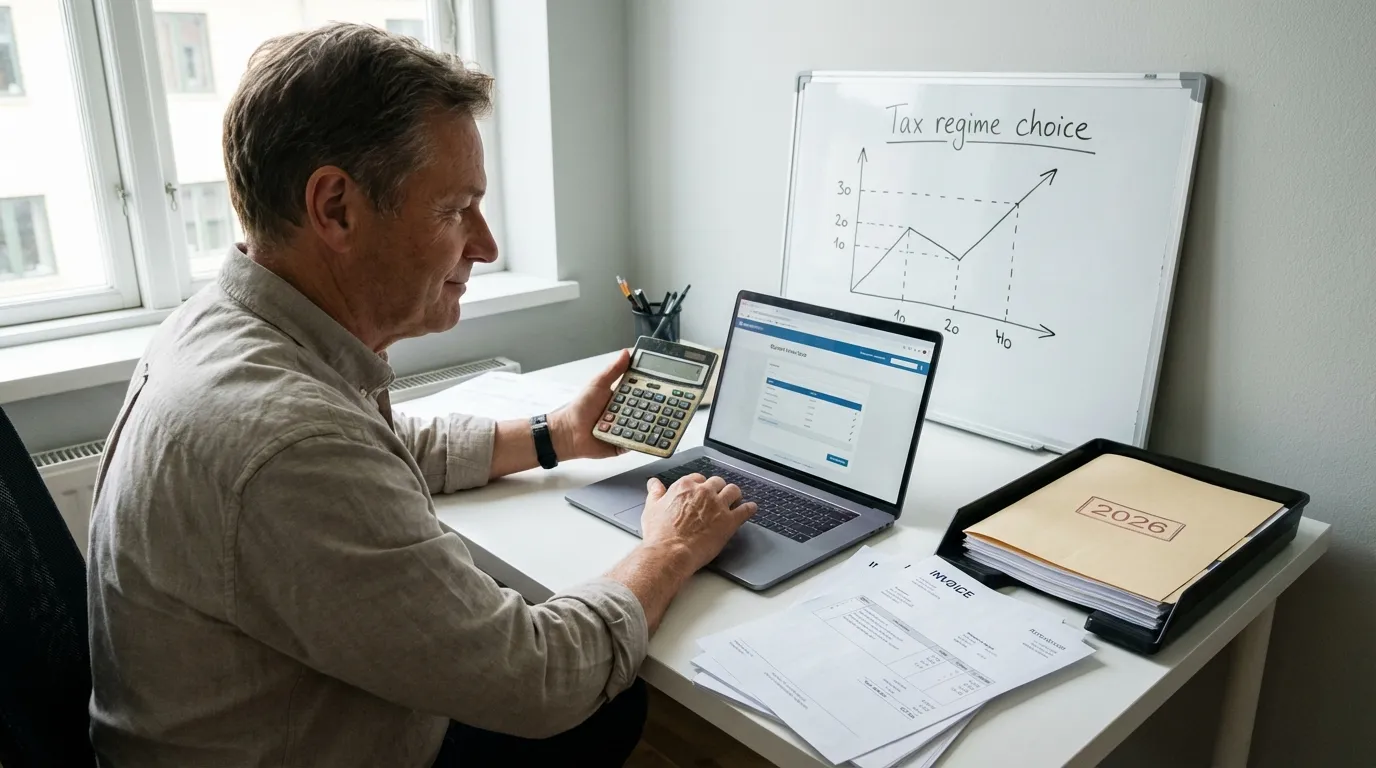
Russian President Vladimir Putin has instructed to fix a transition period in 2026 in legislation so that small enterprises, including microenterprises, can choose the optimal tax regime. The order was published in the list of instructions following the meeting with members of the Government.
"To ensure that amendments are made to the legislation of the Russian Federation providing for the establishment of a transition period in 2026 in order for small enterprises, including microenterprises, to choose the optimal taxation regime."
The instruction also reflects the task of enabling small businesses to generate and submit tax reports in a simplified manner.
For SMEs, this is a direct management signal: the government expects a reconfiguration of the tax architecture and sets aside time for adaptation. In practice, the transition period usually means a window for choosing a mode without sharp breaks in accounting processes, with increased methodological explanations and the setting up of digital reporting services. For companies with seasonal revenue, a wide range of products, and unstable margins, this reduces the risk of errors during regime changes, helps to recalculate the economy in advance, collect documents, and update accounting policies.
In connection with foreign economic activity and logistics, the assignment is important for indirect effects. A significant proportion of small businesses operate as importers of niche goods, sellers of marketplaces, freight forwarders, owners of small warehouses, and last-mile service companies. Tax settings affect prices, payment schedule, working capital, and replenishment rate. When a clear transition contour appears, the business gets the opportunity to build a chain of "purchase — delivery — warehouse — sale" in advance for a new financial cycle, without gaps in the payment of freight, 3PL services and customs duties.
The background for the order is formed by changes in tax parameters, which were previously publicly reported, including lowering the revenue threshold for VAT exemption for small businesses in 2026-2028. In this logic, the transition period becomes a tool for managing mode selection and simplifying reporting so that companies do not go into chaotic decisions in the middle of the year.
The closest practical conclusion for SMEs is that already in the first half of 2026, it is worth calculating the tax burden according to scenarios, preparing a set of data for reporting, checking integration with EDI and bank statements, and setting up primary control. This reduces the likelihood of blockages due to errors in reporting and makes the transition to the selected mode manageable.