China is preparing a significant simplification for cross-border trading of marketplaces and sellers who work with refunds. The General Administration of Customs (GAC) has announced that from April 1, 2026, return shipments of cross-border e-commerce retail exports will no longer be required to return to the customs office through which the original export was processed. This solution removes one of the most expensive "bindings" of return logistics, when it is physically more convenient to accept goods in one place, but legally it is necessary to drive them to another.
The wording of the decision is very clear:
“Starting from April 1, 2026, goods exported from abroad as part of cross-border e-commerce will no longer be subject to return to the customs administration through which they were exported.”
And a practical mechanism is immediately given.:
“Instead, companies can choose any customs port in the country to carry out return procedures.” — the message says.
The policy is based on a pilot that the GAC launched at the end of 2024. The model was tested at 20 customs offices, including the largest hubs and domestic regions. By the end of the year, the authorities announced that the conditions for scaling had been formed and the model could be introduced across the country.
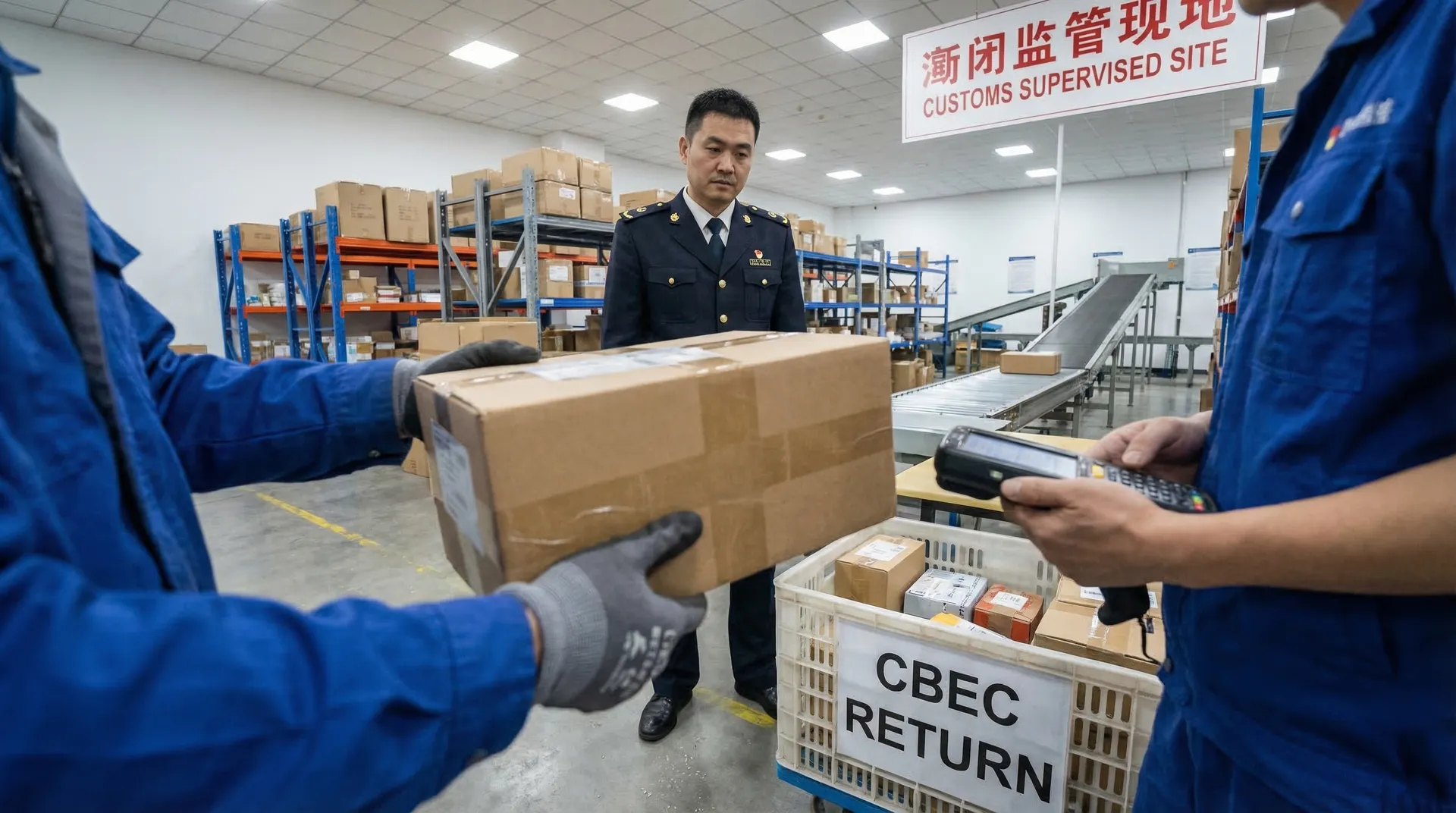
It is important that relaxation does not mean "going anywhere without rules." The GAC clarified that the model applies only to cross-border e-commerce retail exports, and returns must reach customs-controlled sites that have the right to work with such businesses. This means that the operator needs to choose the right infrastructure in advance: a bonded warehouse, a marketplace site, or an authorized processing center where accounting and control requirements are met.
For sellers and 3PL, the effect consists of three parts. The first is speed: fewer flights between customs districts, less waiting for a "window" at a specific customs office. The second is the cost: less transportation costs for return, less storage costs while waiting for clearance. The third is the manageability of the customer service: Refunds are sorted faster, and the product is returned to circulation faster.
The GAC directly linked the new model to a set of measures to support e-commerce exports and noted that the policy would work in conjunction with tax incentives for refunds published in February by other agencies. As a result, the business gets a more predictable reverse logistics scenario and fewer losses on "long" returns.
For companies that sell to China or through Chinese channels, this is an additional indicator: the return infrastructure is becoming part of the export strategy. At the process level, this means the need to prescribe the return route in advance in the contract, select authorized sites, and maintain the correct order-package-customs status relationship in the IT circuit so that the return takes place non-stop.