Wildberries has become a resident of the Russian Arctic and is building a sorting center in Arkhangelsk.

Obtaining AZRF residency for a marketplace is not an "honorary badge", but an applied tool to accelerate northern logistics. The Arctic zone regime was conceived as a package of tax and administrative preferences so that investors could get through land, networks, permits faster and could launch new facilities cheaper. There are benefits and simplified procedures for residents, which are complemented by local support measures in different regions.
The RVB project in the Arkhangelsk region — a sorting center of about 50 thousand square meters — in practice means moving part of the "bottleneck" from the main warehouses closer to the consumer in the North. Arkhangelsk is the gateway to the Arctic and an important transportation hub: the maritime infrastructure, highways, and regional shipping routes converge here. The local sorting contour allows you to:
- reduce the shoulder of the last mile and stabilize the timing under seasonal conditions;
- redistribute flows to settlements in the Arctic zone faster;
- It is more accurate to manage peak loads (winter/holidays) when delays hit customer loyalty.
It is also important that we are not talking about a single facility, but about building up a network: RVB is already leading projects of logistics centers in the Far East and eastern regions and is planning new sites in a number of regions. This fits into the strategy of "rolling out" infrastructure to the periphery, where logistics are more expensive and service is traditionally weaker.
The key focus of the regional authorities is the proven investment attractiveness of the Russian Arctic regime and the willingness to support major federal projects.
"The AZRF residency regime has proven its effectiveness over the past five years — investors choose the Arkhangelsk Region to implement their projects. The Regional Development Agency conducts systematic work with large federal companies, attracting them to our region. RVB has already selected a plot of land in Arkhangelsk for the construction of a logistics center," said Ekaterina Stashkevich, General Director of the Arkhangelsk Regional Development Agency.
For residents and small businesses in the North, the effect is most often expressed most simply in terms of terms and assortment. When delivery becomes predictable, entrepreneurs boldly expand their product line, and customers are more likely to order goods that previously "did not arrive" on time or were too expensive due to logistical surcharges. It is on this socio-economic result that the development institute, which accompanies the AZRF regime, is betting.:
"RVB, in partnership with KRDV, is implementing projects of logistics centers in the Amur Region, Primorsky and Trans-Baikal Territories, and plans to build warehouse complexes in the Republics of Sakha (Yakutia) and Buryatia, in the Sakhalin Region. The creation of a sorting center in Arkhangelsk will not only simplify logistics chains, but also improve the quality of life in the North. For residents of the Arkhangelsk Region, this means shorter waiting times for orders, and the opportunity to receive a wider range of goods as soon as possible," added Anastasia Zhuk, Director of the Department for Support of Investment Projects at the AZRF KRDV.
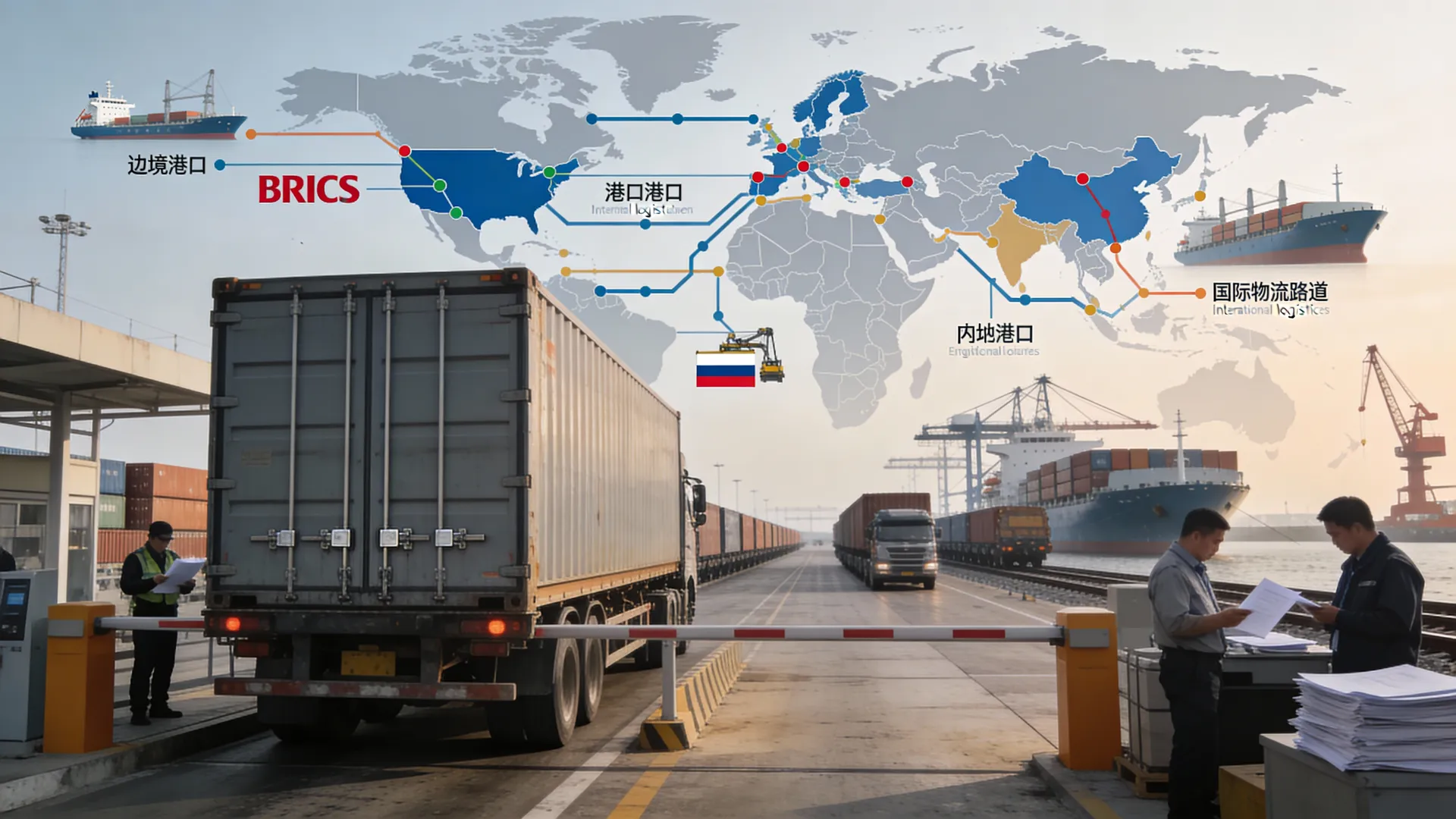
Now about the connection with foreign economic activity. Any large sorting hub in the North indirectly enhances the region's willingness to work with imported assortment: turnover is faster, the "logistical penalty" for shipping to remote areas is lower, and inventory forecasting is better. And for companies that build supply chains through northern ports and routes (including seasonal peak shipments), additional distribution capacity reduces the risk of overstocking and downtime on long-range shoulders. If, in the future, the infrastructure is "docked" with port capabilities and support modes, the entire chain benefits — from the supplier to the final buyer. At the same time, the basic value of AZRF residency — speeding up and reducing the cost of an investment project due to preferences — remains the main factor why such facilities appear in the Arctic regions.
The September 2025 agreement complements the picture: the RVB leadership and the region signed agreements on an investment project and launched the Platform for Growth entrepreneur support program in the Arkhangelsk Region. For local businesses, this means not only faster delivery, but also additional opportunities to promote regional manufacturers within the marketplace ecosystem.