Labeling has really "squeezed" the shadow market: it is estimated that the share of illegal trafficking in clothing and textiles in the Russian Federation has decreased from 38% to 12%, and in footwear from 22% to 6%. But the paradox of 2026 is that with the fall of classic counterfeiting, another channel has intensified — import without “traces”, when goods cross the border as a purchase for personal use, but in fact turn into a regular flow.
How shoes appear without an "Honest mark"
The scheme is based on the mechanics of cross-border e-commerce: the marketplace acts as an aggregator that collects individual orders and then consolidates them into large shipments. As market participants describe it, "ten thousand" identical orders can easily turn into a container shipment, which formally remains a set of individual purchases.
Then the "bypass economy" turns on: if the delivery is interpreted as personal use, it can leave the area of commercial procedures — without full payment of payments and without mandatory labeling as for goods being put into circulation.
Why does this affect foreign economic activity and logistics more than it seems
- Unfair competition at cost. For a legal importer of shoes, duties, VAT, labeling, certification, storage and refunds are included in the price. For the “personal stream", some of these costs may be blurred.
- The risk of counterfeiting is growing precisely in the “gray legal” channel. Poizon claimed that about 30% of well-known brand sneakers on online platforms could be fake, and half were sold cheaper than the original, usually by about 40%.
- Customs control is already responding. According to data related to the Federal Customs Service, counterfeit seizures at the border increased by almost 20% in 2024 (to 5.8 million units). This is an indirect indicator: the larger the flows, the more active the inspections, risk profiles, and supply chain analysis will be.
What is the government going to do
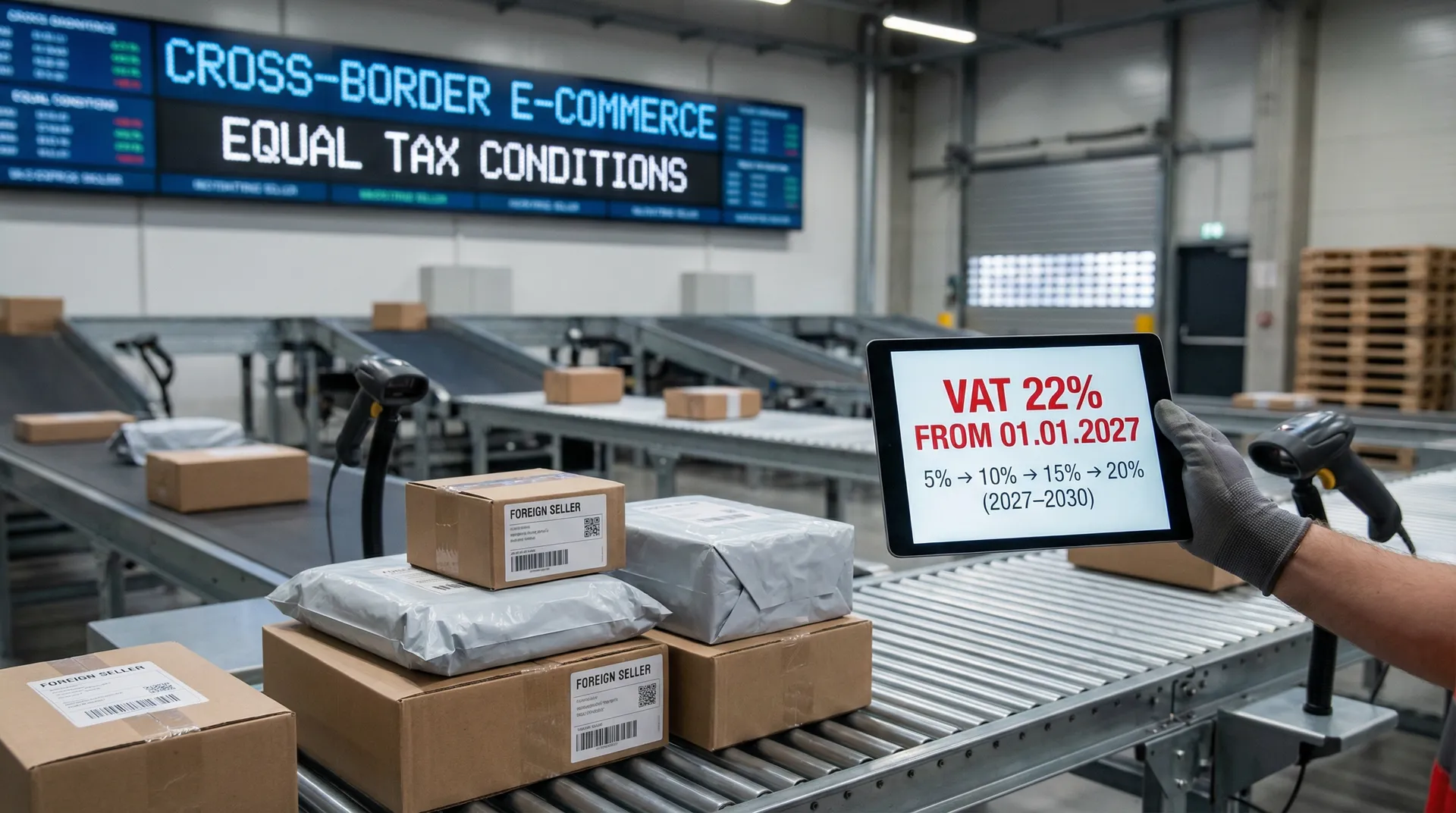
The financial and regulatory response is an attempt to "even out the fiscal burden": the introduction of a payment is being discussed, which will essentially resemble VAT on imports through marketplaces for large shipments of non—food products. The logic in public comments is to make the scheme economically unprofitable so that the price is equal to commercial imports.
A key quote reflecting the approach: "It probably makes sense to think about introducing some kind of payment. Most likely, it should be VAT."
What should a business do now
- Importers/brands: strengthen control of sales channels (card monitoring, price control as a risk marker, work with copyright holders and TROIS), prepare an evidence base for the origin and legality of shipments.
- To marketplace sellers: to put into the model the risk of changing the tax regime and tightening control of “personal” supplies; to build labeling and documents as for commercial turnover.
- 3PL and fulfillment: increase compliance procedures (verification of labeling status at acceptance, end-to-end traceability, segmentation of “personal/commercial” flows) so as not to become a point of concentration of claims.