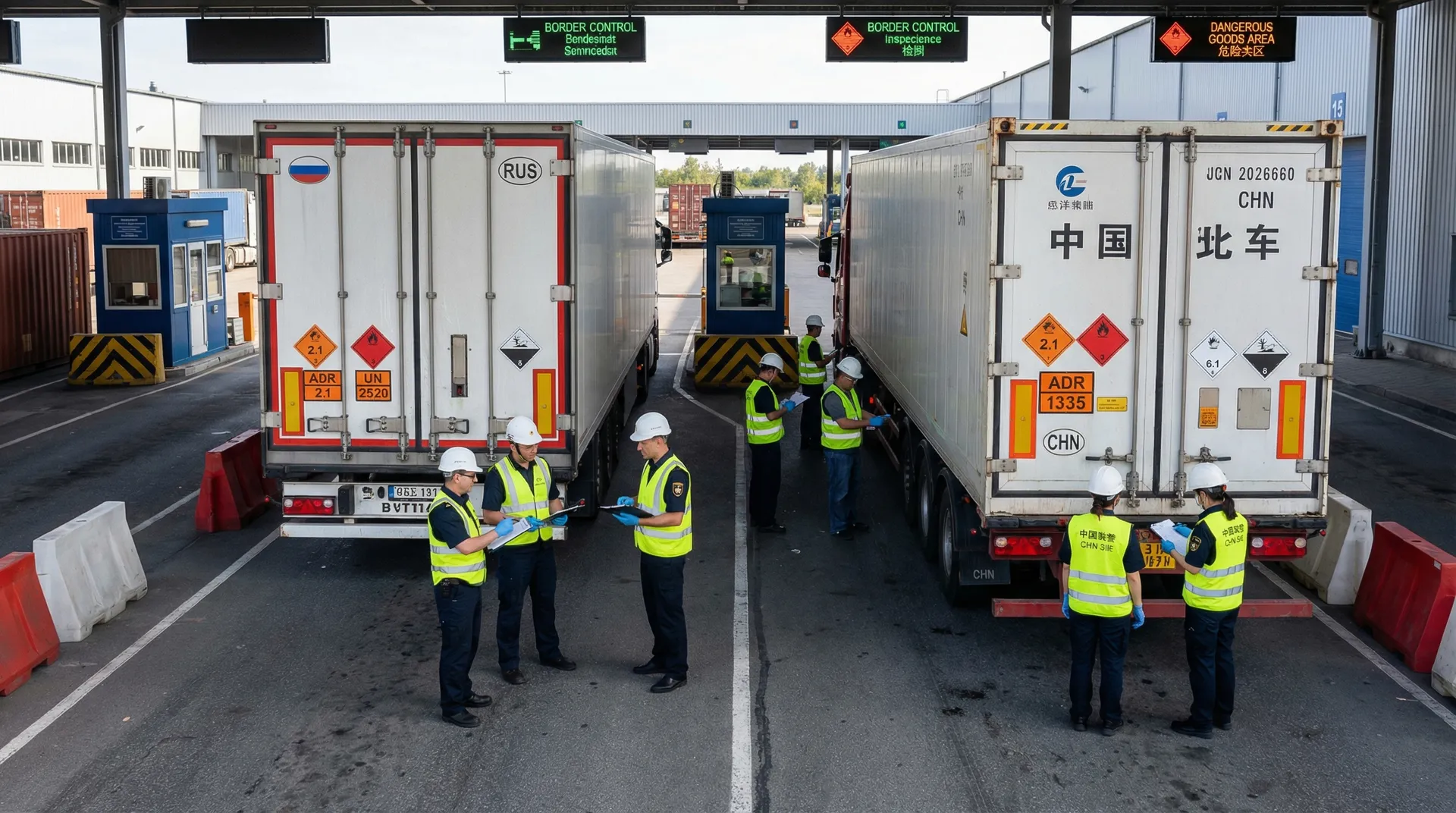
Russia and China have taken the transportation of dangerous goods by road to a new level. Amendments to the bilateral agreement on International Road transport of dangerous goods entered into force on October 16, 2025. This solution significantly expands practical opportunities for businesses operating in the Russian-Chinese sector with chemical products, petroleum products, batteries and equipment subject to special safety requirements.
The main change is a large—scale expansion of the nomenclature. Previously, only 22 items could be transported by road between the two countries, but now the list has grown to 154 items. For the market, this means wider access to the automotive channel where previously it was necessary to look for workarounds through other modes of transport or complex multimodal schemes.
The second important part of the reform concerns the very logic of updating the rules. Now the Russian-Chinese Subcommittee on Cooperation in the field of Transport will be able to adjust the list of dangerous goods. Previously, this required the signing of a separate international agreement. This is a particularly important shift for the logistics market: regulatory adjustment is becoming faster, which means that the list can be more quickly adjusted to changes in ADR, industrial demand and the actual structure of bilateral trade.
The news has practical significance for operators and cargo owners. Now it is important to re-check whether the required UN number is included in the current application, clarify the hazard class, packaging group, requirements for tolerances, labeling, transport equipment and documents on both sides of the border. Against the background of the growth of Russian-Chinese trade, this solution can add flexibility to the market and expand export and import opportunities for petrochemicals, industrial chemicals, battery products and related cargoes. The Russian Ministry of Transport explicitly stated that the changes “will expand the capabilities of Russian and Chinese consumers and exporters of petrochemical products and strengthen the Russian-Chinese strategic partnership.”