Tatarstan launches logocomplex for Russian Federation—China containers: betting on the Volga and multimodality

Tatarstan plans to fully launch its Logistics Complex in 2026. Deng Xiaoping in the Tukayevsky district. It is declared as a platform for container transportation between Russia and China, while in test mode the facility has already received the first trains from China in October 2024.
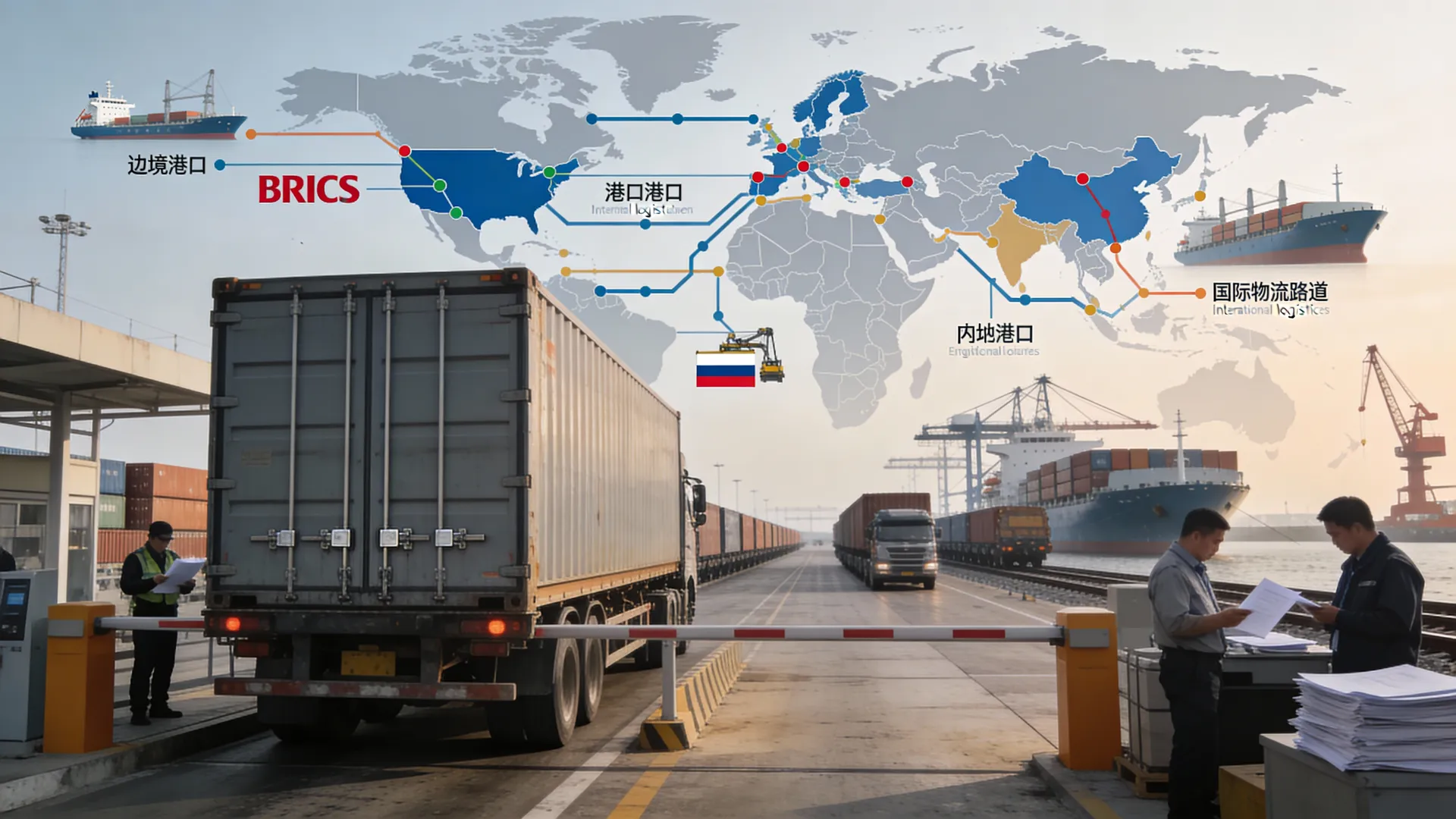
The news is important not because of the fact of "another terminal" itself, but because of the context: the region is systematically assembling a multimodal combination of "railway + trucking + inland waterways" in order to increase transshipment and diversify logistics for new foreign trade destinations.
Why this may become a real point of strength for foreign economic activity
- Containerization of domestic shoulders. The China—railway—Volga region—warehouse/production—railway/River link reduces dependence on overloaded nodes and allows for more flexible batch management: some of them are handled by container, some are "scaled down" and shipped by water or by road.
- The river is like a "cheap shoulder" for bulk shipments. Tatarstan focuses on inland waterways, which are particularly effective for grain, mineral and bulk cargoes. The region has already shown practice: in 2025, more than 244 thousand tons were handled at the Sviyazhsk Interregional Multimodal Logistics Center (SMMLC), and shipments continued to the ports of Kavkaz, Novorossiysk, Vysotsky, St. Petersburg and Kaliningrad according to the “river-sea” scheme.
- Infrastructural “stitching” of the two corridors. The SMMLC is located at the intersection of major transport routes and was conceived as a hub for the integration of water and land transport; a cargo port was opened there in 2024. This creates a hub effect: both export shipments and import containers can be "hooked up" into one circuit for processing/distribution.
What's next: container terminal and warehouse cluster
In the next two years, it is planned to launch a container terminal with up to 150 thousand containers on the basis of the SMMLC. TEU and develop a warehouse cluster. This is a key moment for business: a container terminal without a warehouse infrastructure is just a "transshipment point", and a terminal with a warehouse arm is already a tool for inventory management, cross-docking, bundling and deferred processing (including labeling and document preparation).
If the project is implemented according to the stated logic, Tatarstan can become one of the most “practical” internal nodes for foreign economic activity: containers from China + river logistics for bulk cargo + warehouse handling. For exporters, this is a cheaper chance to deliver large volumes to the river-sea ports, and for importers, it is faster to distribute container shipments along the Volga region and beyond, reducing the risks of disruptions on one route.