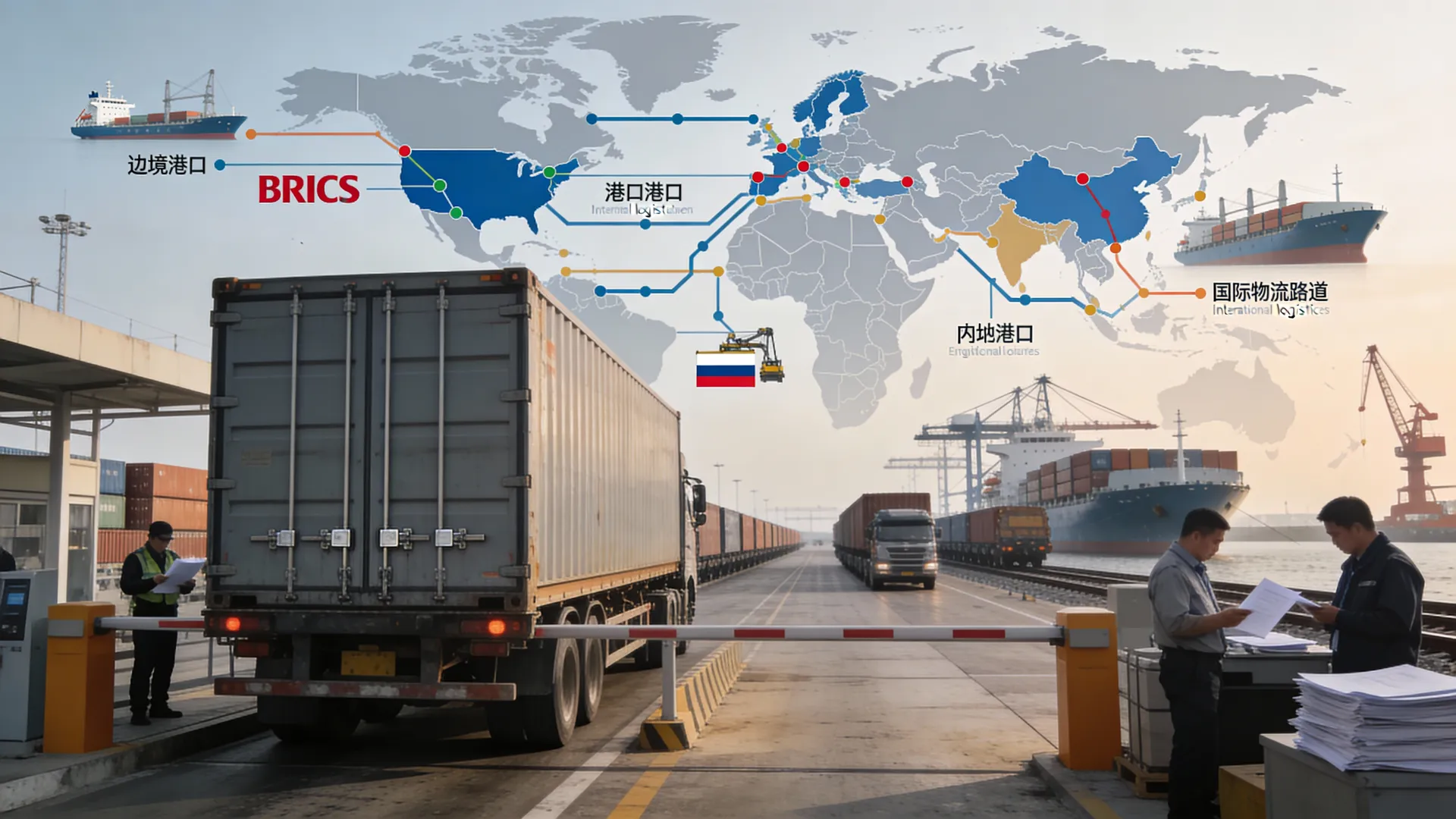
The first half of 2025 proved to be controversial for the logistics industry in Russia. According to the Federal Customs Service, exports decreased by 6.3%, while imports showed a slight increase of only 0.8%. The bulk of foreign trade still falls on the Asian direction, however, trade turnover with these countries decreased by 2.6%. Exports, including shipments to China, sank by more than 4%. Nevertheless, the market is no longer experiencing the same shock effect that it had in 2022: businesses have adapted and learned how to operate in new conditions.
After the rapid growth in the number of carriers in 2022 caused by the sanctions pressure, the market faced a serious correction. Many companies could not withstand the competition, problems with payments and currency fluctuations. According to experts, by the end of 2024, almost a third of the players ended the year with losses, and up to 20% left the market altogether. The situation with Azerbaijan has become an additional test: increased checks at the border have increased the transit time of goods from 2-3 to 10-14 days. As a result, some carriers have shifted to routes through Kazakhstan, although this has increased costs by 15-20%.
The labor market has also undergone changes. According to the data hh.ru The number of vacancies in the transport and logistics sectors decreased by a quarter, while the number of applicants increased by 50%. Now, not only young people are applying for jobs, but also experienced managers who are forced to accept mid-level positions. In addition, automation of management processes has led to a reduction in the number of senior positions and the consolidation of work teams.
On the other hand, in 2025, there will be a noticeable transition to real steps towards import substitution. According to Rosstat, the industrial production index rose to 101.4% in the first half of the year compared to last year's level. The reduction in the Central Bank's key rate has made loans more affordable, and many medium-sized companies have started investing in their own facilities. This promises prospects for the growth of exports to friendly countries, which means new challenges for logistics.
In general, we can say that the freight transportation market has gone through a stage of purification and stabilization. Prices have become more predictable, the number of weak players has decreased, and businesses have learned how to calculate risks. Despite the difficulties with certain areas and high competition, the forecasts for the second half of the year look cautiously positive. Traditionally, in the period from September to December, traffic volumes increase by 30-40%, and 2025, according to experts, will be no exception. At the same time, a sharp jump in tariffs is not expected: the likely increase will not exceed the inflation rate, which is facilitated by companies focusing on long-term contracts and reducing unstable carriers.
Thus, logistics in 2025 is no longer the chaotic market it was a few years ago, but a more stable and mature space. However, only those who know how to plan for the future, control costs and build flexible supply routes will be able to survive here.