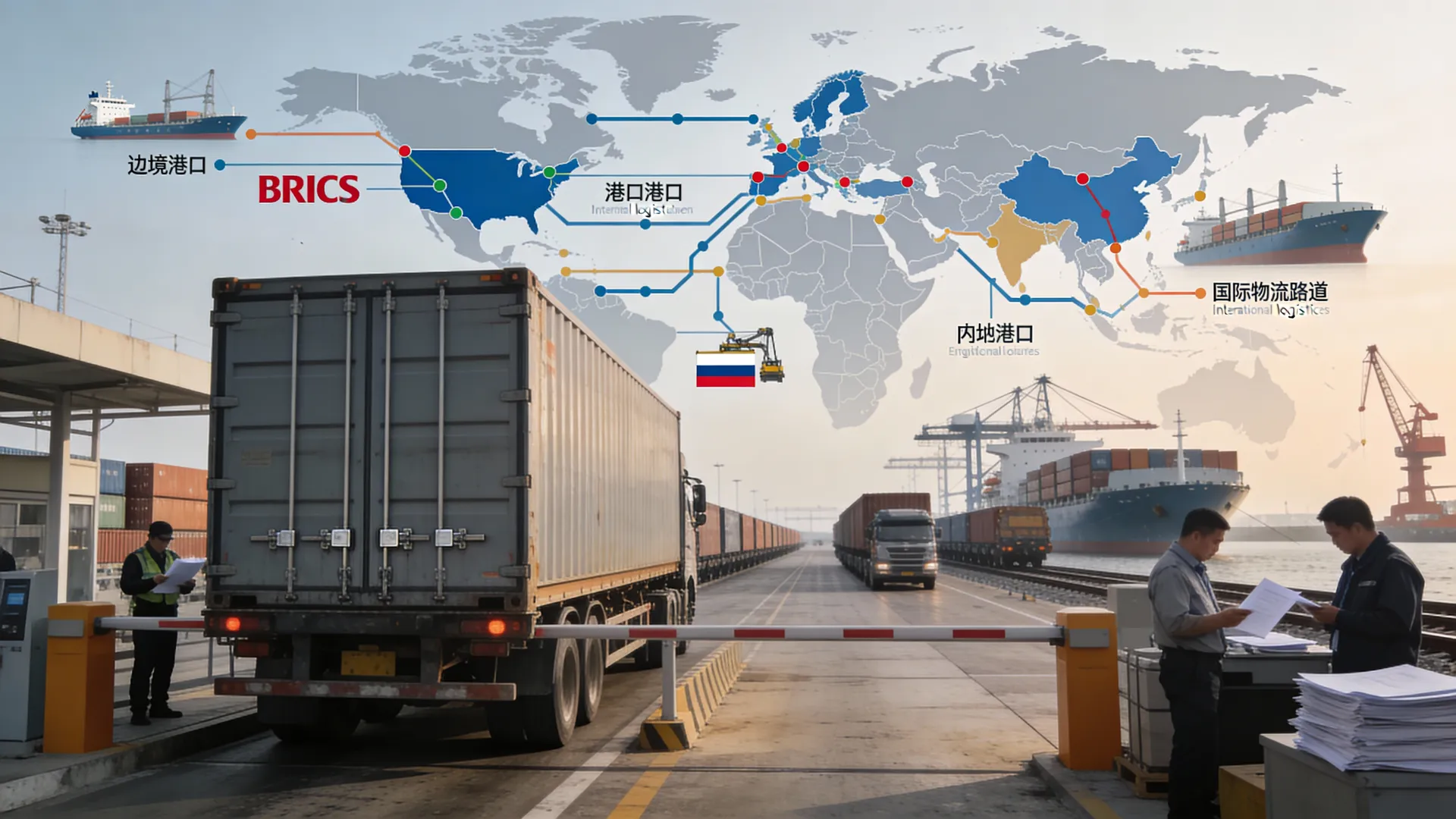
The Russian container market has dropped by 6% in seven months: the main reasons for the decline are named

This forecast was announced by Alexander Iodchin, First Deputy General Director for Strategy and Development of Delo Group, at the Eastern Economic Forum. The expert explained the current situation by a set of macroeconomic factors that affect imports and exports in different ways.
On the import side, the main reasons for the decline were the glut effect and the high key rate. In 2024, there was an abnormally high demand for imported goods, especially cars, which led to the formation of significant stocks. In 2025, the market entered a correction phase, when the need for new large supplies decreased. Expensive loans also continue to constrain consumer activity and the desire of businesses to increase inventories.
The export direction has faced other challenges. The strengthening of the national currency has made Russian goods less competitive in foreign markets. An additional negative factor was the general slowdown in the growth of the Chinese economy, which is one of Russia's largest trading partners. This led to a decrease in demand for a number of Russian export positions.
Despite the generally negative market conditions, Delo Group reports an increase in its operating performance. The Group managed to increase the volume of container transshipment at its ports by 1.6% during the reporting period, exceeding the milestone of 1 million TEU (twenty-foot equivalents). This allowed the company not only to withstand the general decline in the market, but also to increase its share in it.
Geographically, the dynamics turned out to be uneven. The company's terminals in the Northwestern and Azov-Black Sea basins showed growth of 3% and 8%, respectively. At the same time, the Far Eastern direction, which has been the engine of growth in recent years, has shown a decrease in volumes.
What does the industry have in store for the future? According to Alexander Iodchin's forecasts, the market will recover in 2026, but its pace remains questionable. The baseline scenario assumes that if volumes return to the 2024 figures, they will be slightly undersupplied. Thus, the industry is undergoing a correction stage after rapid growth, and its further trajectory will depend on the behavior of the key interest rate, the ruble exchange rate and the recovery in demand from key trading partners.