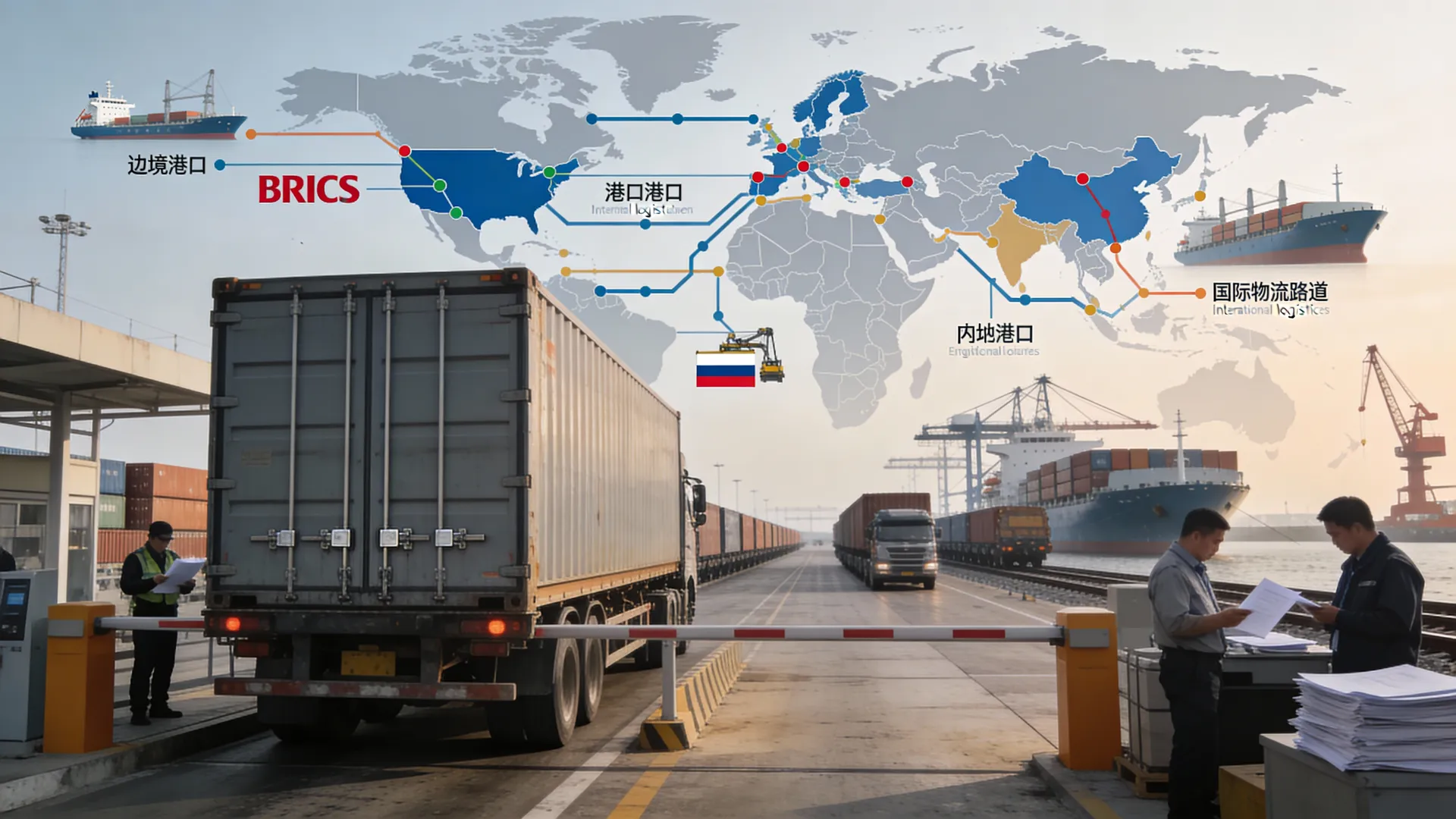
The topic of the "BRICS payment system that bypasses the dollar" came up again in the information field. The reason was a post in Binance Square, which claims that the BRICS countries allegedly "introduced" a new DCMS system in Brazil based on Pix and a decentralized blockchain network. For the foreign economic activity market, this formulation sounds like a ready—made solution: I pressed a button and the calculations went without SWIFT and USD. But this is where the risk zone begins: there is a long chain of approvals between the political slogan, the pilot technology and the really working interstate contour.
What can be considered sustainably validated? Firstly, central bank digital currencies (CBDCs) cross-linking and the creation of compatible rails for cross-border payments are indeed being discussed within the BRICS. Reuters, citing sources, wrote that the Reserve Bank of India proposed linking the CBDC of the BRICS countries to simplify trade and travel payments and put this on the agenda of the 2026 summit. At the same time, it is emphasized in the same logic: the countries have pilots, but full-fledged launches are not yet widespread.
Secondly, there is the BRICS Pay project shell, where DCMS is described as a decentralized financial messaging circuit that can work in parallel with existing channels and integrate different payment systems. This is an important detail for business: even if "messages" and payment routing become alternatives, there remain issues of final clearing, liquidity, FX conversion, limits, sanctions risks, compliance rules, and legal enforceability.
Why is the "Pix effect" so often mentioned in these discussions? Pix in Brazil is an example of how the government's instant payment infrastructure is able to scale cashless payments within the country. At the level of an idea, it is logical to try to transfer the principles of speed, standardization and accessibility to the cross-border layer. But the international circuit is more complicated: there are inevitably different currency control regimes, different approaches to KYC/AML, different requirements for data storage and localization, plus a political factor.
For foreign economic activity and logistics, the key issue is practical: what will change in the chain "contract — invoice — shipment — payment — closing documents"? If BRICS really comes to compatible rails (CBDC links or a messaging platform), there will be gains in three places.: money is transferred to the supplier faster, it is easier to manage currency volatility through settlements in national currencies, and there is less dependence on the narrow necks of correspondent banks. But before this stage, the market does not need a loud "launched" headline, but signs of maturity: pilots between specific countries, public access rules for banks and corporations, understandable SLA in terms of speed/cost, and, most importantly, a legal dispute resolution model.
Therefore, it is more correct to interpret the current burst of news as follows: BRICS accelerates work on alternative infrastructure and tests architectures where Pix-like mechanics can become part of the puzzle. But the thesis about the "full-fledged launch of DCMS" as presented so far looks premature and requires independent confirmation at the level of regulators and official structures.