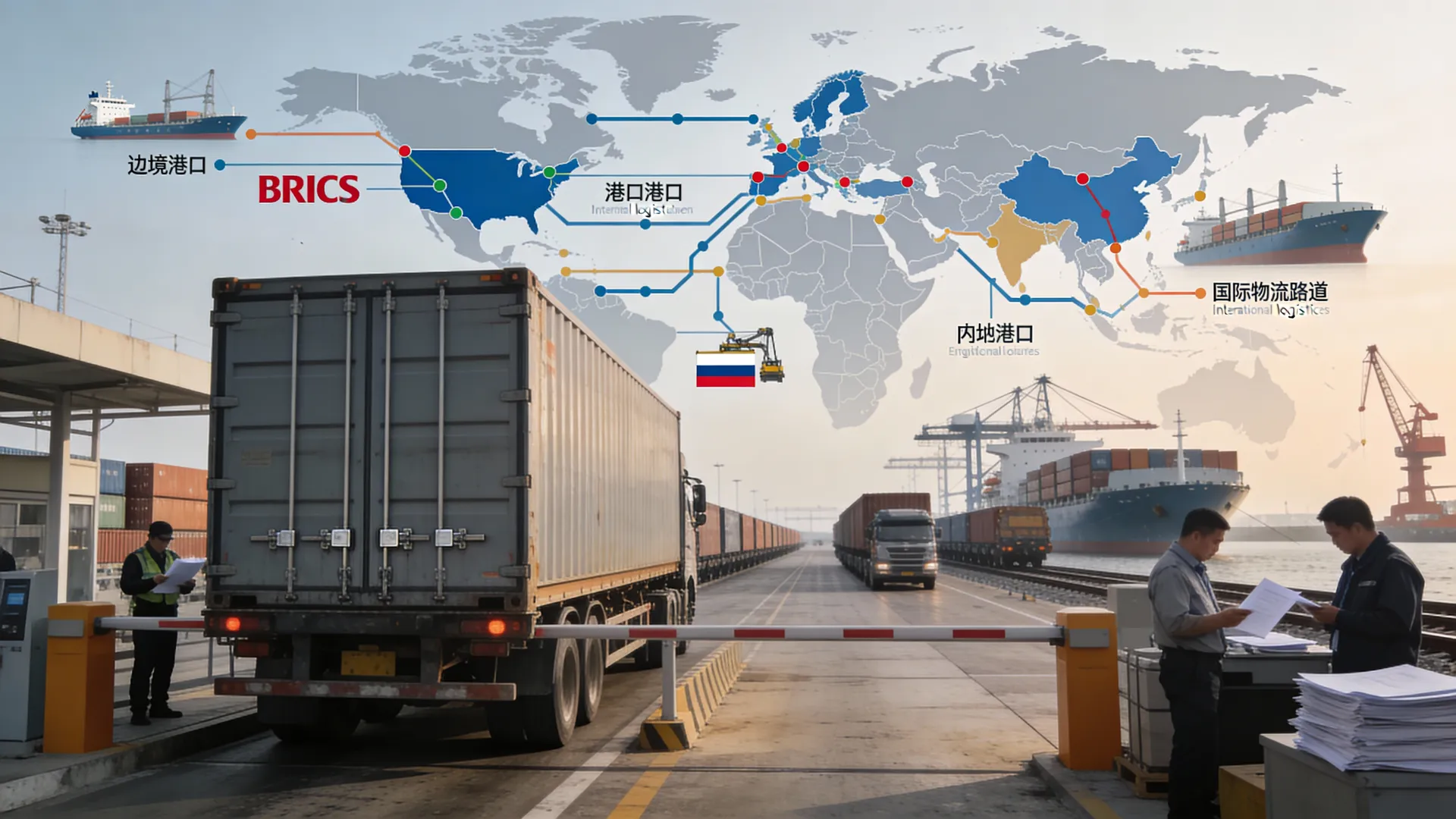
Starting in December 2025, the Russian customs system will move to a fundamentally new level of automation. The Ministry of Finance has approved a technical regulation that completely eliminates the human factor in the distribution of electronic declarations for goods between customs posts.
The new system, built on the basis of the Unified Automated Information System of Customs Authorities (EAEU TO), was informally called the "customs metro" for its ability to quickly and efficiently direct the flow of declarations along optimal routes. This decision radically changes the existing practice, where the decision to send a declaration often depended on the subjective assessment of the inspector.
The key advantage of the innovation is a significant acceleration of the initial stage of customs clearance. Participants in foreign economic activity will receive more predictable and clear deadlines for completing all necessary procedures. The system's algorithms operate on the principle of a multi-level "funnel", sequentially analyzing various criteria to determine the optimal place for processing each declaration.
The system provides reasonable exceptions to the general rule of automatic distribution. A number of categories of goods and declarations will be processed by specialized customs posts. This list includes paper declarations, transit documents, passenger declarations for personal goods, express cargoes, vehicles, military cargoes, international mail and ATA carnets for temporary import.
A separate register has been compiled of goods that, even in electronic form, must be declared to strictly defined customs authorities. This measure applies to products associated with increased risks or special regimes. The list includes military goods, products for re-export, goods for free customs zones in the Kaliningrad region, Vladivostok and the Arctic zone, cargoes for the Sakhalin-1 and Sakhalin-2 projects, goods for the Skolkovo innovation center, products of military-industrial cooperation, medical goods, multicomponent products, supplies for the supply of ships and aircraft, as well as cargo transported from or to Abkhazia and South Ossetia.
The automatic distribution algorithm takes into account many factors. Initially, the system checks whether the product belongs to the categories of exceptional competence. If there are no such signs, the mode of transport and the checkpoint are analyzed. Sea cargo is distributed between the CED in St. Petersburg, Novorossiysk and Vladivostok, depending on the region of import/export. Air cargo is sent through Moscow airports to the Sheremetyevo Customs Aviation Center.
If these criteria are not applicable, the system uses the principle of tax binding. For Russian companies, declarations are sent to the CED of their federal district, for foreign persons - to the CED of the customs administration in whose territory the goods are located.
The final stage is intelligent load balancing. The system analyzes the workload of inspectors, the technical condition and the working hours of the target post in real time. If the regulatory indicators are exceeded or failures occur, the EAEU automatically redirects the declaration to a pre-determined backup post, which completely eliminates downtime and ensures continuity of customs clearance.
This step is part of a large-scale digital transformation of the customs service and creates the foundation for the introduction of more complex automated procedures, including the automatic release of goods.