Choosing a factory in China is not a "price search", but a guided due diligence process. The main mistake of newbies is to pay in advance, relying on a beautiful catalog and quick promises. The right approach starts with legality: a business license, matching the company name with bank details, a clear legal address and work history. It is important to evaluate not only "how many years on the market", but also how the factory has lived these years: a stable assortment and recurring customers are usually more reliable than a constant change of products "on demand".
Next is the examination. The factory may be honest, but it is unsuitable in terms of competencies. Ask for relevant cases specifically for your category and your quality level. If the manager answers "yes" to everything, but they simply "nod" at the clarification of the TOR, this is a signal: the project can be subcontracted or they can start "learning" from your party. A good manufacturer asks questions about tolerances, materials, packaging, labeling, marketplace requirements, and how you will accept the product.
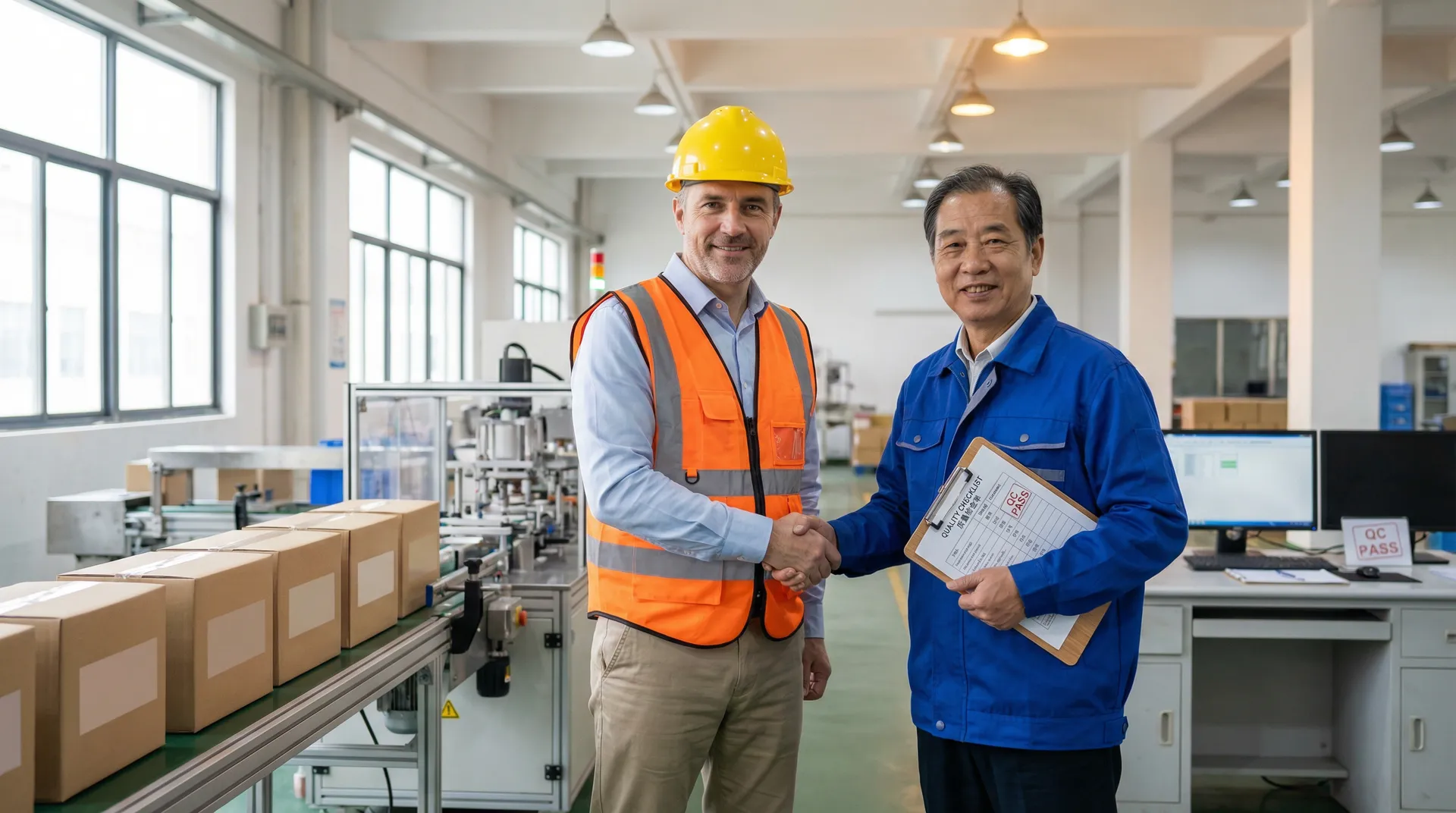
Quality must be "embedded" in the deal. A sample before the batch is launched and a clear QC protocol are required: what we check, to what extent, by what tolerances, who records the results and what happens during marriage. The practical minimum is raw material control, in—process control, and final inspection before shipment. And most importantly, there is a pre—prescribed procedure: recycling, discount, replacement, withholding part of the payment. Without this, the dispute turns into a correspondence with no result.
Communication and transparency are a separate layer of security. All parameters are recorded in the bilingual TOR: materials, fittings, colors, logos, sizes, type of packaging, labeling, terms, delivery conditions. Deadlines need to be coordinated with a reserve for peak seasons and possible delays in components. For payment, strive for a clear scheme: a detailed invoice, step-by-step payments, linking the final payment to the inspection results. Check the "hidden" costs separately: molds, tooling, molds, add-ons.packaging, repackaging to meet the requirements of the sites.
And finally, the human factor. In China, partnerships are often built over a long distance: it is beneficial for a factory to work stably if you are clear, disciplined and predictable. But sympathy is not a substitute for a contract, just as a contract is not a substitute for proper verification. The best result is a combination of legal purity + transparent technical specifications + quality control + financial conditions that motivate the supplier to comply with deadlines and specifications.