Russia accelerates logistical rapprochement with China: new bridges, crossings and corridors by 2027
The logistics map of the Far East and Siberia is actively changing: Russia is strengthening transport links with China, expanding and modernizing border infrastructure. Against the background of the rapid growth of cargo traffic in the Asian direction, the Russian authorities are launching new checkpoints and developing existing ones.
One of the latest innovations was the mixed crossing "Lesozavodsk" in Primorye, which started operating on October 10. It handles transport related to the construction of a gas pipeline across the Ussuri River. Although its role may be temporary, carriers will be able to use this communication channel with China until 2027.
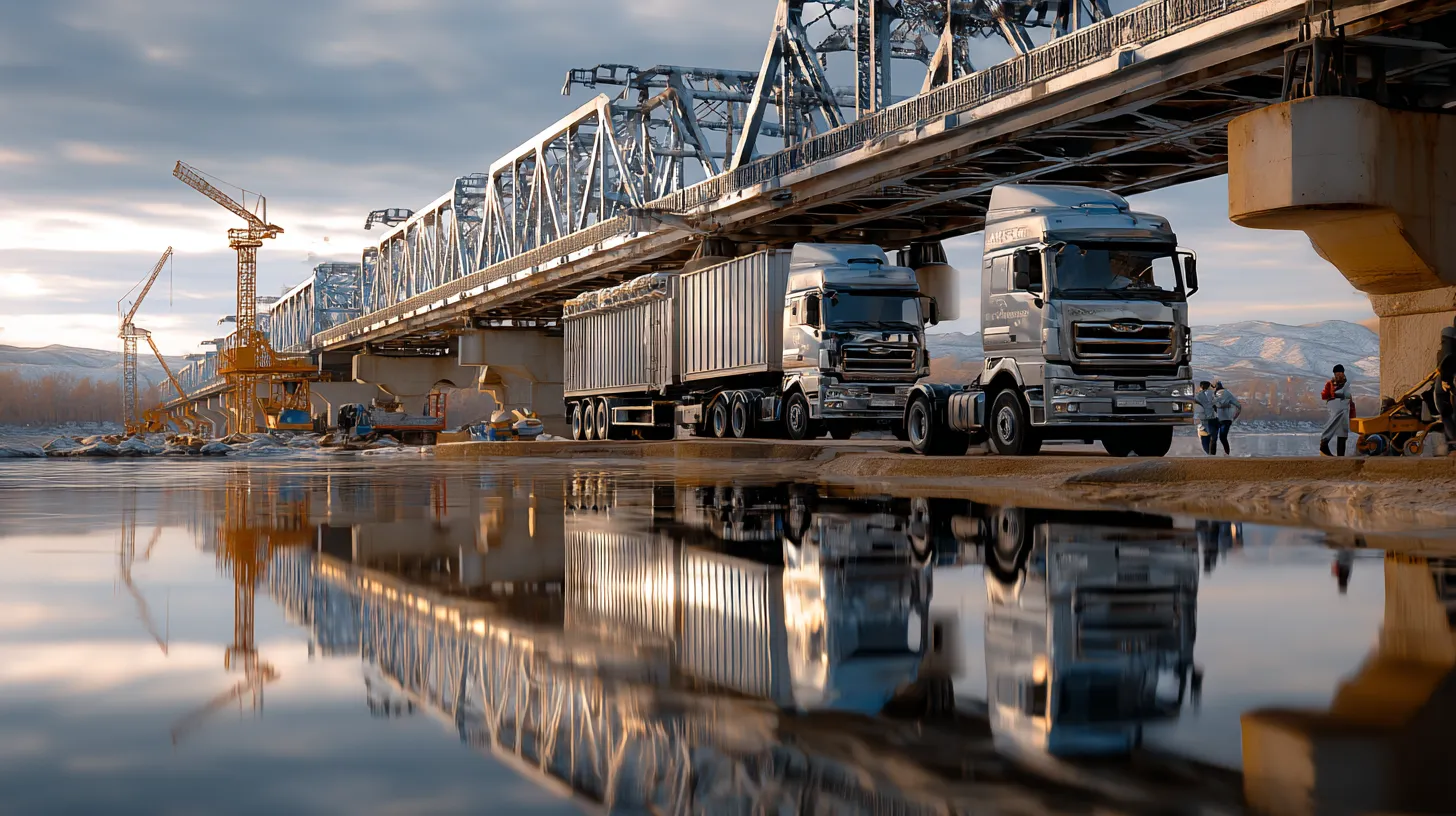
Another point of revival is "Jalinda" in the Amur region. The crossing was closed back in 2005, but it is planned to be re-launched in early 2026. Moreover, it is already planned to build a combined bridge that will connect this section with the Chinese Mohe and provide freight traffic both by road and by rail.
The Blagoveshchensk-Heihe automobile bridge, which has been operating since 2022, is also expected to expand its capabilities. Currently, the capacity is severely limited, but the degree of readiness of the Kani-Kurgan border terminal is estimated at 82%, and its full launch is scheduled before the end of 2025.
Expansion plans cover other regions as well: a new facility on Bolshoy Ussuriysky Island is already under construction in the Khabarovsk Territory, and a road crossing project is being discussed in the Jewish Autonomous Region next to the existing Nizhneleninskoye-Tongjiang railway bridge.
The project in the Priargunsk area in the Trans-Baikal Territory deserves special attention. According to the agreements concluded at the Eastern Economic Forum, it is planned to build bridges across the Argun and Urulongui rivers, as well as create all the necessary infrastructure for a new railway crossing.
All these initiatives speak to Russia's strategic course towards strengthening transport integration with China. By 2027-2030, a network of high-tech, year-round and universal crossings will be formed on the eastern border, ready to serve both domestic and international cargo flows. This will not only relieve the already overloaded checkpoints, but also open up new routes for business.