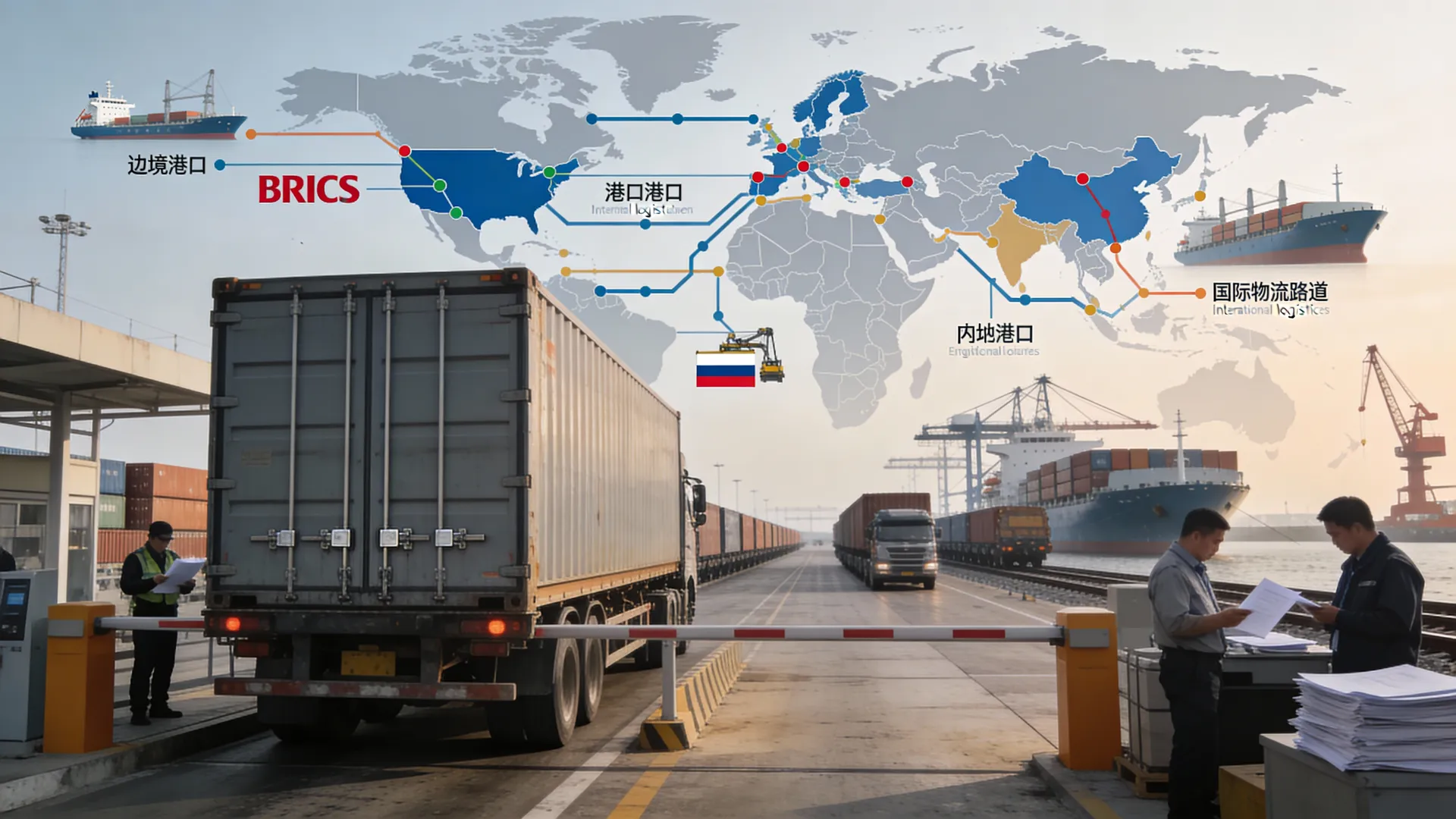
In Russia, the concept of a national system for confirming the expectation of delivery of goods, SPOT, has been approved. The new digital mechanism should be operational from July 1, 2026 and will become a mandatory element of import control, primarily from the EAEU countries. The Federal Tax Service has been appointed as the system operator, and testing is scheduled for the period from April to June 2026.
SPOT is introduced as a tool for preliminary control of commodity flows and tax liabilities. The authorities expect that the system will reduce the volume of illegal trafficking, increase tax collection and strengthen cooperation between the Federal Tax Service and the FCS. Unlike the current model, where a significant part of the information is generated after the goods are imported, the SPOT assumes control even before the actual border crossing.
Experts point out that the prerequisites for the implementation of the system have been formed for a long time. Pavel Dukhnitsky, a business consultant and lecturer at the Kompas Foreign Economic Activity Management Center, draws attention to the specifics of the movement of goods within the EAEU:
"This can lead to violations when not all shipments are accounted for, and information about the goods may be unreliable. The customs authorities check some of the vehicles by mobile groups, but unlike shipments from other countries that are subject to declaration, they do this at random, without having previously analyzed information about incoming goods."
According to him, the SPOT should change the very logic of control. The system will combine several government IT circuits at once, including AIS Tax-3, the national import traceability system, Honest Sign, GosLog platform, and the FCS risk management system. At the same time, the current statistical accounting forms remain in place, since the SPOT covers only goods imported into Russia.
The key element will be the Russian Importer's Personal Account service. Through it, companies will be required to submit an electronic document about the proposed delivery in advance. Additionally, the importer will need to make a security payment in the amount of future tax obligations, such as VAT. These funds are subject to refund if the delivery actually fails.
However, the business is already assessing the possible risks. Andrey Serebryakov, Deputy General Director for Customer Relations at Kanavara Logistics, notes that SPOT can significantly complicate operational processes.:
"Businesses will have to adapt to the new functionality, integrate it into business processes, train staff, set up checkpoints, integrate data with their accounting systems, and monitor deadlines."
He also recalls the practical experience of working with the labeling system.:
"Possible errors in entering product data, such as HS codes, lead to significant delays in the customs clearance process. Similar difficulties are possible with the SPOT system."
An additional risk factor may be the burden on government IT systems. During the launch of new requirements, technical failures often occur that can delay cargo clearance. As a result, import operations become more transparent, but at the same time more complex from the point of view of administration.
SPOT is actually forming a new stage of digitalization of foreign economic activity, transferring import control from the after-the-fact model to the pre-supervision mode. For bona fide market participants, this means a transition to more formalized and predictable rules, and for gray schemes, it means an increase in costs and risks.