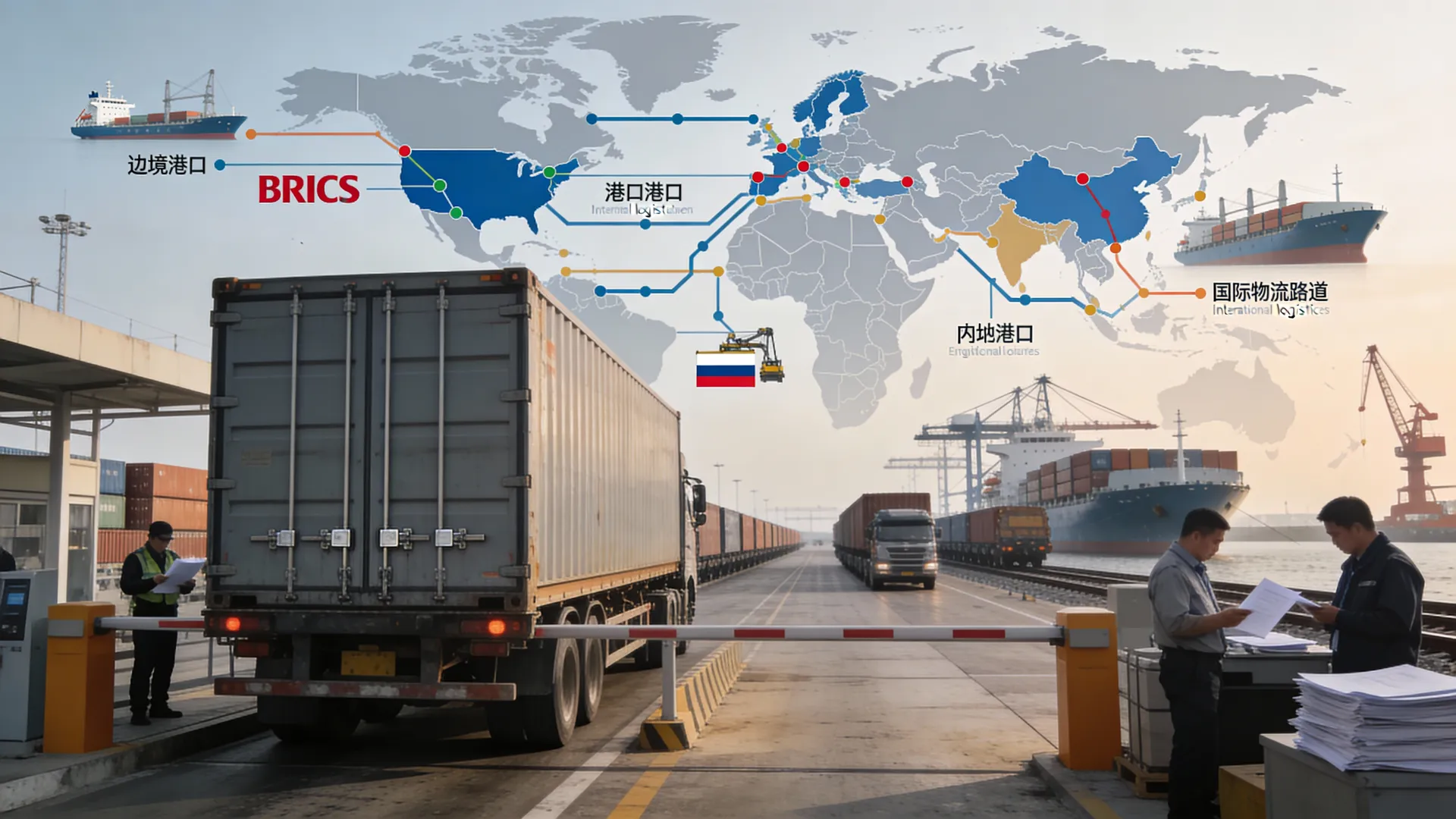
The Federal Customs Service of Russia will introduce a digital ecosystem and reduce the time at the border to 10 minutes.

The Federal Customs Service of Russia has announced the key vectors of its development until 2030. According to the announced strategy, the priority will be to speed up border crossing procedures for freight transport — the goal of the FCS is to reduce this time to 10 minutes. By 2026, the new standard should be operational at five checkpoints in the Far East, and by 2030, it should cover 25 checkpoints across the country.
An important element of the modernization will be the introduction of a new generation digital platform, EAIS TO 2.0, which will combine the declaration filing system and the post—control mechanism. It is also planned to develop streaming inspection systems, which will speed up the inspection of goods without the need to unload them.
Dispatching declarations between electronic declaration centers (CEDs) will be another important part of the technological transformation aimed at reducing document processing time and increasing transparency of operations.
The FCS is also strengthening international cooperation — Russia is actively developing "green corridors" with bona fide participants in foreign economic activity and expanding its dialogue with a number of countries, including Turkey, China, Azerbaijan and Tajikistan. Negotiations are underway to create new simplified border crossing regimes.
In addition to digitalization, special attention is paid to staff development, combating unscrupulous participants in foreign economic activity, as well as the introduction of a system for confirming the waiting status of goods. This system will be operational from July 2026 and will allow monitoring the timing of logistics operations.
The new strategy is designed to make Russian customs more flexible, modern and business-oriented, as well as reduce administrative barriers for participants in foreign economic activity.