China has announced plans to build the world's first industrial source of thermonuclear energy — the so—called "artificial sun" - by 2027. This is the next stage in the development of China's controlled fusion program, which should bring the country closer to the commercial use of an almost inexhaustible source of energy.
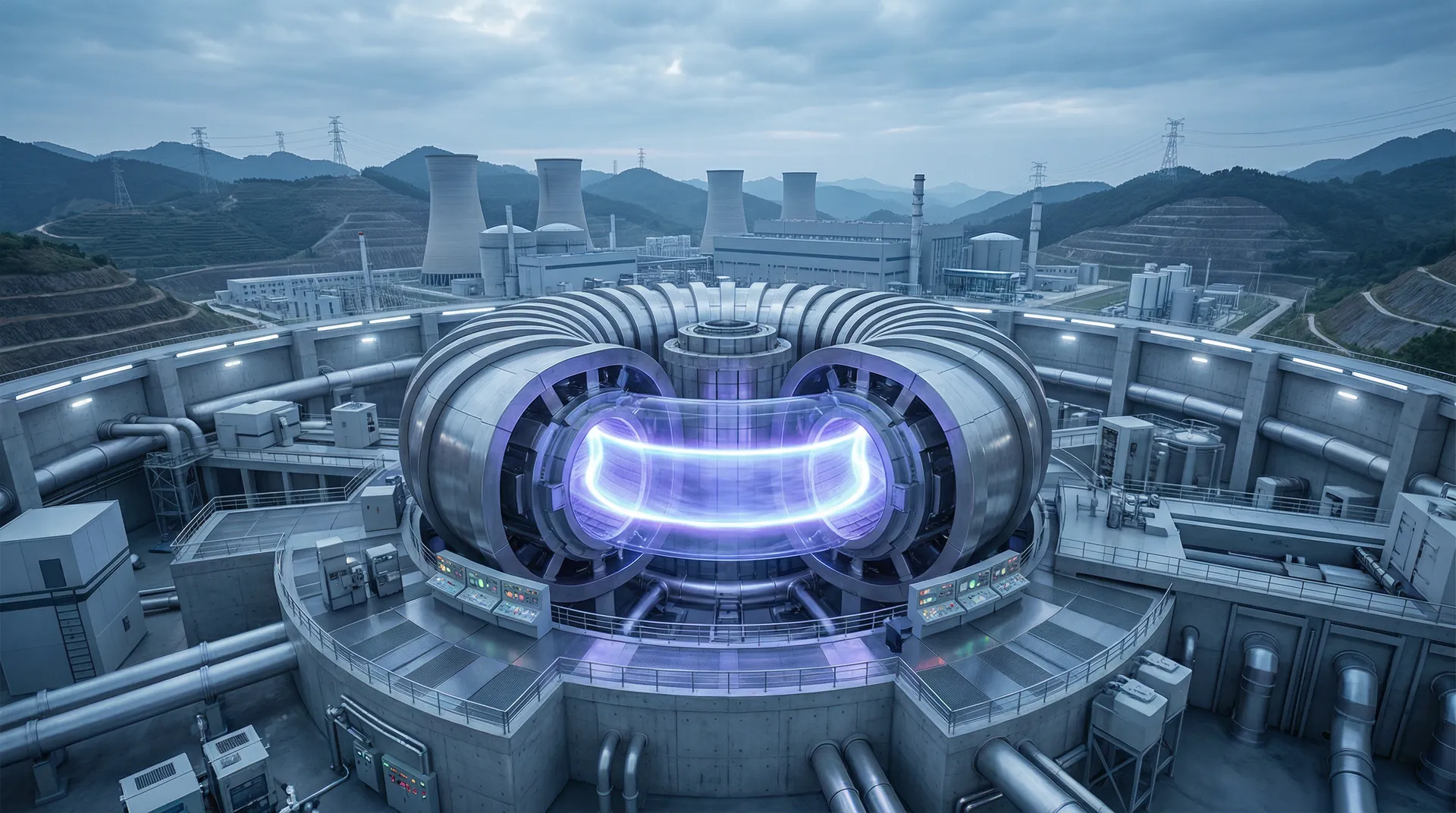
The project is based on the new generation tokamak CFETR (China Fusion Engineering Test Reactor), which will become a transitional link between experimental installations and a full-fledged thermonuclear power plant. Its key task is not just plasma retention, but to demonstrate a stable energy output that exceeds the cost of maintaining the reaction.
China has already achieved significant success in this area before. The experimental tokamak EAST ("Experimental Advanced Superconducting Tokamak") has repeatedly set world records for the retention time of high-temperature plasma. It was these developments that formed the basis of the new project.
Chinese scientists emphasize that CFETR should be the first reactor capable of approaching the industrial efficiency of a thermonuclear reaction. In the long term, this means obtaining clean energy without carbon emissions and with a minimum amount of radioactive waste.
The publication notes that the creation of an "artificial sun" is considered by Beijing as a strategic element of energy security. Thermonuclear energy does not depend on the import of oil, gas or coal and is able to ensure the long-term sustainability of the economy.
The project is also of international importance. China is one of the key participants in the global ITER program, but the development of its own reactor allows the country to accelerate technological progress and reduce dependence on multilateral formats.
Experts point out that the successful implementation of CFETR can change the global energy balance. Countries with industrial thermonuclear technologies gain a huge advantage, from reducing energy costs to transforming industry, transport, and logistics.
At the same time, even the Chinese side admits that the path to a commercial thermonuclear remains difficult. The issues of plasma stability, material wear, and technology scaling need to be addressed. However, the very fact of the transition from experiments to an engineering reactor indicates a qualitatively new stage in the development of the industry.
The launch of the "artificial sun" in 2027 could become one of the most significant technological events of the decade and strengthen China's position as one of the world leaders in the field of high technology and energy of the future.