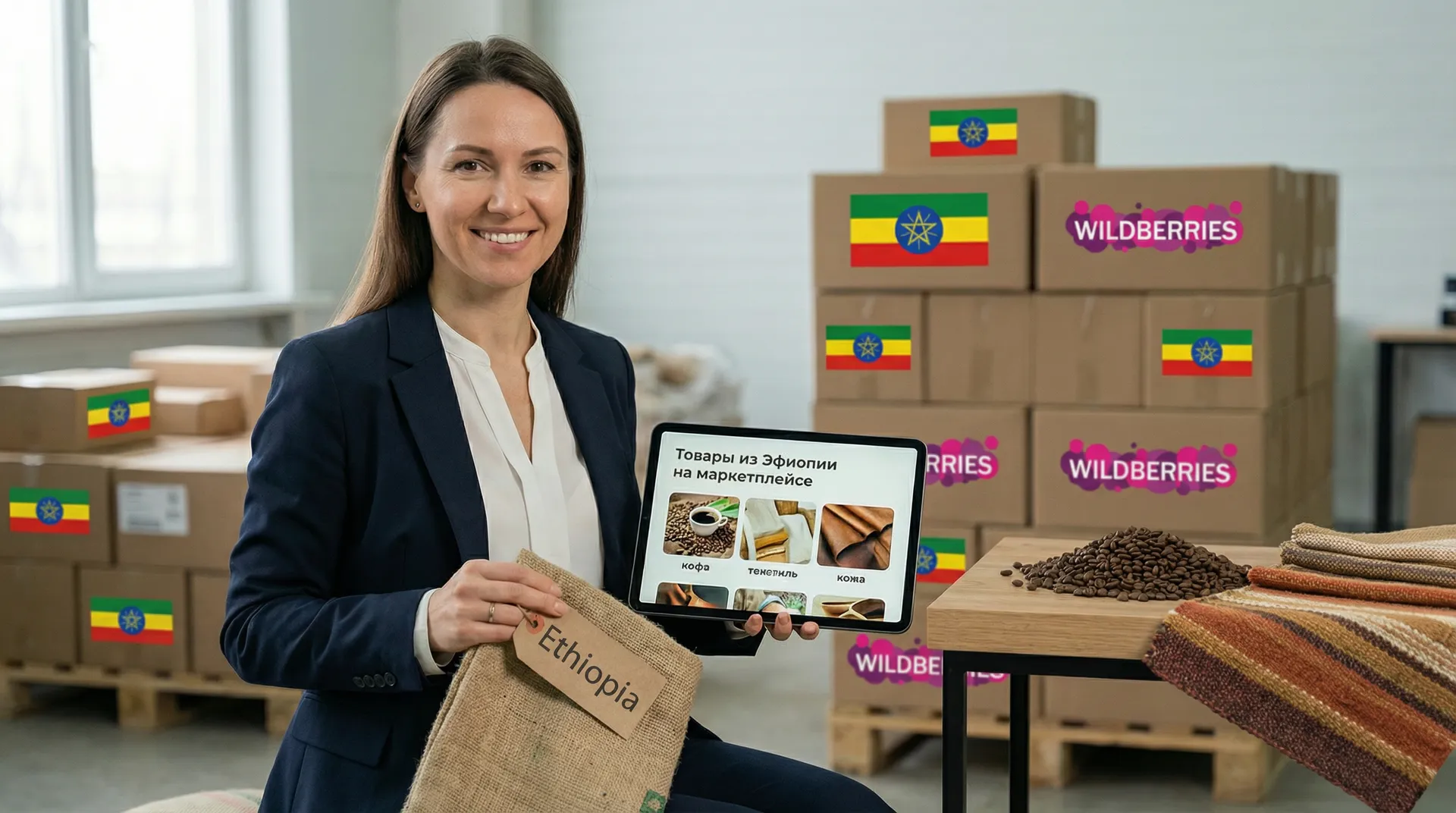
Wildberries will feature products from sellers from Ethiopia — RWB announced the imminent launch of sales in Russia and identified the categories that will be the first to appear on the showcase: coffee, textiles, leather goods and accessories, interior items, natural cosmetics.
For the marketplace, this is a step towards a new export logic: the platform turns into an “entrance” to the Russian market for manufacturers who previously did not have a direct sales channel and infrastructure for delivery, returns and customer service. For Russian buyers, this is an expansion of the product range, and for sellers, it is a signal that competition in individual product groups will become denser.
In the public part, the bet is on the market potential and recognition of the key product. Tatiana Kim, founder of Wildberries and head of RWB, explained the motivation as follows:
"We see a huge potential for e-commerce development in Ethiopia."
From the point of view of logistics and foreign economic activity, the project has two “stress points” at once. The first is the quality of the supply chain: coffee and cosmetics require clear storage conditions and traceability, while textiles and leather depend on batch stability and timing. The second is the last—mile economy: long-haul imports are sensitive to returns and fluctuations in shipping costs. Therefore, success here will depend on how RWB sets up fulfillment, registration and support for sellers at the start.
If the second stage really opens the platform for buyers in Ethiopia, Russian sellers will receive an additional export channel. In this scenario, the marketplace turns into a bridge between markets, and uniform rules for product cards, payments, logistics, and advertising become the main asset.