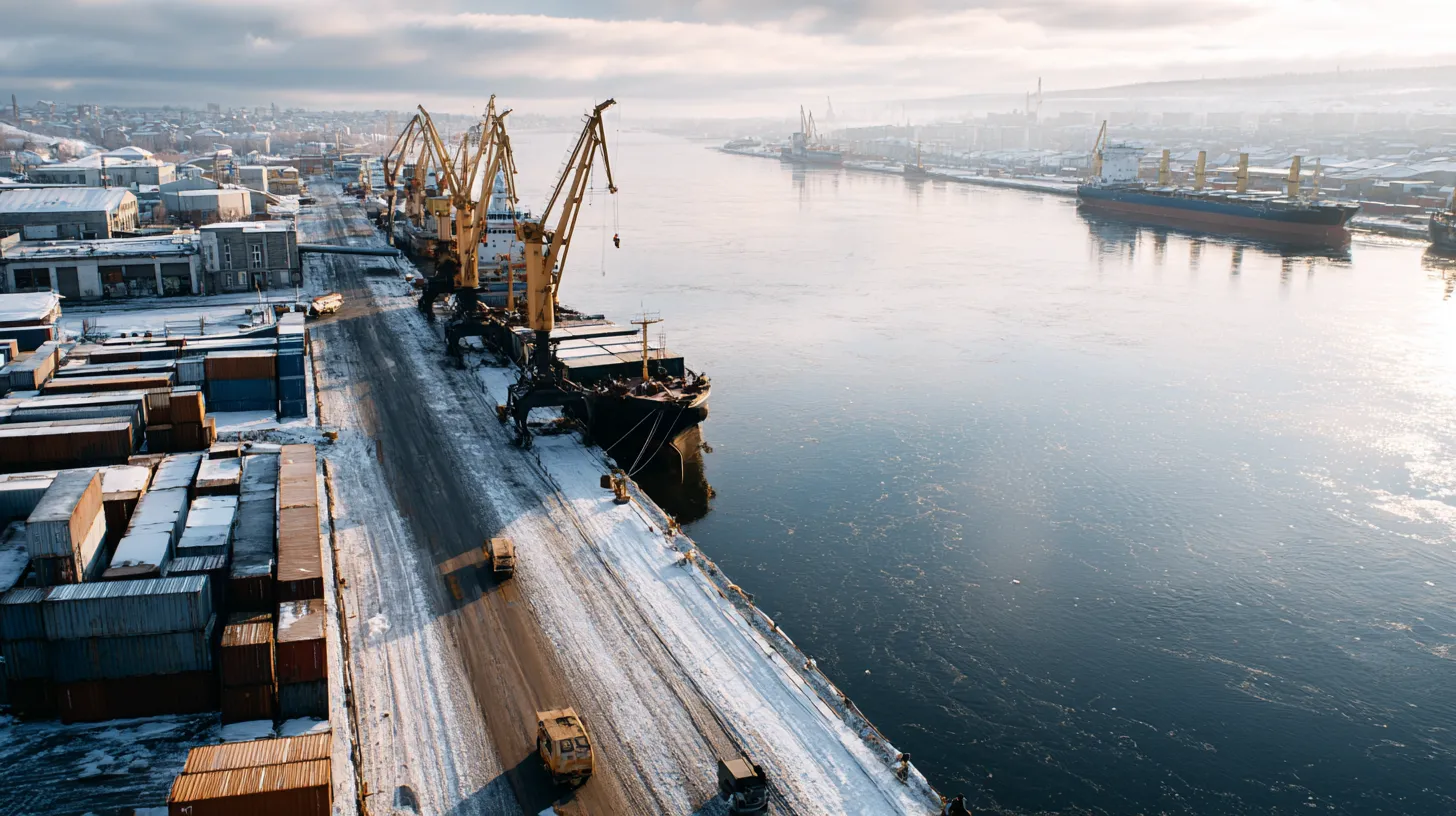
The Arkhangelsk Seaport continues to strengthen its position as a strategic center for northern logistics and international trade. This was announced by Igor Muraev, Deputy Chairman of the Government of the Arkhangelsk Region, at the XXIII All-Russian Forum "Strategic Planning in the Regions and Cities of Russia", held under the auspices of the State Duma of the Russian Federation and the Government of St. Petersburg.
The main topic of the forum is "Strategies for real results: government, society and business." Special attention was paid to the development of the Arctic zone and improving the quality of life in the northern territories.
During the round table "From strategy to action: new directions of regional relations in international cooperation" Igor Muraev presented the experience of the region and spoke about the dynamics of export traffic through the port of Arkhangelsk.
According to him, goods are currently being shipped from Arkhangelsk to Brazil, Ghana, India, Mexico, Nigeria, Peru, Turkey and Chile, and China accounts for the largest volume of container traffic.
Of particular importance is the Arctic Express No. 1 project, which transported 17,500 containers to Chinese ports in 2024-2025.
In addition to traditional cargoes, the port began exporting nickel concentrate, which indicates an increase in the range and volume of supplies.
Muraev also noted that work is underway to create a deep-water port area, which will give a new impetus to the development of the region and increase the attractiveness of the Arctic route for international trade.
At the same time, international cooperation in the educational and scientific fields is developing: the Northern (Arctic) Federal University implements joint programs with universities in Belarus, China, Kazakhstan, Vietnam, India and other countries. One of the projects is the Arctic Star campus, which will become a center for innovation and research in the Arctic.