Azerbaijan has imposed temporary restrictions on road cargo transportation across the state border with Iran. The decision was made at the level of the country's Cabinet of Ministers after the incident with drones in the Nakhichevan Autonomous Republic.
According to the government's official statement, the movement of trucks through all checkpoints on the Azerbaijani-Iranian border has been completely suspended. The restriction applies both to bilateral transportation between countries and to transit transport that uses this corridor for further travel.
The statement of the authorities notes:
"The Cabinet of Ministers has adopted a corresponding decision on the temporary complete suspension of the movement of trucks (including vehicles in transit) from all checkpoints on the state border of Azerbaijan and Iran."
The measure was a response to a drone attack on the territory of the Nakhichevan Autonomous Republic. Baku blamed Iran for the incident, after which additional security measures were introduced on the southern borders of the country.
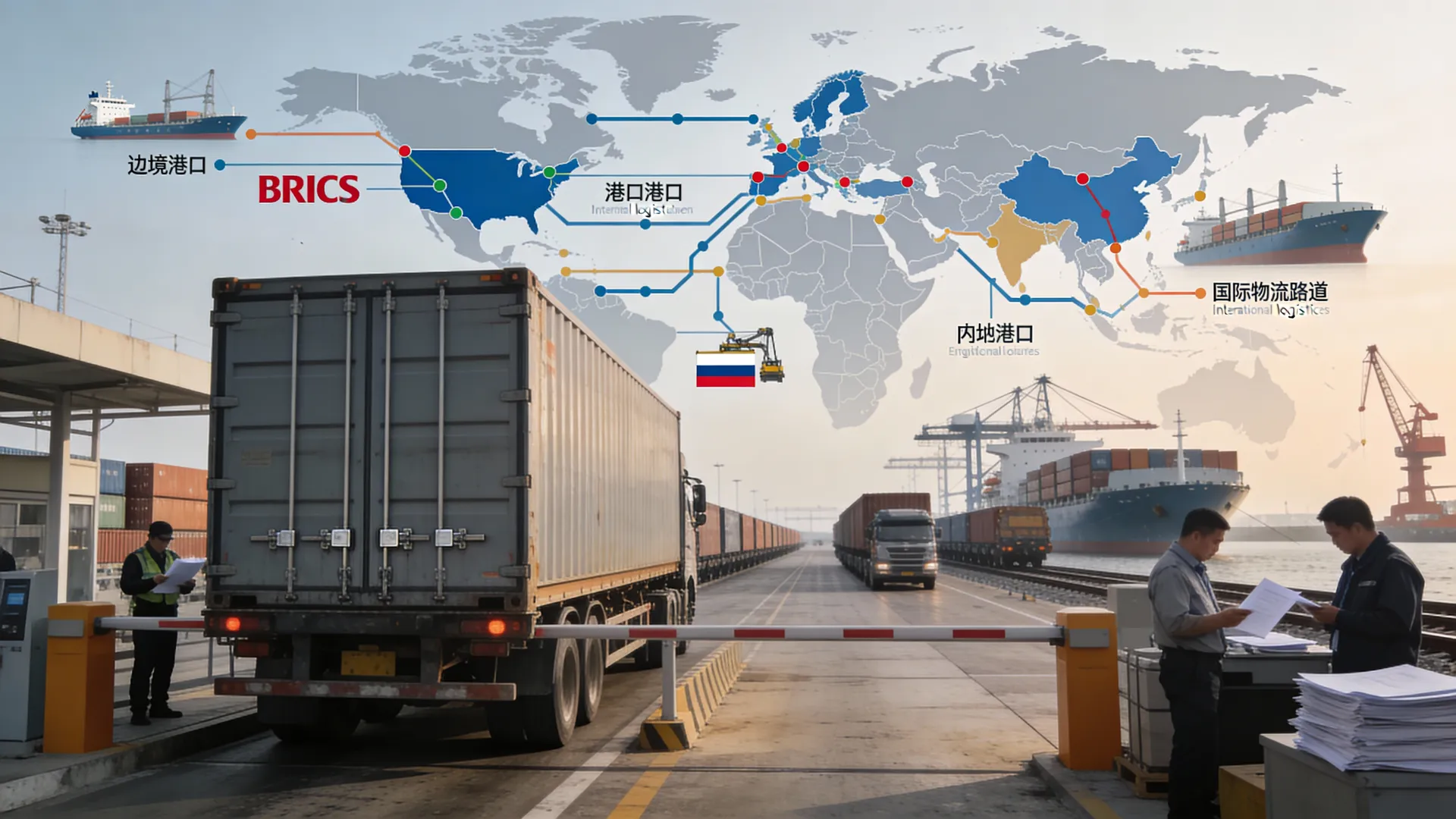
The closure of automobile checkpoints may have an impact on logistics routes in the South Caucasus region. The Azerbaijani-Iranian border is used for the delivery of goods between the countries of the Middle East, the Caucasus and Central Asia. Part of the regional transit passes through this corridor, including supplies of food, industrial products and construction materials.
The restrictions also affect international transport chains that use automobile routes to deliver goods between Iran, Russia, Turkey and the countries of the Caspian region. The suspension of traffic may lead to congestion of cargo transport at border terminals and an increase in delivery time.
This route is of particular importance for projects for the development of international transport corridors. In recent years, the countries have been actively developing the North–South direction, which connects Russia, Azerbaijan, Iran and India. Road transport is an important part of this logistics chain.
Industry experts point out that a prolonged closure of the border may lead to a redistribution of cargo flows to alternative routes. Some of the shipments may transfer to sea lines across the Caspian Sea or to overland routes through other countries in the region.
So far, the Azerbaijani authorities have not announced the exact duration of the restrictions. The solution is designated as temporary and is related to current security issues.
Logistics companies have already begun to review delivery routes and warn customers about possible delays in transportation through the southern Caucasus corridor.