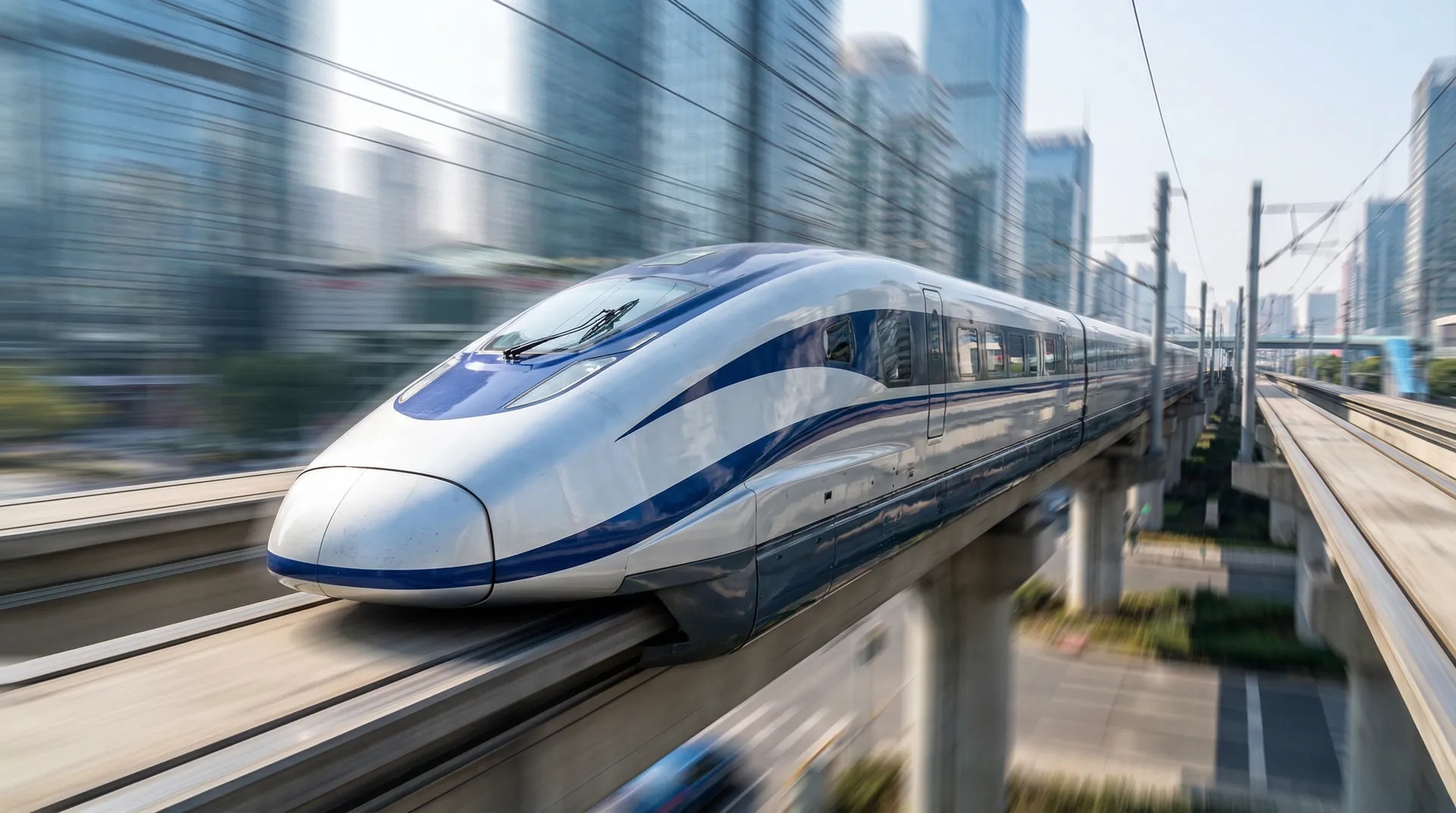
China has taken another step towards global leadership in the field of high-speed transport. A magnetic cushion train developed by Chinese engineers has set a new world speed record, confirming the country's technological superiority in moving without contact with rails.
During the tests, the Maglev accelerated to a speed close to 650 km/ h, which was a record for trains of this type. The project is being implemented within the framework of the national program for the development of intelligent transport and is considered as a key element of the future logistics and passenger infrastructure.
According to the developers, the use of magnetic levitation allows you to almost completely eliminate friction, which means that you can significantly increase speed, energy efficiency and traffic safety. The train is stably held above the track, and the control is carried out by an intelligent control system.
The article emphasizes that China considers Maglev not only as a passenger transport, but also as a promising solution for high-speed freight transportation over medium distances. With the growth of e-commerce and pressure on traditional railways, such technologies can radically change logistics within a country.
The development of maglev projects also fits into the strategy of China's technological sovereignty. The country is actively investing in its own engineering schools, materials and management systems, reducing dependence on foreign solutions.
Experts note that such speeds were previously considered more in theory than in practical application. Now, China is demonstrating its willingness to scale the technology and eventually use it on commercial routes.
The project strengthens China's position as one of the world's centers of transportation innovation and confirms that high-speed technologies are becoming not an experiment, but a part of the real economy.