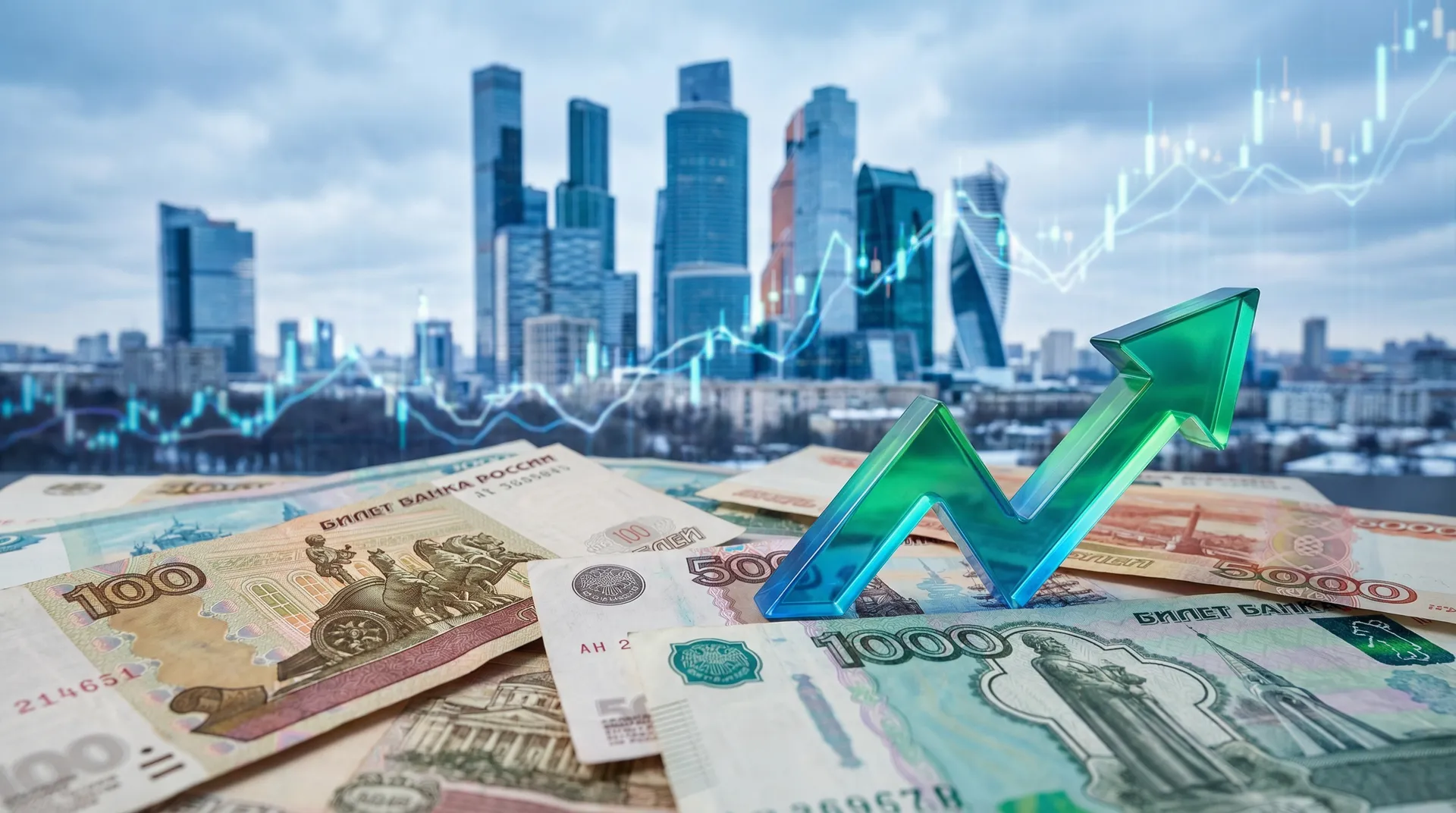
The sharp strengthening of the ruble, which has become one of the most noticeable currency movements of the end of the year, is beginning to cause concern among economists and market participants. The Russian currency demonstrates one of the best dynamics in the world, but such a rapid rise in the exchange rate carries not only positive, but also systemic risks for the economy.
Since the beginning of the year, the ruble has significantly strengthened against the dollar, as a result of tight monetary policy, restrictions on capital flows and lower imports. However, a strong currency in a commodity-based economy inevitably affects export revenues and fiscal balance.
Experts note that the current exchange rate is already starting to diverge from the fundamentals. As indicated in analytical estimates, such a strong ruble reduces the ruble revenues of exporters and increases the burden on the budget, a significant part of which is generated by income from foreign trade.
One of the key risks is that the strengthening of the national currency is taking place against the background of continued pressure on export flows and limited access to international capital markets. This makes the economy more vulnerable to any external shocks, including changes in commodity prices or geopolitical factors.
Economists emphasize that the strong ruble complicates the task of balancing the budget. With declining oil and gas revenues, the government has to either increase borrowing or adjust spending. In such circumstances, currency revaluation can accelerate structural imbalances.
Special attention is paid to the impact of the exchange rate on imports. A stronger ruble temporarily restrains inflation by reducing the cost of imported goods and components, but this effect is short-term. If currency controls are relaxed and demand is restored, a reverse correction of the exchange rate is possible.
Analysts also note that the excessive strengthening of the ruble reduces the competitiveness of Russian goods in foreign markets, especially in low-value-added segments. This may lead to a reduction in exports outside the commodity sector and a slowdown in economic growth.
In the long term, experts agree that the sustainability of the economy requires not a record-breaking strong currency, but a balanced exchange rate reflecting real trade and financial flows. Without structural changes, the current currency rally may give way to a sharp correction, which will create additional risks for businesses and the financial system.