Strengthening customs control is becoming one of the key factors directly affecting the logistics of export-import cargo flows. This was stated by Alexey Ivanovich Kizerev, Head of the Customs Practice at Belsky & Partners Law Firm, during the conference "Transport Services Market: Interaction and Partnership (RTU) 2025".
According to the expert, it is a methodological mistake to consider customs control as an element separate from logistics. It is an integrated part of the logistics architecture and has a systemic impact on the speed of movement of goods and their final cost.
Customs control has the greatest impact at the stage of customs clearance. This is where errors in documentation, classification of goods, determination of customs value or country of origin cause delays and rising costs. Requests for additional documents under Article 325 of the EAEU Customs Code, format-logical control and actual inspections increase the time the cargo is under control and lead to payment for transport downtime, temporary storage services and additional cargo operations.
A special risk zone, according to Kizerev, is formed by seizures of vehicles and goods, as well as bringing carriers and forwarders to administrative and criminal responsibility. In accordance with Article 16.1 of the Administrative Code of the Russian Federation, the carrier is responsible for concealing goods and providing false information. Although previously the practice of applying this rule was relatively favorable for business, the adoption of Federal Law No. 140-FZ, which strengthens the duties of freight forwarders and carriers, may lead to a revision of the law enforcement approach.
The expert gave an illustrative example of the application of Article 261 of Federal Law No. 289-FZ "On Customs Regulation". Within the framework of this rule, customs authorities carry out vehicle inspections directly at or near the border. The algorithm assumes a stop, inspection, decision on inspection and delivery of transport to the storage location, where the inspection can last up to 90 days. Failure to comply with the requirements entails the immediate withdrawal of the vehicle and goods, which effectively eliminates the possibility of maneuver for the carrier.
Significant changes are also taking place in terms of control after the release of goods. Although the focus is shifting to this stage, customs authorities retain the right to request documents, conduct inspections and counter measures, including with regard to carriers and forwarders, which retains a high level of uncertainty for businesses.
Kizerev paid special attention to the development of the declaration dispatch system. The order of the Ministry of Finance of the Russian Federation dated April 8, 2025 No. 45n provides for a phased transformation of the mechanism for distributing declarations. If dispatching currently remains linked to the modes of transport and the place of registration of the declarant, then from March 1, a fundamental transition is expected to a random distribution of declarations between electronic declaration centers without taking these factors into account.
According to the expert, dispatching will not change the physical geography of commodity flows, but it will have a noticeable impact on the speed and rhythm of border crossing. The stated goal of the Federal Customs Service is to smooth out load peaks and reduce queues, however, differences in the practice of electronic declaration centers can lead to increased unpredictability and the need to lay additional time and financial reserves.
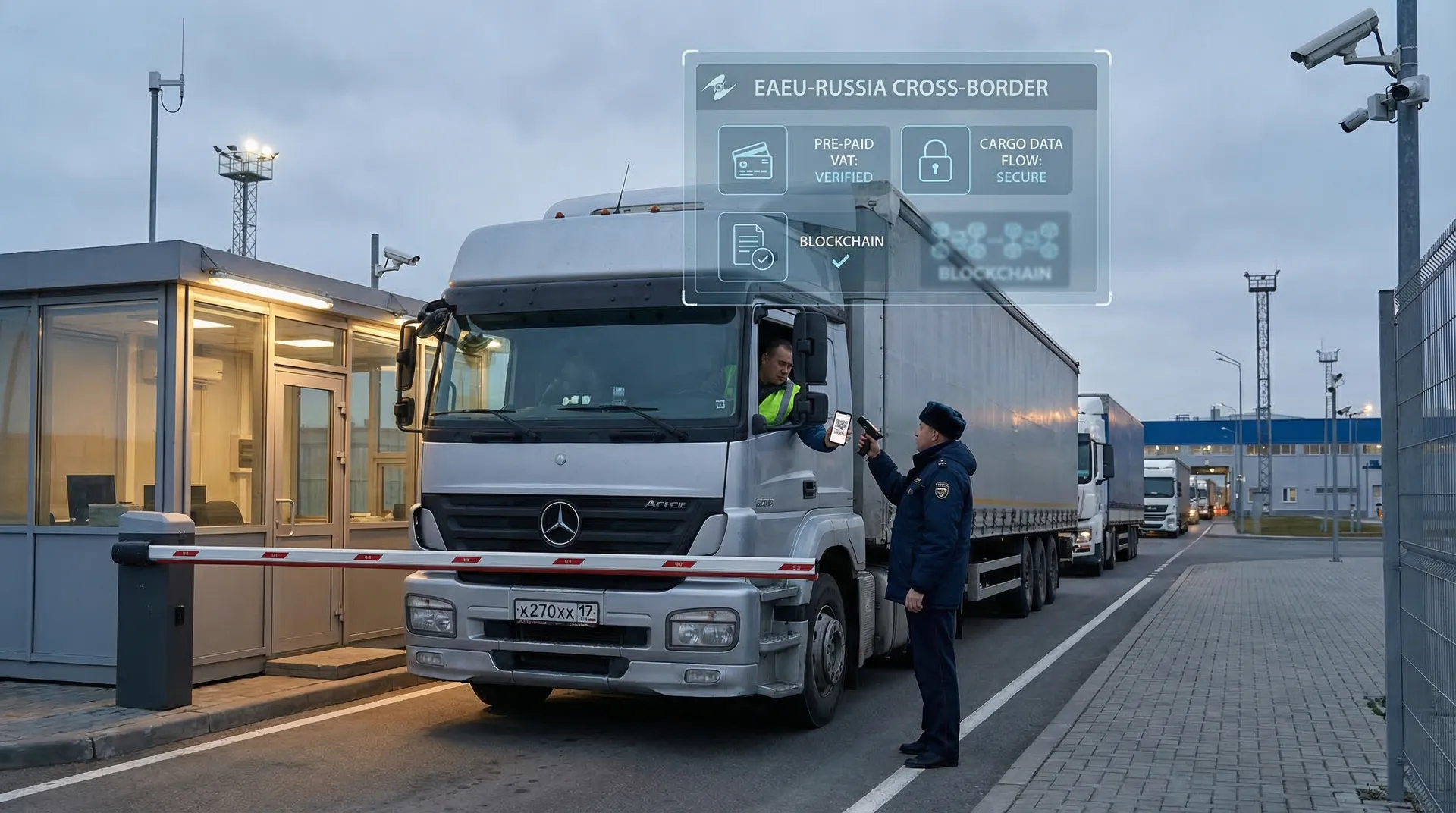
An additional factor in the transformation of logistics will be the introduction of a system for confirming the expectation of delivery of goods (SPOT), approved by Decree of the Government of the Russian Federation No. 3213 dated November 10, 2025. The system is aimed at combating gray imports and involves legalizing the importer, submitting notifications of import intent and making security payments. The test mode is planned from April 1, 2026, and the full launch is scheduled from July 1.
According to Kizerev's forecast, the SPOT will lead to a reduction in gray flows, increased concentration of imports from major players, an increase in the role of advance VAT payments and more complicated administration. This is especially sensitive for small and medium-sized businesses and may lead to a redistribution of cargo flows and the formation of new logistics schemes.