The network of Russian national pavilions continues to expand in the Middle East: the operator of a new site in the Hashemite Kingdom of Jordan has been identified. The project will become another element of the export infrastructure, focused on the direct presence of Russian manufacturers in foreign markets without intermediaries and complex distribution chains.
Jordan is considered as a regional hub with access to several markets at once — the countries of the Persian Gulf, the Levant and North Africa. Its geographical location, well-developed trade infrastructure and neutral logistics position make the country a convenient entry point for Russian food products, industrial products and services.
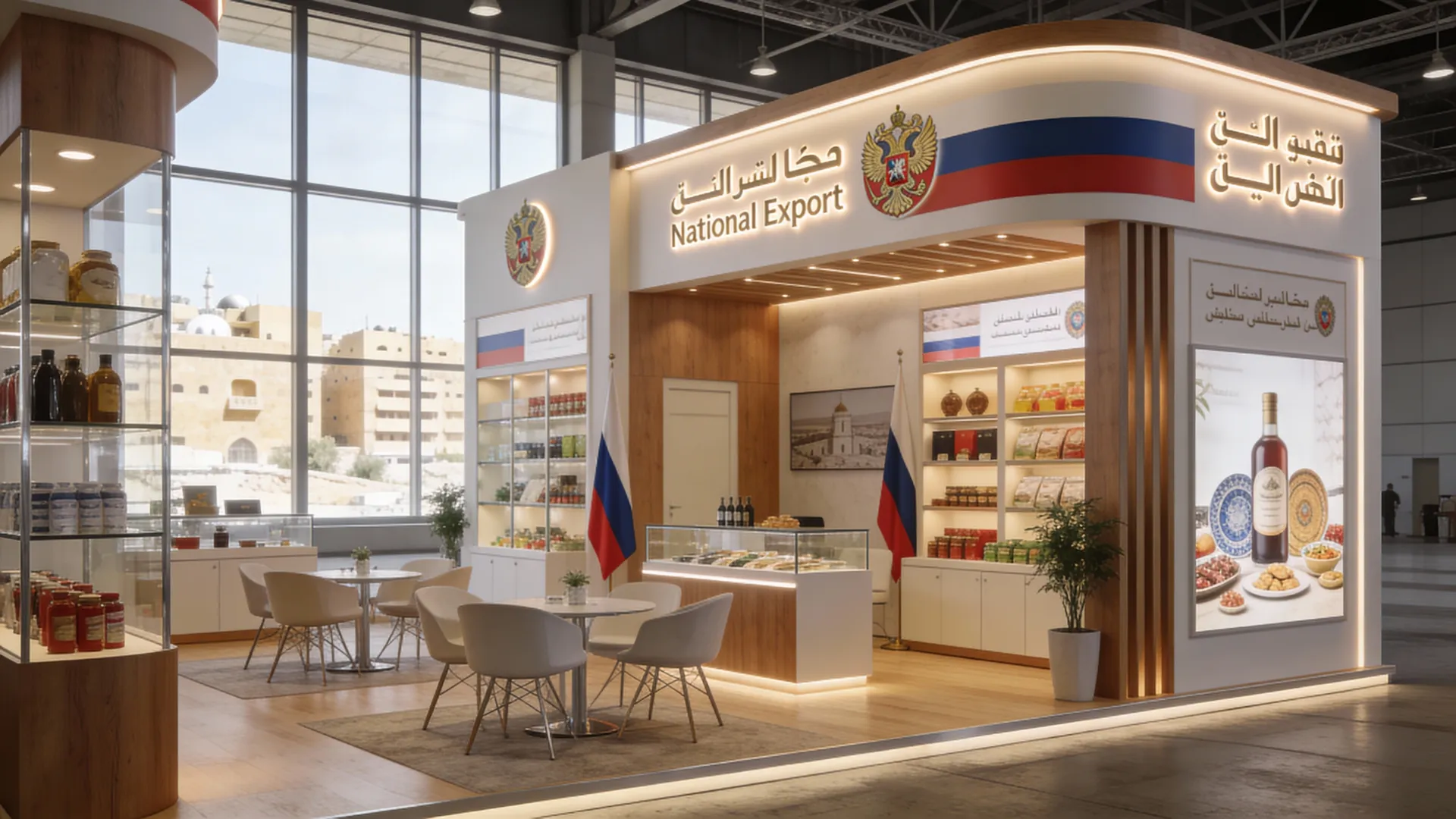
The National Pavilion is not a classic exhibition model, but a permanent trade and communication platform. The exporter receives a ready-made infrastructure for product demonstrations, negotiations and direct sales. The format involves simultaneous work in both the B2B and B2C segments, which is especially important for high-value-added products with a recognizable brand.
The key difference of the pavilion model is comprehensive support. The operator takes care of marketing promotion, primary logistics, localization of presentation materials and the search for trusted partners. This lowers the entry threshold for companies that have not previously worked with the Middle East markets and did not have their own infrastructure abroad.
An additional factor is the promotion under a single national brand "Made in Russia". This approach enhances the trust of foreign buyers and institutional partners, especially in an environment where the origin of goods and government support are becoming an important element of commercial decisions.
Today, Russian national pavilions are already operating in China, Vietnam, Egypt, the United Arab Emirates, Turkey, Saudi Arabia and India. More than 170 Russian manufacturers and over 3.2 thousand product lines are represented through this infrastructure. The launch of the site in Jordan logically complements this network and strengthens Russia's export presence in the MENA region.