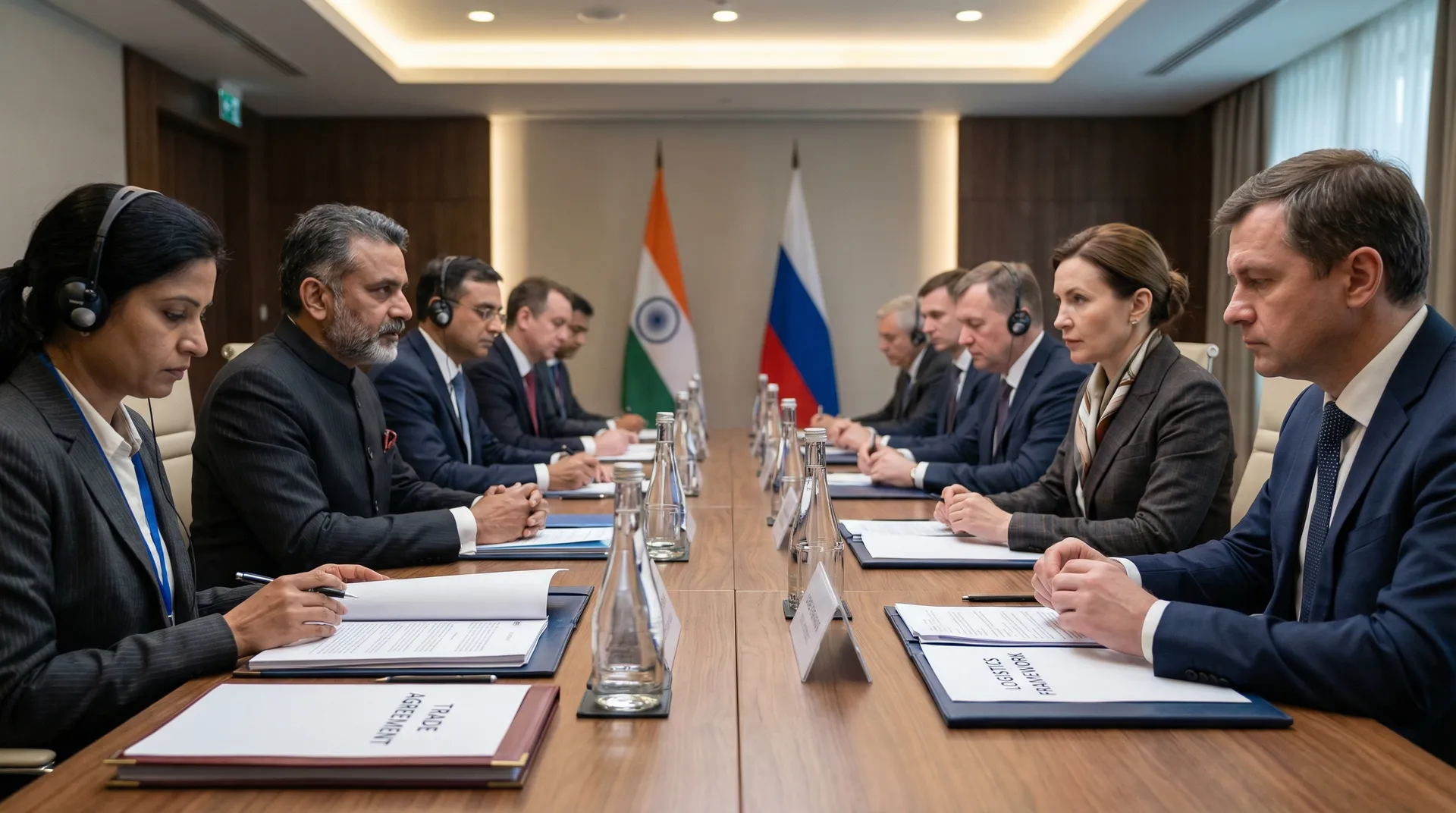
The trade agenda of India and Russia is becoming more substantive. Indian Foreign Minister Subramaniam Jaishankar has explicitly outlined a new task: in order to reach a trade volume of $ 100 billion by 2030, the parties need to remove non-tariff barriers, remove regulatory obstacles and make greater use of the opportunities of the agreement with the Eurasian Economic Union.
The key value of this statement lies in its business content. The political formula of partnership between Moscow and New Delhi has existed for a long time, but now the market is hearing a different tone - a conversation about specific growth mechanisms. We are talking about logistics, certification, payment schemes, admission of goods, settlement infrastructure and acceleration of trade document flow. It is these narrow issues that actually determine whether a large turnover can move from plans to sustainable practice.
Jaishankar said, "India and Russia have a special and privileged strategic partnership based on trust and mutual respect." And he emphasized: "By 2030, both sides intend to increase the volume of annual trade from 68.7 to 100 billion US dollars in a balanced and sustainable manner." Even more important for business is the following phrase: "We must continue efforts to conclude a free trade agreement between India and the Eurasian Economic Union and eliminate non-tariff barriers and regulatory obstacles."
This is one of the most significant signals of the week for BRICS foreign trade. India and Russia have actually set a course for a deeper economic link, where practical conditions for goods to enter the market play a major role. The sooner regulatory bottlenecks can be cleared, the more mutual trade in energy, industry, agriculture, engineering, and transport logistics will grow.