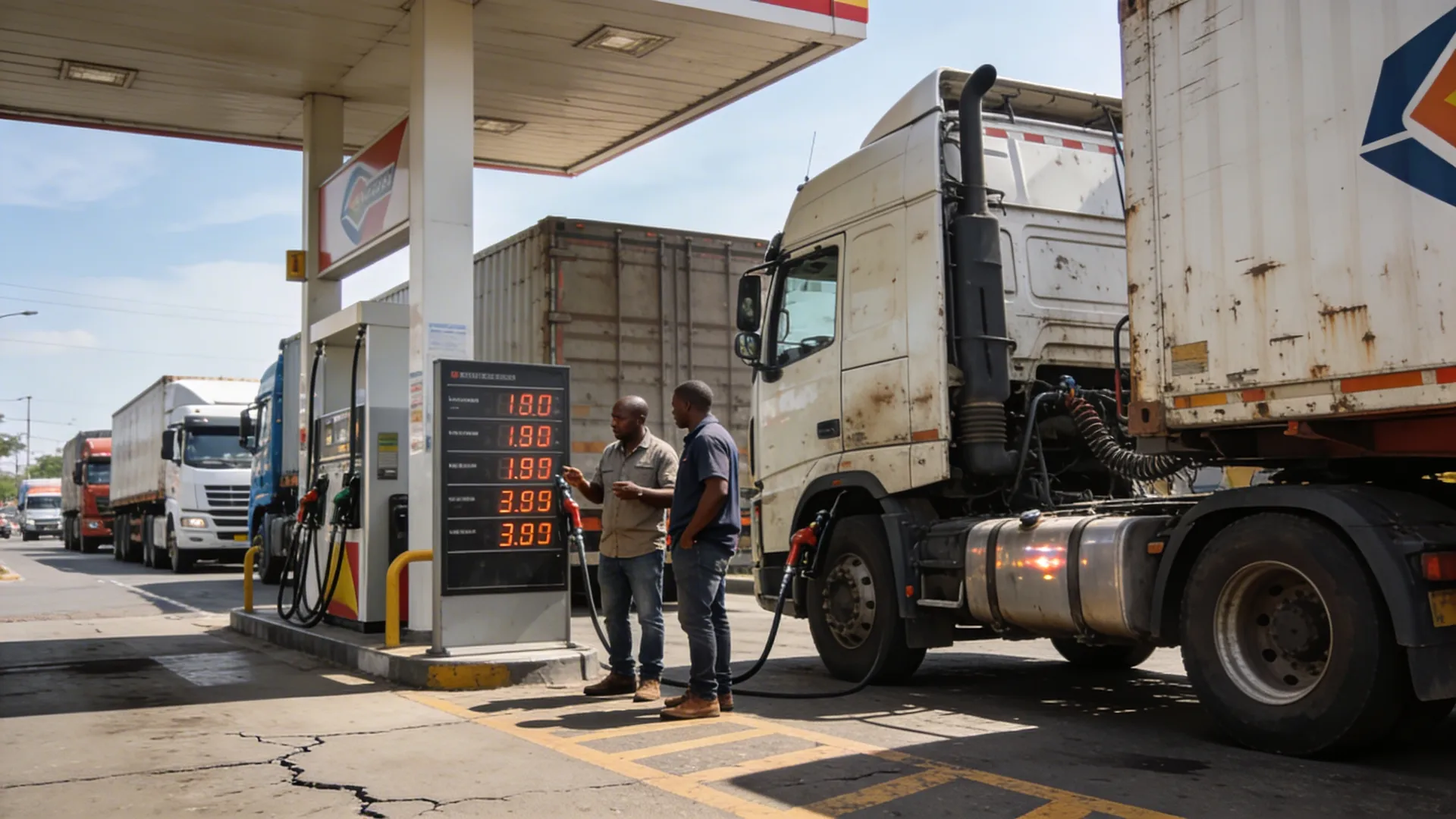
South Africa has temporarily lowered its fuel tax for one month to limit the rise in gasoline and diesel prices. The government has reduced the total fuel levy by 3 rand per liter, hoping to ease the pressure on businesses and households.
For the B2B segment, this solution makes direct practical sense. Any company that depends on trucking, agricultural machinery, urban deliveries, and commercial vehicles feels a price spike almost immediately. Reducing the fee provides a respite, but does not change the very structure of the problem.
Reuters noted that even after this step, prices were still expected to rise: for diesel, the value was about 40 percent. That is why the market perceived the measure as a temporary shock absorber, rather than as a full-fledged solution for the transport economy.
The effect is particularly noticeable for exporters. Diesel affects the delivery of raw materials, the delivery of products to ports and the cost of contract logistics. When the price of fuel goes up even after a tax correction, businesses have to quickly recalculate tariffs, budgets, and margins.
The macro level is also important. The government has actually acknowledged that the pressure on the fuel market has gone beyond the usual seasonal fluctuations. If the tension on external energy routes persists, South Africa will continue to look for targeted anti-crisis mechanisms to protect transportation and critical industries.