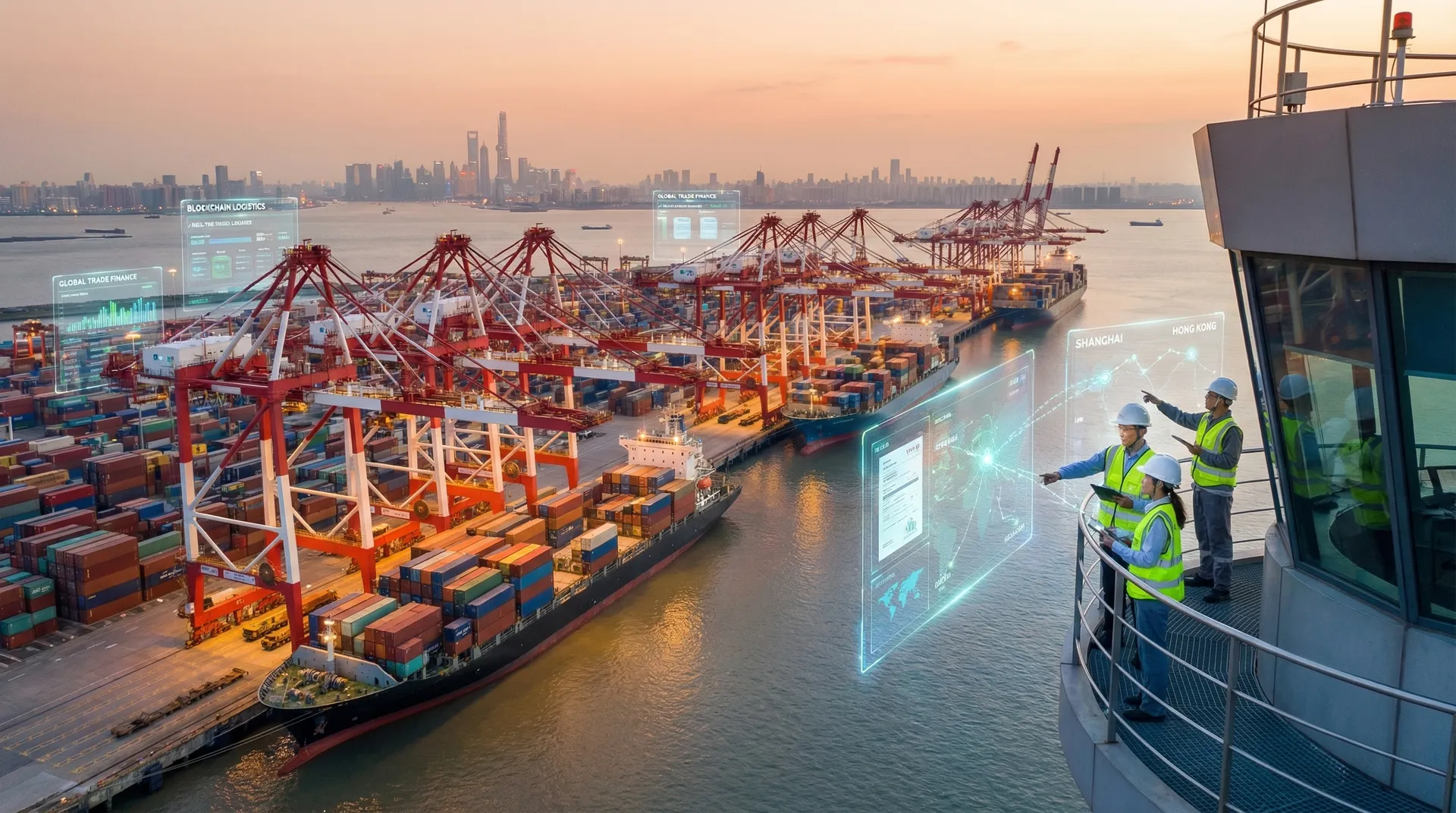
China continues to accelerate the digital transformation of international trade. Hong Kong and Shanghai have announced the launch of a joint blockchain platform that will combine mainland Chinese trade data with the financial infrastructure of one of the world's largest financial centers.
The parties signed the agreement on the creation of the platform on March 1. The new project aims to integrate logistics processes, trade documents and financial instruments into a single digital ecosystem.
The key objective of the platform is to speed up data processing in international supply chains and increase transparency of transactions between participants in foreign economic activity.
Blockchain technology will allow you to record the key stages of cargo movement in a distributed registry. This includes processing transportation documents, confirming the shipment and arrival of goods, as well as processing contract data between suppliers, carriers, and banks.
At the same time, the platform will become a tool for automating trade finance. Banks will be able to access verified cargo and transaction data in real time. This will make it possible to make faster decisions on financing export and import transactions.
For market participants, this means reducing operational risks and reducing document processing time. In the traditional system, the confirmation of cargo transactions and financial obligations often requires the participation of several intermediaries and lengthy verification procedures.
The integration of logistics information with financial services will significantly speed up the processes.
As part of the project, data on cargo shipments from mainland Chinese ports will be directly synchronized with Hong Kong's financial systems. This will create an infrastructure for more efficient operation of companies engaged in international trade.
Experts note that such platforms are becoming a key element of the new global logistics architecture. The use of blockchain solutions increases the transparency of supplies, simplifies the control of the movement of goods and reduces the likelihood of fraud in trading operations.
For China, the development of such systems is part of a long-term strategy for the digitalization of foreign trade. In recent years, the country has been actively implementing electronic documents, intelligent logistics platforms and automated cargo handling systems.
Combining the capabilities of Shanghai's port infrastructure and Hong Kong's financial center forms a new model for managing international supply chains. Such an architecture can become the basis for scaling digital trading services to other logistics corridors in Asia.