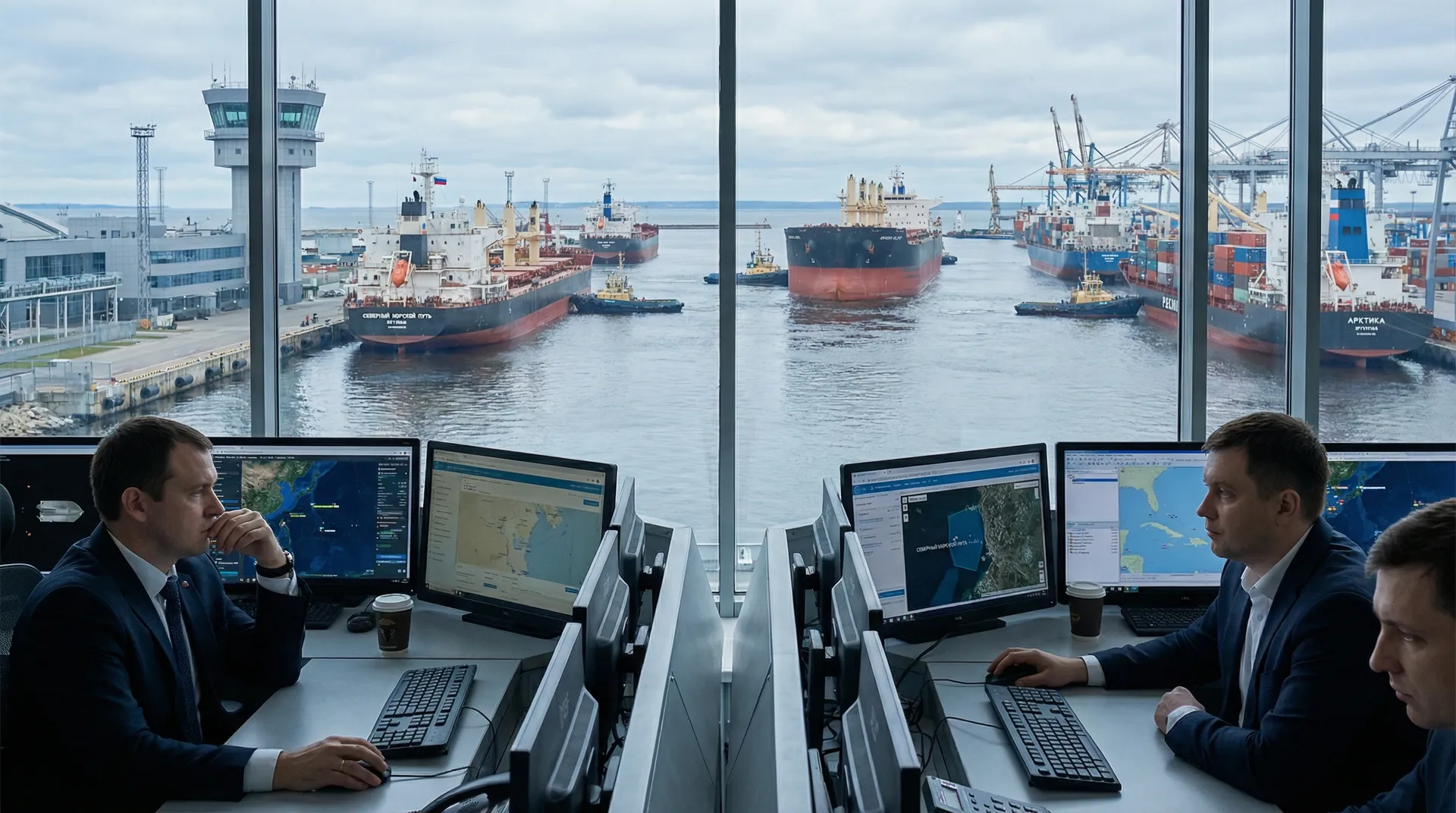
The Russian port infrastructure is receiving a new digital project at the federal level. FSUE Rosmorport plans to create an information system for recording the entry of ships into Russian ports within 24 months. The solution should be based on the Russian RMP-traffic software.
By itself, the accounting of ship calls has long gone beyond the limits of formal statistics. For the port industry, it is a tool for managing capacity, monitoring berth loading, analyzing seasonal fluctuations, assessing the cargo base and building a more accurate operating model. When such information is collected separately, the industry loses speed and transparency. The new project should close this particular system gap.
The materials for the presentation by the representative of Rosmorport indicate that the key tasks of the system are the consolidation of databases, the unification of data storage templates, as well as the development of business intelligence on ship calls and cargo. This is especially important against the background of growing demands for digital management of transport infrastructure: the state and the market need a single data set based on which they can predict the load on ports and make infrastructure decisions faster.
For business, the project also has an applied meaning. The more accurately the port system sees the movement of the fleet and cargo, the higher the planning quality for stevedores, shipping lines, exporters and logistics operators. We are talking about better forecasting of the time of entry, reducing information gaps between the participants in the process and a clearer picture of the actual operation of ports.
It is also important that the system is based on domestic software. In the current circumstances, this is no longer just a matter of technological choice, but an element of the sustainability of critical infrastructure. If the project is implemented within the stated time frame, Russian maritime logistics will receive a more dense digital contour, where ship calls, cargo data and analytics will begin to work as a single management system, rather than as a set of disconnected segments.