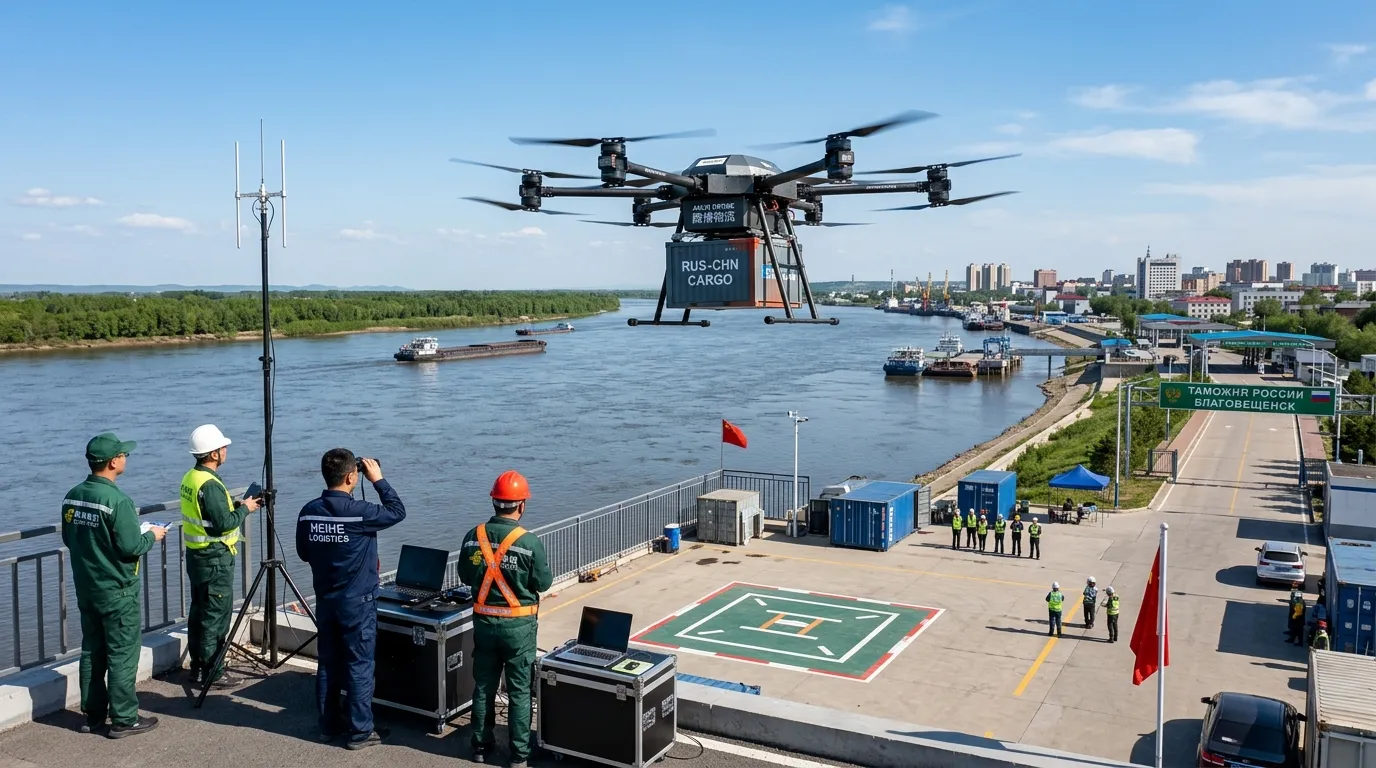
Russia and China are preparing to launch cross-border cargo drones in the summer of 2026. The route is planned to cross the Amur River between the border territories of the two countries. The project looks like a point, but its significance for the B2B market goes far beyond a single pilot.
The bottom line is that unmanned delivery is no longer an exhibition technology and is beginning to enter into real cross-border logistics. Even if the initial volumes are limited, the launch itself means working out a scheme where the customs regime, cargo control, security, digital support and commercial model should converge in one chain.
This is a particularly interesting signal for e-commerce, urgent B2B shipments, and logistics of expensive small-sized goods. Drone delivery across borders may be in demand where speed and regularity are critical, and physical infrastructure or traffic congestion create unnecessary costs.
The project is also important as a test for future unmanned corridors. If the model shows stability in real operation, the market will gain an argument in favor of scaling to other cross-border routes and cargo types. This opens up space for digital logistics operators, monitoring platform developers, insurance companies, and IT solution integrators.
For foreign economic activity, this is a story about how innovation is gradually becoming an applied tool. Russia and China have been strengthening overland trade for a long time, and now a new technological layer can be added to it, designed for fast and controlled cross-border transportation.