Ozon raised the cost of "Easy Return" on realFBS from February 26, updated the label, improved conditions for seasonal goods
Main news: realFBS has adjusted the "Easy Refund" service tariff since February 26, 2026 due to VAT changes.
The new rates are fixed in the official communication and in the tariff documents: 109.8 ₽ for a refund of up to 0.5 kg, 30.5 ₽ for each subsequent 0.5 kg and 12.2 ₽ as an additional component of the tariff.
For the seller, refunds form a direct expense, which often remains "behind the scenes" when calculating margins. After the tariff increase, any product with a high percentage of returns receives a different payback threshold. This is especially noticeable in categories with a range of sizes, complex characteristics, and a high proportion of impulse purchases. In management accounting, it is more convenient to fix the "profit after refunds" indicator at the SKU level and calculate it upon write-offs. This indicator helps you quickly see positions where advertising and discounts generate turnover without profit.
The practical focus for the next 90 minutes looks like this: upload the top 20 SKUs by percentage of returns, then calculate the profit per unit, taking into account reverse logistics, then allocate 5 positions at the payback boundary. Three levers work quickly on these SKUs: product card, packaging, and price. The card reduces refunds due to accurate expectations in terms of size, configuration, and properties. Packaging reduces returns due to damage and appearance claims. The price helps to take into account the new tariff in the unit economy.
News 2: FBS updated the shipping label
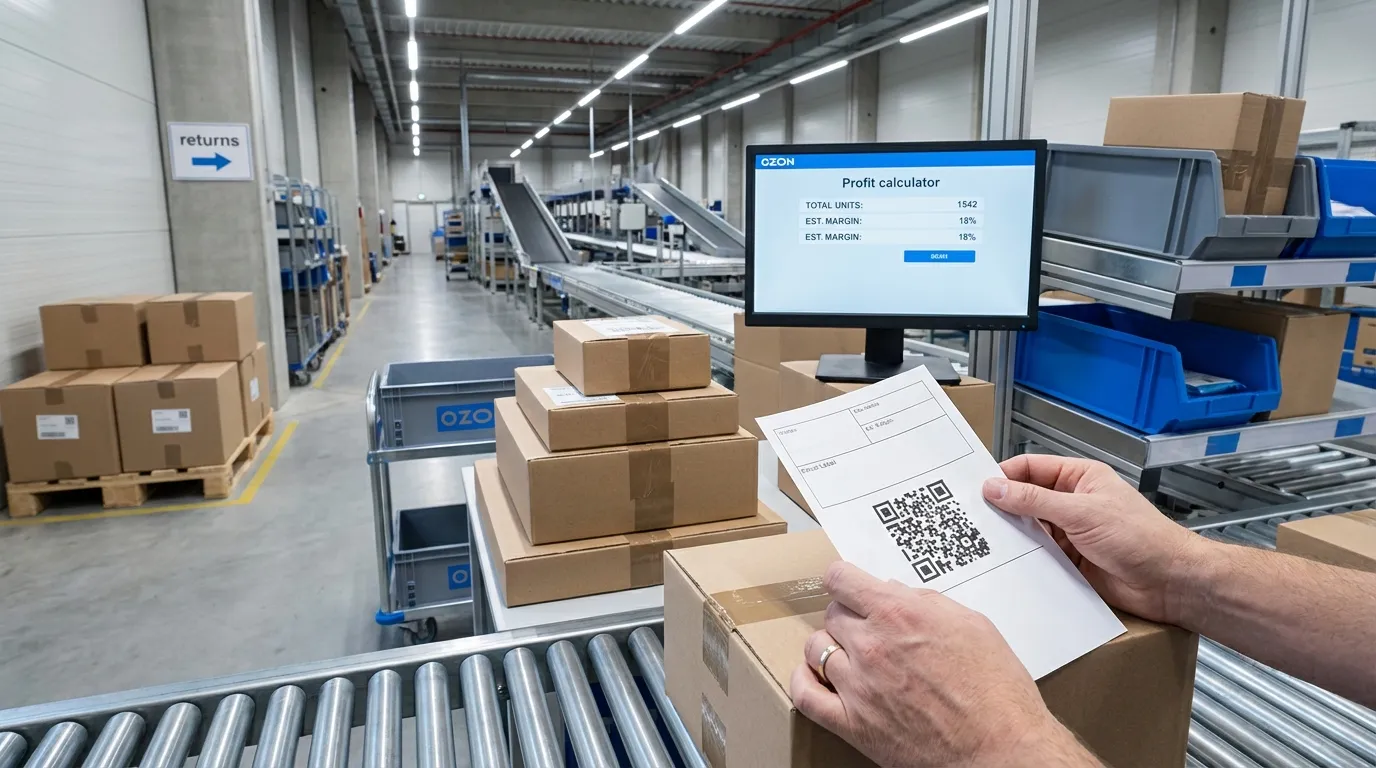
Now they are translating the code to QR. In the official message, the emphasis is on readability and resistance to damage, the key quote is as follows:
"We decided to abandon the barcode on the label in favor of a QR code."
Even a visual change requires checking the print chain, especially with automation. The risk arises in printing patterns, scale, margins, printer settings, and WMS integrations. The fastest control is to run 1-2 test orders, check the readability of the QR on the scanner, then fix the settings in the shift instructions and in the acceptance checklist for new employees.
News 3: Seasonality on FBO.
Ozon has announced improved placement conditions for seasonal goods and an extension of the fee-free placement period to 150-180 days during periods of high demand.
For the seller, this turns into a window for early delivery, when the goods manage to be distributed in warehouses before the peak of demand. Here it is important to link supplies in advance with the actual turnover and dimensions, and then put the allowable shelf life into marginality. The seasonal economy benefits from discipline: supply according to the demand calendar, balance control by week, and a list of SKUs for accelerated replenishment.