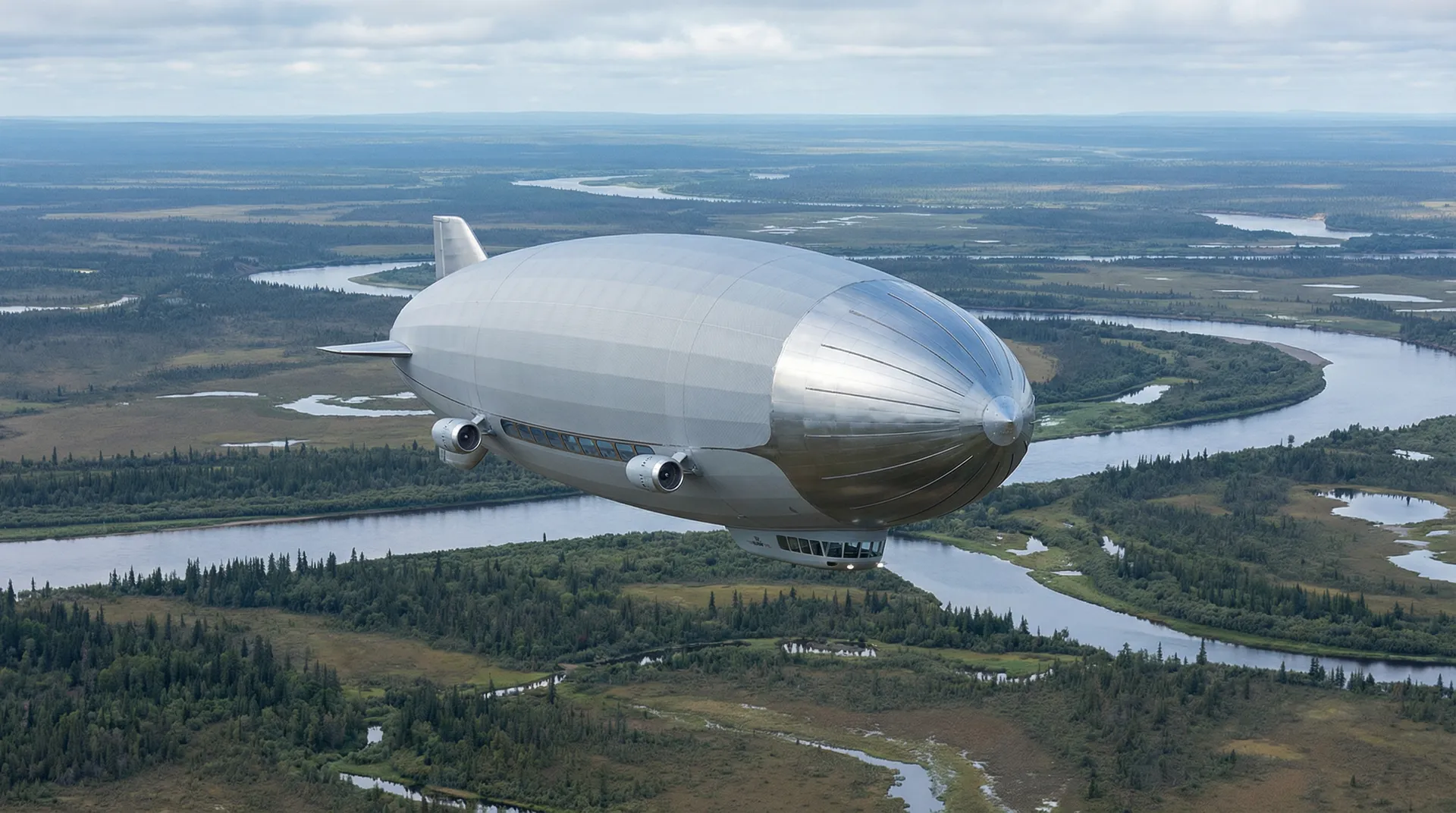
Russia is once again discussing the return of airships, aircraft that have been considered obsolete for decades. The idea is fixed in the new transport concept of the country's development until 2035. We are talking about the creation of passenger and cargo airships for regions with complex logistics, where the construction of roads and airfields is economically or technically difficult.
The main argument in favor of airships is their ability to operate where traditional aviation and ground transportation are ineffective. Airships do not require runways, they can hover in the air and deliver cargo directly to hard-to-reach areas: the Arctic, the Far North, the Far East, mountainous and forested territories.
Historically, the USSR actively developed the airship industry, but after the disaster of 1937 and the official abandonment of the program in 1938, the direction was closed. The modern concept assumes a fundamentally different level of technology — new materials, digital control systems, improved aerodynamic solutions and increased safety.
In world practice, interest in airships is also returning. China plans to launch the first passenger airship Xiangyun AS700 in 2026. The aircraft is about 50 meters long and can carry up to 10 passengers, has a range of up to 700 kilometers and can operate at an altitude of 100 to 300 meters. This project is considered as a part of environmentally sustainable transport and regional mobility.
For Russia, airships can become an element of a new logistical architecture. Their intended applications include the delivery of equipment for extractive industries, the supply of remote villages, the transportation of oversized cargo, as well as passenger routes in regions with low population density. An additional factor is the reduction of the carbon footprint compared to aviation.
Experts note that the economic efficiency of airships will directly depend on the scale of application and integration with the existing transport system. If implemented correctly, they can occupy a niche between aviation and ground logistics, especially in the context of rising costs for infrastructure projects.