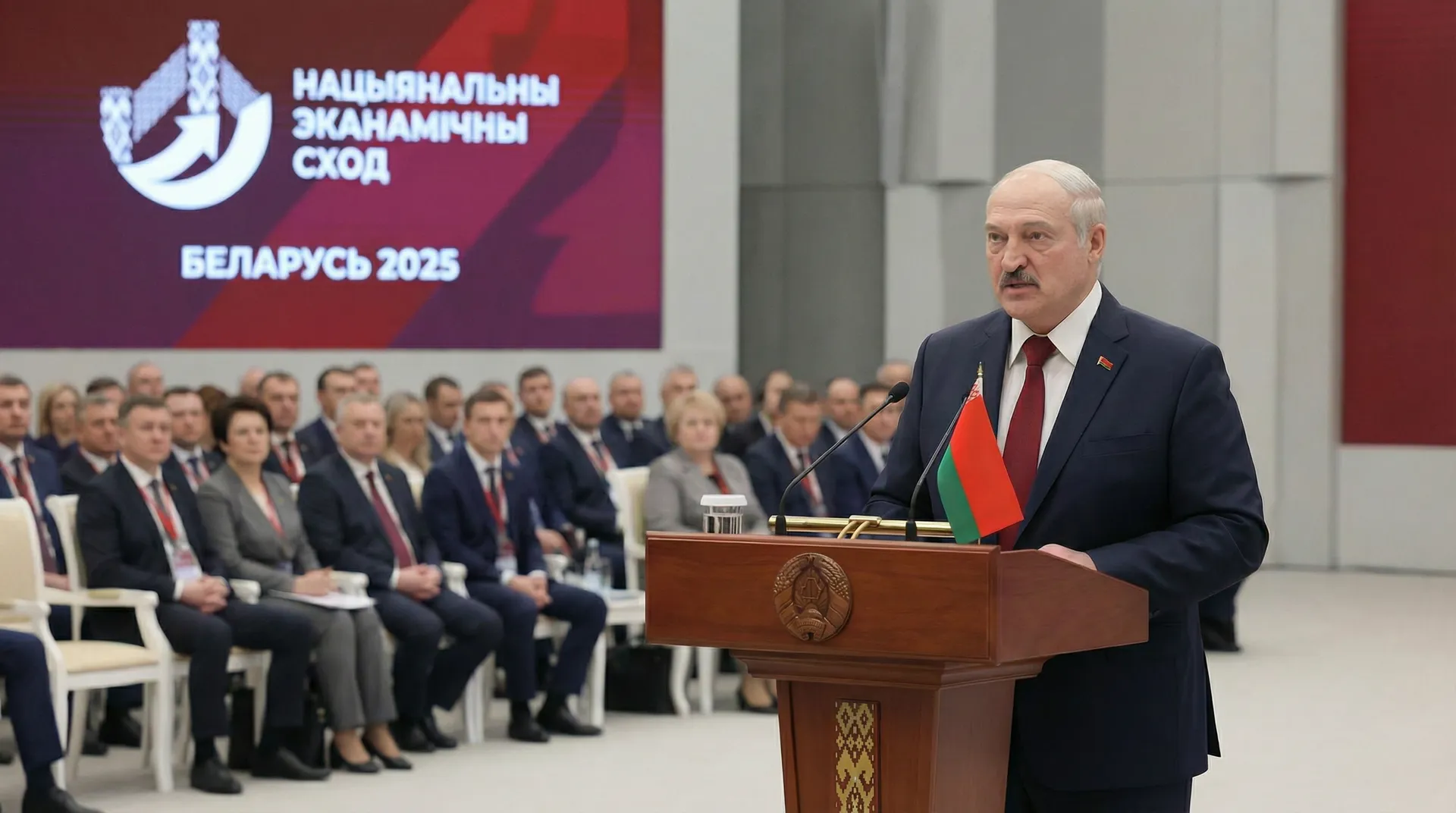
President of Belarus Alexander Lukashenko said that the countries of the Global South and Asia are becoming key centers of the global economy, forming a new geo-economic reality. He said this while speaking on the first day of the meeting of the VII All-Belarusian National Assembly in Minsk, where the country's socio-economic development guidelines for the next five years were presented.
According to the head of state, Belarus is already actively reorienting export and production chains to new markets, demonstrating sustainable integration into the economies of developing regions.
"The Global South and Asia have become a new reality. Today, our agricultural machinery and trucks, dairy and meat products, tires and components are traveling to the countries of the Middle East and Africa, China and Latin America. The list of goods is impressive," Alexander Lukashenko stressed.
The President noted that this diversification of export destinations makes it possible to reduce dependence on traditional markets and creates additional growth points for industry and the agro-industrial complex.
As part of the strategic planning until 2030, Lukashenko outlined the task of increasing the country's energy independence, calling energy the foundation of economic stability. According to him, it is planned to implement at least 25 major investment projects in the industrial sector in the coming years, focused on the modernization and technological renewal of production facilities.
The head of state paid special attention to the state of the real sector of the economy, emphasizing the continuity of the country's industrial potential.
"We have preserved and multiplied a strong real sector of the economy, without destroying or spilling anything from the Soviet legacy. In the world ranking of industrial competitiveness, we occupy the 56th position among one and a half hundred countries. It is especially important to increase the speed of implementation of promising developments in the real sector," Lukashenko said.
The President called technological sovereignty a key element of the future development model. He announced plans to expand the network of technoparks in all regions of Belarus and stressed the need for accelerated development of the national IT industry.
"Critical industries should be provided with an import—independent software product by at least 90 percent," he said.
In addition, Lukashenko drew attention to the growing tourist attractiveness of the country. According to him, Belarus has entered the top 50 most visited countries in the world, taking 48th place. The President outlined doubling the contribution of the tourism industry to the economy as a target for the next five years.