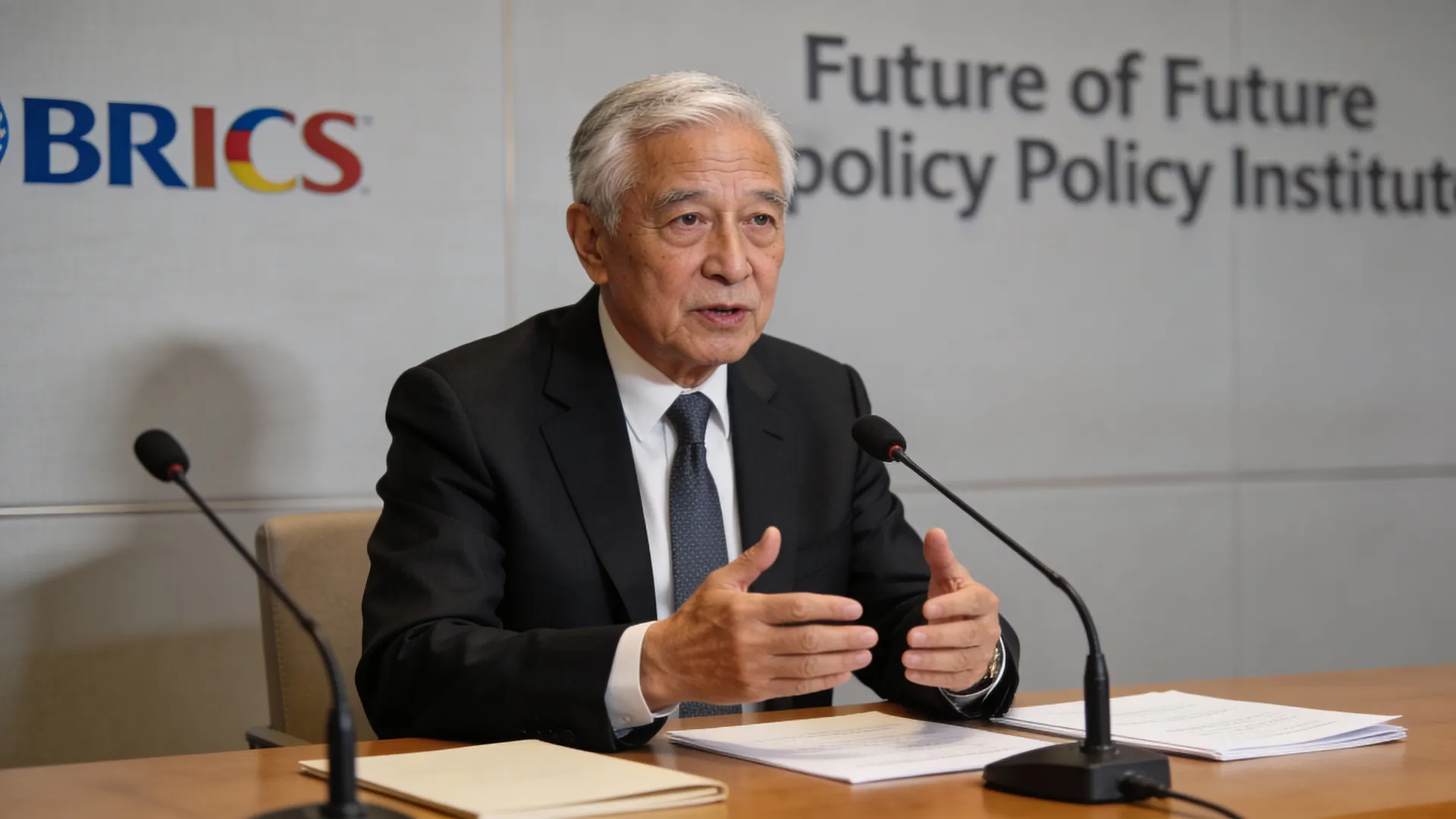
The issue of the transformation of BRICS into a full-fledged international organization is currently not on the agenda. This was stated by Deputy Minister of Foreign Affairs of Russia, Russian Sherpa in BRICS Sergey Ryabkov in an interview published on the website of the PIR Center.
According to the diplomat, the existing model of cooperation within the association has proven its effectiveness and does not require fundamental changes. Ryabkov stressed that a stable architecture of financial, trade and economic cooperation has already been formed within the BRICS.
"The <is functioning within the framework of the association...> the mechanics of financial, trade and economic cooperation are sufficiently developed," he said.
The Deputy Foreign Minister drew attention to the evolution of the association since its creation. Over the years of its existence, BRICS has gone through several stages of qualitative transformation, gradually turning into a complex and multicomponent mechanism of interstate interaction. At the same time, as Ryabkov emphasized, one of the strengths of the format was the absence of excessive institutionalization.
According to him, BRICS today is "an extensive, complex, multicomponent mechanism of interstate cooperation in a wide range of areas."
According to the diplomat, the rejection of a rigid bureaucratic structure allows participants to remain flexible and effectively promote joint initiatives without creating a cumbersome supranational apparatus. It is this feature, he noted, that makes BRICS adaptive to the changing conditions of the global economy and politics.
Currently, the association includes the founding States of Brazil, Russia, India, China and South Africa, as well as new members: Egypt, Indonesia, Iran, Ethiopia and the United Arab Emirates.
Against the background of the expansion of the membership and the growing economic weight of the association, the topic of the institutional future of the BRICS is regularly raised in expert circles. However, the Russian side's position is that the current format fully meets the objectives of coordination and cooperation. Earlier, the Russian president also pointed to the strengthening of the BRICS role in the global economy, noting the superiority of the association in a number of indicators over the G7.