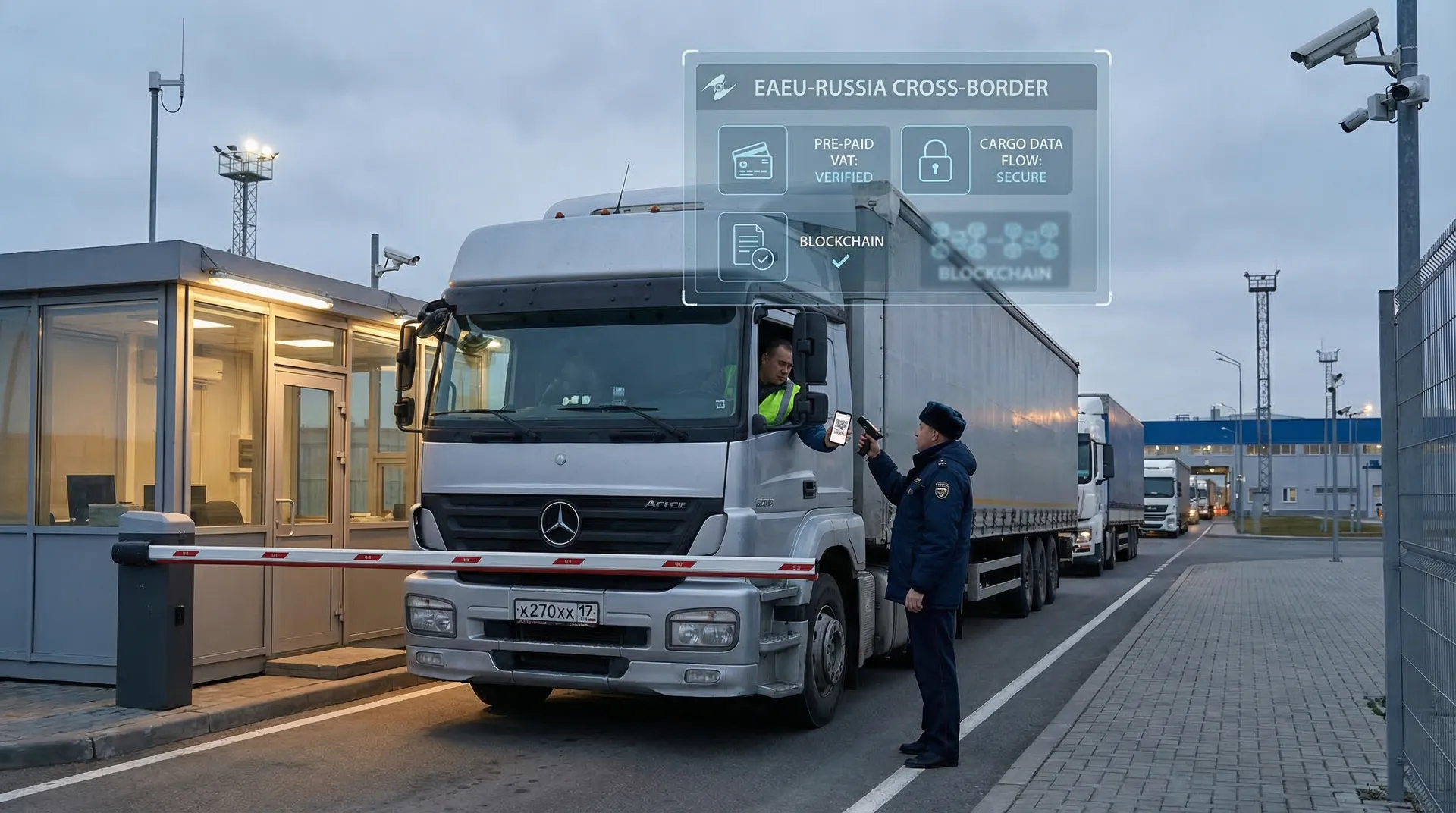
In Russia, the introduction of SPOT is accompanied by temporary simplifications so that businesses can rebuild logistics and documents without stopping supplies. The new transitional mechanism is valid from April 20 to May 31, 2026 and applies to the import of goods from the EAEU countries. Its purpose is to prepare the participants of foreign economic activity for the launch of the national system of confirmation of waiting for goods, which is scheduled for June 1, 2026.
The FCS explains the measure as a way to give importers time to adapt. Agepsim Ashkalov, Deputy Head of the Federal Customs Service of Russia, said:
"It is necessary to create conditions so that foreign trade participants can adapt as much as possible and smoothly "enter" the SPOT."
According to him, the mechanism will allow companies to promptly eliminate violations of already imported goods. Importers will be able to get to the temporary storage warehouses and perform the necessary procedures there, including labeling. This is an important detail for the market: control is maintained, but the business is given the opportunity to bring the cargo to an understandable processing point, rather than creating a traffic jam at the border.
Ashkalov separately emphasized the meaning of the decree:
"This decree is to help businesses. It should stimulate importers to take a conscientious approach to conducting foreign economic activity in anticipation of the launch of the SPOT."
The transitional regime is especially important for companies whose goods are already on the way, are in warehouses, or come with an incomplete set of documents on the status of EAEU goods. Normally, such shipments could be a source of delays and additional checks. Now they are given the opportunity to cross the border and close the missing procedures inside Russia.
Petr Shcherbachenko, Associate Professor at the Financial University under the Government of the Russian Federation, evaluates the temporary order as a tool for protecting supply chains:
"The introduction of a simplified procedure for the import of goods from the EAEU countries from April 20 to May 31, 2026 in Russia will allow businesses to complete deliveries that have already begun and gradually integrate into the new system without creating sharp gaps in supply chains."
For logistics, this means reducing the risk of a sudden accumulation of vehicles at checkpoints. Carriers receive a time window to deliver their goods, while importers receive the opportunity to put their documents and markings in order after crossing the border.
Svetlana Ilyashenko, Associate Professor at Plekhanov Russian University of Economics, directly links simplifications with the risk of overloading borders. According to her, the task of the transitional order is to prevent a logistical collapse and give businesses time to clear the flow of goods from old problematic remnants.
"It will be possible to import goods into Russia for which, for various reasons, there are no complete documents confirming their status as EAEU goods. These may be leftovers in warehouses, goods in transit, or shipments with incomplete documents. In addition, the simplified regime makes it possible to import goods without prior labeling and apply it already on the territory of the Russian Federation, which saves time and simplifies logistics at the border crossing stage," she said.
For participants in foreign economic activity, this is not a cancellation of control, but a short period of adjustment before the new regime. Starting from June 1, the SPOT should become the basic tool for confirming the expectation of goods. Therefore, businesses already need to check routes, the status of shipments, documents of origin, labeling, and the readiness of temporary storage warehouses for additional operations.
The main risk for companies is to perceive simplification as a postponement without consequences. The transition corridor is needed to complete old supplies and fix problems. After the launch of the SPOT, any poor preparation of documents, lack of confirmations, or labeling errors will have a greater impact on the speed of control. For carriers and importers, the coming weeks will be a time of technical preparation, rather than a pause before the new rules.