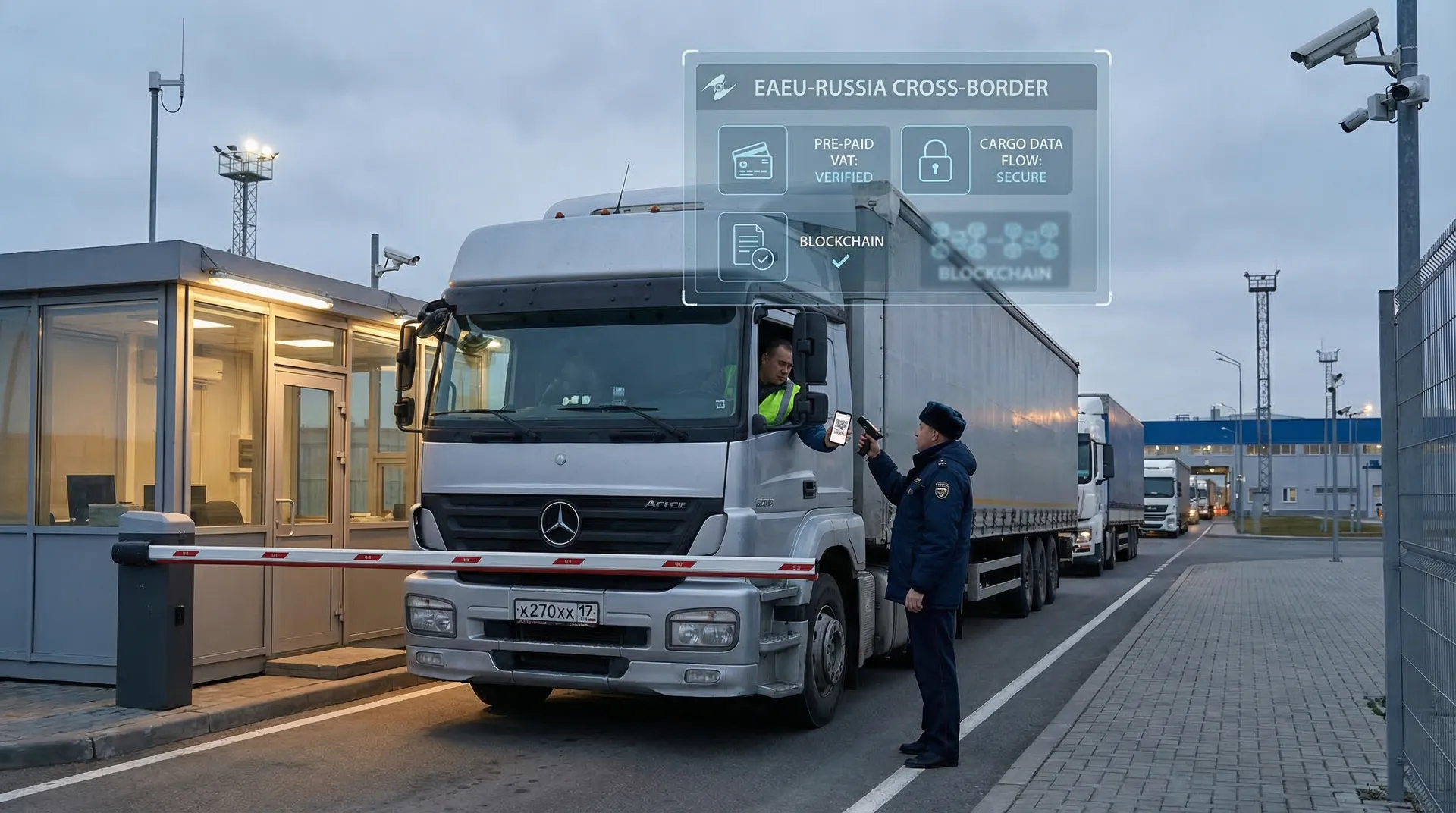
The Federal Customs Service explained how participants in foreign economic activity should fill out a declaration for goods when processing shipments imported by Decree of the President of the Russian Federation No. 261 dated April 20, 2026. This decree is related to the temporary importation of certain goods and became part of the transition period before the launch of the SPOT.
The main requirement concerns column 7 of the declaration. In it, the declarant must specify the code "NVT" in accordance with the classifier of features of the customs declaration of goods. This code allows customs to identify a shipment as a product that is processed under a special regime under Decree No. 261.
The second important detail relates to column 44. The FCS indicated that in this column, under the code 09999, you must additionally enter the number and date of the decree. For declarants, this means that the reference to the legal basis should be reflected directly in the declaration, and not just in the accompanying package of documents.
Separately, the service clarified that the declaration is filled out taking into account the specifics established by Section 5 of the Decision of the Customs Union Commission dated May 20, 2010 No. 257. In this case, the provisions of paragraphs 7-11 of subparagraph 7 of paragraph 41.22 of the specified procedure do not apply in this case. For customs clearance specialists, this is a technical but significant setting: an error in such details can lead to requests, adjustments to the declaration, and delays in the release of goods.
The practical meaning of the explanation is that the FCS formalizes in advance the work with cargoes that go through a transitional regime. The business has received a time window to adapt to the SPOT, and now customs is clarifying exactly how to reflect such shipments in the DT. This reduces the risk of discrepancies between declarants, customs officials, and on-site inspectors.
For importers and brokers, the immediate task is simple: update the internal instructions, check the declaration templates and make sure that the software correctly adjusts the declaration feature code and information according to the decree. Companies with a large flow of the same type of supplies from the EAEU countries, where errors often occur due to automatic copying of old declarations, should pay special attention to this.
The new setting does not change the economic essence of the transitional regime, but it does affect the speed of registration. The more accurately the DT is filled out, the less grounds for additional questions from customs. In preparation for the SPOT, such technical details become part of the general discipline of foreign economic activity: digital control does not begin at the border, but with the correct filling in of each field of the declaration.