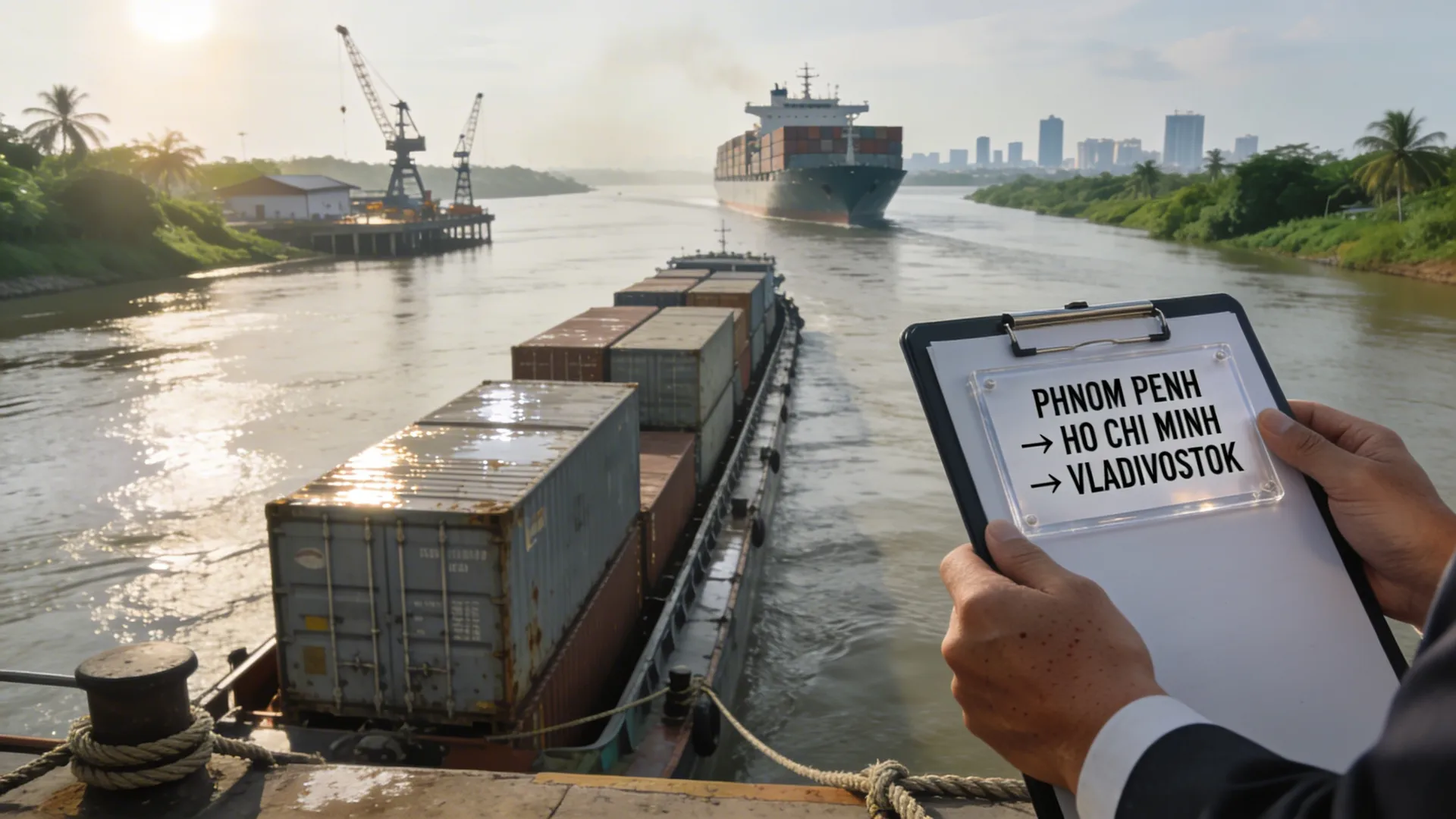
FESCO Transport Group is expanding the geography of maritime services and launching container shipments between Cambodia and Russia. At first glance, this is "another line", but in fact it is an indicative step in the restructuring of logistics with Southeast Asia: the market is looking for routes that provide a predictable time, an understandable connection and the opportunity to transport the container to the interior regions of the Russian Federation without breaking responsibility.
The key figures in the project are the speed and integrity of the chain. The estimated transit time between Phnom Penh and Vladivostok is stated to be an average of 12 days, and the first batch arrived intermodally to the final recipient in Moscow in 32 days. This is critical for light industry and agricultural products: seasonality, turnover requirements and sensitivity to delays make the "plus week" a direct blow to margins.
The route is built as a "soft" multimodal link. The containers travel from the Phnom Penh river port via inland waterways to the port of Ho Chi Minh City, where the group has set up a regional hub for transshipment of goods from Southeast Asian countries. Then there is sea delivery on regular ships to Vladivostok with a call at the Naval Station, after which the container either remains in the Far East or is included in through intermodal transportation inland by container trains to Moscow, St. Petersburg, Novosibirsk, Yekaterinburg, Kazan and other destinations in the Russian Federation and the CIS.
It is also important that the service is provided in both directions.: This reduces the risk of an "empty run" of containers and gives a chance for a more sustainable tariff economy. For Russian exports to Cambodia, this may mean a more even schedule and the ability to schedule shipments not on a case-by-case basis, but through a regular slot.
What does this change for foreign economic activity and for the BRICS/friendly markets agenda? Cambodia is not the largest partner, but it is integrated into Southeast Asian production chains (textiles, footwear, agro). The more "combinable" shoulders Russian importers have (river/feeder + hub + main sea + railway in Russia), the easier it is to diversify purchases and move away from dependence on one or two ports/branches. For the government and business, it's also about sustainability: regular services with a hub in Ho Chi Minh City actually create a gateway for connecting neighboring countries in the region to Russian logistics without launching separate direct lines for each jurisdiction.
A practical conclusion for market participants: if you carry "fast" categories from Southeast Asia, it is worth evaluating the new chain not only in terms of the rate, but also in terms of manageability — the waste schedule, the stability of docking at the hub, the availability of containers, conditions at the TTP and the speed of boarding the train. It is these parameters that more often decide today whether the route will be "operational" during peak periods.